Overlay vs. New Granite Countertops: Which Is Right for Your Kitchen?
When planning a kitchen renovation or upgrade, one of the key decisions you must make involves your countertops. Many homeowners face the choice between overlaying their existing surface with thin granite veneer or replacing everything with full‑thickness granite slabs. Each route brings its own cost, durability, installation effort, and long‑term value. In this article you […]
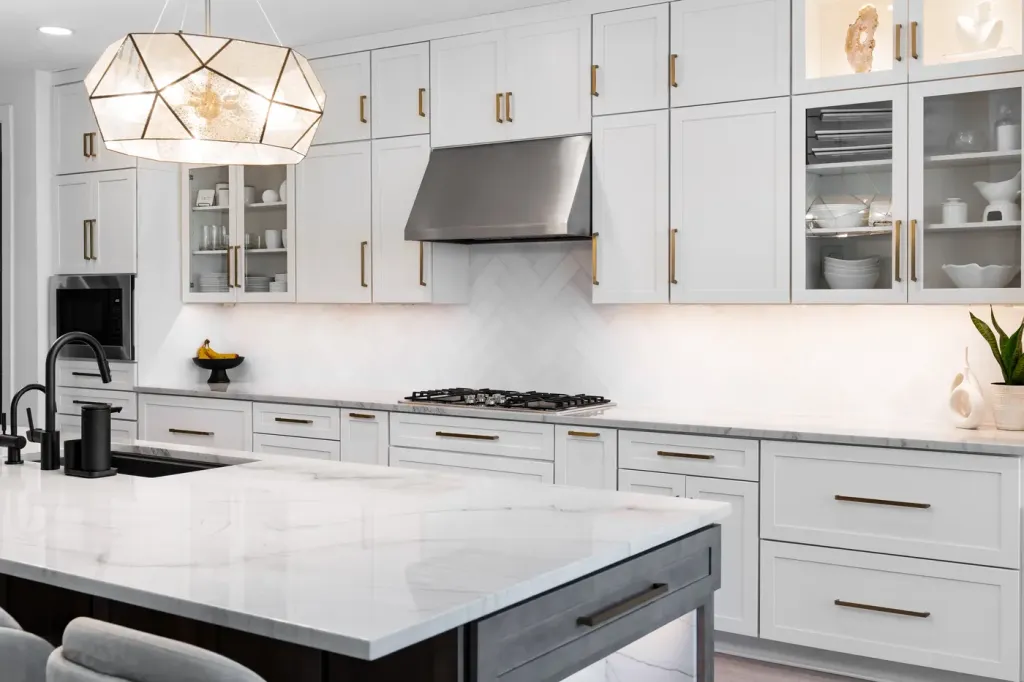
When planning a kitchen renovation or upgrade, one of the key decisions you must make involves your countertops. Many homeowners face the choice between overlaying their existing surface with thin granite veneer or replacing everything with full‑thickness granite slabs. Each route brings its own cost, durability, installation effort, and long‑term value. In this article you will get a clear, informative comparison so you can choose with confidence.
What Is a Granite Overlay
A granite overlay means placing a thin layer of natural stone over an existing countertop. Rather than removing the old surface, a veneer of real granite (often six to thirteen millimeters thick) is bonded directly atop the existing substrate. This approach avoids significant demolition. Because the overlay is lighter and uses less material it can reduce installation time and labor. The finished look retains that authentic stone appearance while leveraging much of the underlying structure.
The success of an overlay depends heavily on the condition of your existing countertop. It must be structurally sound, level, and free of warps, cracks, or weakness. If the base is substandard, repairs or reinforcements may be necessary before overlay installation can proceed.
How Installation Works: Overlay vs Full Slab
The installation process for overlays and full granite slabs differs significantly in both time and complexity. Here’s what you can expect from each option.
Overlay Installation Process
First the existing countertop is inspected. Any flaws are addressed, and the surface is made perfectly flat. Next a template or precise measurement is taken to match sinks, appliances, and backsplashes. The overlay pieces are fabricated offsite. Back at your kitchen the existing surface is cleaned, primed, and adhesive is applied. The thin granite sheets are bonded carefully. Where seams or joints exist they are sealed. Edge profiles and finish polishing are done to match the surrounding materials. Finally the surface is sealed (if applicable) and allowed time to cure before regular use.
Because no demolition or waste removal is required, overlay installations are typically quicker and less disruptive. In many cases the work can be completed in a single day or a few days depending on complexity.
Full Slab Granite Installation Process
First the old countertop must be removed and discarded. This can include demolition, disposal, and possible repair of the supporting cabinets or structure. Next the cabinets and substructure are inspected and reinforced as needed to support heavy stone. Then a precise template is made and you select the slabs, finishes, and edge styles. The slabs are cut and shaped, including all sink and appliance cutouts. On site the slabs are installed, leveled, and joined at seams. After installation the stone is sealed, cleaned, and inspected carefully.
Because of the demolition, heavy handling, and structural preparation, full slab installations are more disruptive and take longer to complete than overlays.
Costs Compared: Granite Overlay Cost vs Full Replacement
Cost is often the deciding factor in countertop upgrades. This section breaks down what you can expect to spend for both overlay and full-thickness granite.
Granite Overlay Cost
One of the biggest advantages of an overlay is its lower cost. The granite countertop overlay cost typically falls in a range that is substantially less than full slab installation. Because overlays use thinner material and skip demolition, labor and material costs are reduced. In many markets overlays may run between forty and eighty dollars per square foot installed, depending on stone quality, region, edge work, and complexity of the layout. Complex cutouts, curves, or intricate edging will raise the cost. In general overlays may cost about half as much as full replacement in favorable conditions.
Full‑Thickness Granite Cost
A full granite replacement is more expensive. Depending on slab grade, finish, labor cost, and location, full slab installation often ranges from fifty to one hundred fifty dollars per square foot or more. For a typical kitchen countertop that can result in a total cost from a few thousand dollars to a higher range in upscale markets. In addition, removal of the old countertop, structural reinforcement, and waste removal can add significant costs over the basic stone and labor. In premium or exotic stone cases with custom edge profiles, it is not unusual for costs to exceed these averages.
Because of these differences, overlay is often marketed as a budget‑friendly alternative especially when your existing cabinetry and base structure remain sound.
Durability, Maintenance, and Limitations
Beyond looks and budget, longevity and upkeep play a major role in your countertop decision. Here’s how both options measure up in daily use.
Strength and Wear Resistance
Full slab granite is thick and robust. It resists heat, scratching, and general wear when properly sealed. That strength makes it ideal for kitchens with heavy usage. By contrast, overlays are thinner and more vulnerable to chipping, especially at edges or corners. If heavy items are dropped or appliances shift, the thin stone may sustain damage more readily. Some installers caution that undermount sinks or heavy loads near seams are more challenging with overlays.
Repair and Maintenance
Both full slabs and overlays require regular cleaning with nonabrasive, neutral pH cleaners. Also both may require periodic resealing if the stone is porous. But full slabs are easier to repair. Chips or cracks in full thickness stone can often be patched or refinished. With overlays, because the stone is thin, localized repair is harder and in many cases the section may need replacement rather than repair.
Lifespan and Value
A well installed full granite countertop can last many decades, often outliving the cabinets beneath. It adds perceived value and quality to a kitchen. Overlays may not last as long under heavy stress or wear but can serve well under moderate use. For homeowners planning to stay long term or aiming to maximize resale value, full granite often offers better longevity and appeal. For those needing a more immediate aesthetic update at lower cost, overlays can be a practical compromise.
How to Decide Which Option Suits Your Kitchen
Start by assessing the condition of your existing countertop. If it is warped, damaged, or structurally weak, overlay may not be viable without substantial repair. Next consider your budget. If funds are constrained, overlay offers real stone aesthetics at lower cost. Think about your usage. If the kitchen will see heavy cooking, high traffic, or frequent wear you might prefer the strength of full slabs. Also weigh disruption and timeline. Overlay is less invasive and quicker to install. For major remodels, the longer timeline of full slab installation may not matter. Finally consider your long‑term goals. If you intend to stay many years or expect resale, full granite often makes more sense for durability and appeal. If tastes or layout might change, a lower cost overlay can be replaced later.
Optimizing Costs and Getting Value
To manage cost while keeping quality you might limit intricate edges or curves, choose a mid‑grade stone, or reduce seam count. For overlays avoid unnecessary overhangs or complex profiles. Ensure your base cabinets are level and sturdy before overlay or full slab installation. Ask for competitive quotes and compare materials, labor breakdowns, and warranty. Always check installer credentials and sample work. Make sure sealing is done correctly and that maintenance instructions are clearly explained.
Summary
Overlay and full‑slab granite installations each bring advantages and trade‑offs. Overlay provides a faster, less disruptive, lower cost path to real stone aesthetics provided your existing substrate is in good condition. The granite countertop overlay cost is generally lower because of reduced demolition, material, and labor needs. On the other hand full slab granite offers superior durability, easier repair, longer lifespan, and strong resale value at higher cost and greater installation complexity. Your choice should reflect the condition of your current counters, your budget, the expected use of your kitchen, and your long term plans. If you like, I can estimate both overlay and full granite costs for your kitchen size and location, so you can see precisely what it might cost you.
Ready to Upgrade Your Countertops?
Whether you’re leaning toward a granite overlay or a full replacement, the best first step is getting expert advice tailored to your kitchen. Our team can assess your current counters, walk you through the pros and cons based on your layout and usage, and provide a clear, accurate estimate for both options.
If you’re in the Lubbock area and want a durable, beautiful countertop that fits your budget and design goals, reach out to schedule a free consultation. Let’s make your kitchen upgrade seamless and stress-free, from selection to installation.
Contact us today to get started.