Concrete Countertops: Cost, Sealing, Pros & Cons
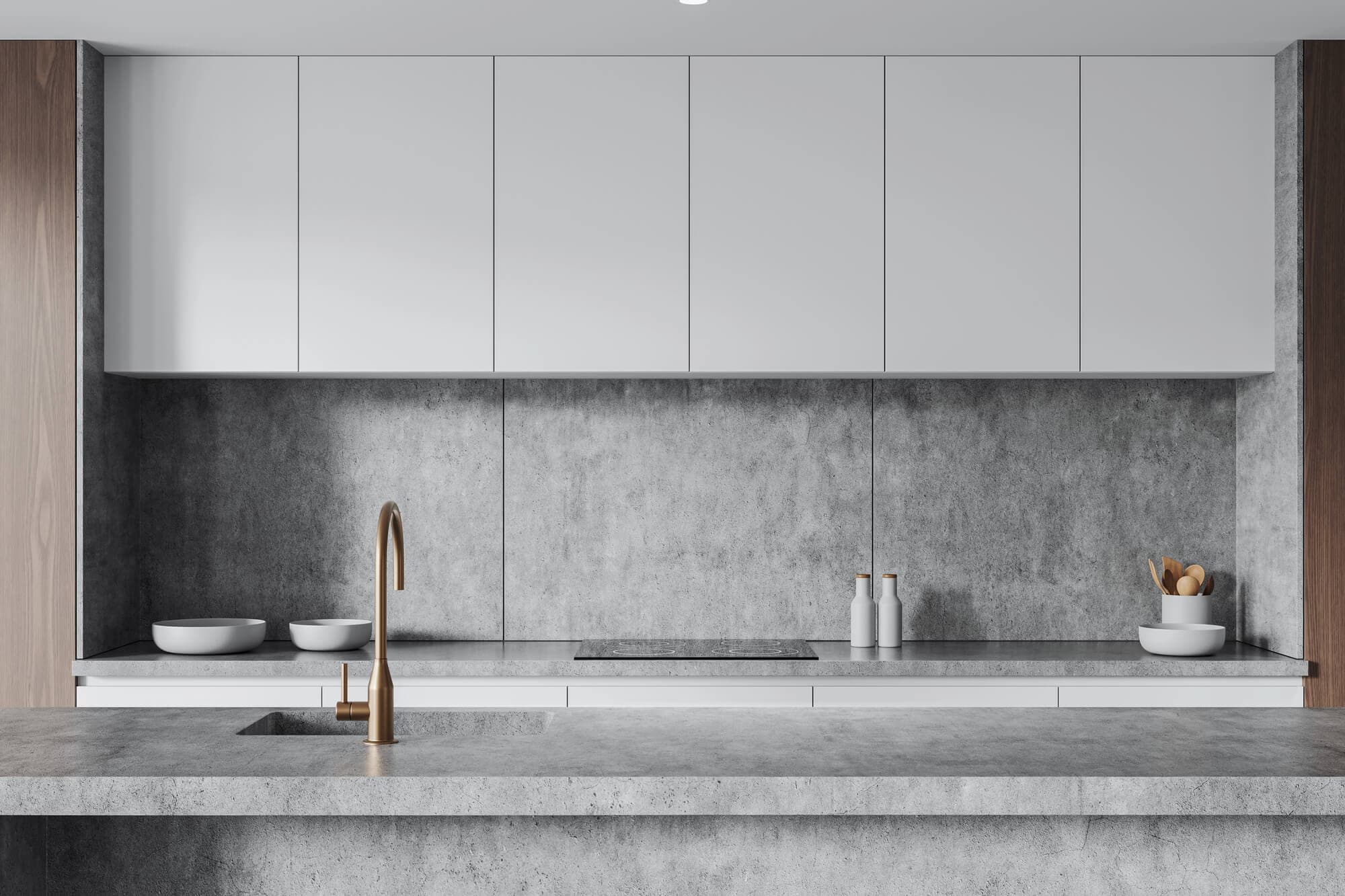
When you picture your next kitchen countertops, you're probably not dreaming about builder-grade countertops. You want a space that feels designed for you, the way the island anchors the room, how light hits the surface, and how it feels in daily use, not just in photos. Concrete countertops promise that kind of custom, sculpted look you don’t always get from off-the-shelf countertop slabs.
At the same time, concrete countertops raise fair questions: How does the cost compare with quartz or granite? How much work is sealing and resealing? What about stains, hairline cracks, or resale if you move? Is the installation process manageable for homeowners, or does it require professional intervention?
By the end, you’ll know how concrete kitchen countertops stack up on appearance, cost, and maintenance, and whether this durable countertop material truly belongs in your kitchen.
What Are Concrete Countertops?
Concrete countertops are cast rather than cut from quarried granite or engineered quartz slab. A fabricator can build forms, reinforce them (wire mesh, rebar, etc.), pour a concrete mix, then grind, finish, and seal the surface.
That process gives homeowners concrete countertops that offer a customizable appearance with various finishes, textures, thickness, edge designs, and colors that can suit any designer's vision.
On top of that, concrete offers durability comparable to most natural and engineered stones.
Why Placing Concrete as Countertops Works For Some
- Many Design Possibilities: Its flexibility is one reason concrete works well in design-driven kitchens. The countertop can be made specifically for the room and treated more like a made-to-order furniture piece.
- Concrete Slabs as Centerpieces: A concrete island or bar top can become a deliberate focal point, a sculpted surface that looks made for your space instead of dropped in from a catalog.
- Complements Warmer Elements in Kitchen: If you’re worried it might feel too industrial, that usually comes down to color, edge details, and what you pair it with. Many homeowners mix design styles to neutralize the coldness from concrete with softer grays, warm taupes, or sand tones layered with wood, upholstered seating, and warm lighting, which read as inviting rather than cold.
- Form Aesthetics Can Be Customized: Fabricators can round edges, expose or hide aggregate, and tune the surface from silky smooth to gently textured.
- Use it in Hybrid Kitchen Styles: You also don’t have to commit your whole kitchen to concrete. Many people use it only on the island or a work zone and pair it with quartz or stone on the perimeter, giving you a crafted focal point without using concrete across every countertop.
Whether considering precast concrete countertops or a DIY concrete countertop project, the potential for a unique touch is vast.
However, learning the nuances of concrete mix, sealers, and the importance of reinforcing steel, especially when considering modern methods like GFRC (Glass Fiber Reinforced Concrete), is crucial for long-lasting results with any concrete DIY project, especially for kitchen countertops.
Concrete vs. Quartz vs. Granite Countertops
Concrete gives you considerable freedom in shape and character, quartz slabs generally require less routine maintenance, and granite offers natural variation with more familiar slab-based fabrication.
Concrete can be a strong fit when you want a sculpted, furniture-like look and you’re comfortable maintaining a sealer.
Quartz or granite may make more sense when low maintenance, familiar patterns, and predictable care sit higher on your priority list.
Here’s a simple side-by-side snapshot:
| Material | Customization & Look | Maintenance |
| Concrete | Highly custom shapes, thicknesses, integrated details; natural variation and patina | Needs sealing and maintenance based on the sealer system |
| Quartz | Many colors, including some concrete-look options; consistent patterns | Generally low maintenance |
| Granite | Natural variation determined by the stone | May require periodic care depending on the stone and finish |
Most concrete countertops are essentially cast to order, which means the fabricator can control thickness, edge profiles, drainboards, ledges, and even integrated sinks. Some precast concrete countertops are made at the site (the client's kitchen), while in some cases, the concrete slabs are cast according to the precise measurements and specifications requested.
Quartz slabs can mimic the look of concrete, and if you mainly want a soft gray, low-movement surface with simple care, a concrete-look quartz deserves a serious look.
From a resale perspective, concrete is more of a design-specific choice than quartz or granite. Whether that helps or hurts depends on the home, the quality of the work, and what buyers in your market prefer. It’s best treated as an intentional design decision rather than an automatic upgrade.
Pros and Cons of Concrete Countertops at a Glance
Upsides:
- Highly custom shapes, thicknesses, and integrated details
- Unique, furniture-like presence that can anchor the room
- Can be paired with other materials for a mixed, tailored aesthetic
Tradeoffs:
- Needs sealing and ongoing care based on the sealer used
- Natural variation, patina, and hairline cracks can become part of the look
- More design-specific than familiar materials such as quartz or granite
Taken together, concrete makes the most sense when you care more about character and customization than total simplicity.
At Cabinet IQ, we encourage homeowners to look beyond appearance alone and compare countertop materials against the way the kitchen will actually be used. Maintenance preferences, cabinet design, lighting, budget, and the role you want the countertop to play in the room can all influence which surface makes the most sense.

Concrete Countertop Cost: How Much Do Concrete Countertops Cost?
Concrete countertop cost varies significantly because you’re paying for more than the raw material. Professionally made concrete countertops require skilled labor, formwork, reinforcement, finishing, sealing, transportation, and installation.
According to Angi, professionally installed concrete countertops typically cost about $50 to $150 per square foot, including materials and professional installation.
Location, project complexity, fabrication method, and custom details such as colors and finishes can move the final price outside that range, so national figures should be treated as a budgeting starting point rather than a project quote.
Most of what you’re paying for is skilled labor, forming, and finishing, not just bags of cement. Concrete projects often use Portland cement and may include additives like GFRC (Glass Fiber Reinforced Concrete) for added durability.
Depending on the project, concrete may overlap with the cost of other premium countertop materials like quartz or marble, while highly customized designs can cost more. In addition to kitchen countertops, concrete is also popular for bathroom countertops due to its customizable appearance and potential aesthetic similarity to materials like Caesarstone or granite.
For those interested in DIY concrete countertops, learning the process involves understanding the use of molds, melamine sheets, foam rails, and silicone sink knockouts to achieve professional results. Maintenance considerations like sealing and using granite cleaners can help extend the longevity and beauty of concrete surfaces.
What Drives Concrete Countertop Cost?
A typical per-square-foot rate includes form-building, reinforcement, pouring, grinding, finishing, and the sealer system.
Costs can rise with:
- Complex shapes, curves, or thick waterfall legs
- Integral sinks, drainboards, or built-in ledges
- Decorative aggregates, inlays, or special pigments
- Large spans that must be cast in place, in multiple pieces, and joined cleanly
- Site conditions like a tight stairwell, a long carry into the house, and difficult access
Concrete can make financial sense when its customization solves a specific design problem or lets you concentrate more of your budget on a focal point.
Using concrete on an island while choosing another surface for the perimeter, for example, can deliver the custom look without using it across every square foot.
That’s also why Cabinet IQ looks at countertop decisions within the larger kitchen budget. A surface doesn’t have to cover every counter to make an impact. Coordinating the countertop plan with the cabinetry, layout, and other project priorities can help you decide where it makes sense to invest more, and where a different material may deliver better value.
How Concrete Countertops Affect Your Installation Schedule
Concrete countertops don't just influence your budget; they also shape your project timeline and impact the overall kitchen design. Since each countertop is custom-formed, poured, cured, finished, and sealed, there are more time-sensitive steps compared to factory-finished countertop slabs like granite or quartz.
Sealing systems may require multiple applications and curing steps before the countertop is ready for normal kitchen use. The exact timeline depends on the fabrication method and the sealing products being used, so it's crucial to ask your fabricator for the complete curing and use schedule before installation begins.
A qualified remodeler should walk you through the timeline upfront, explaining when the forms are built, when the pour happens, how long curing and finishing take, and when it’s safe to resume normal use in the kitchen. This understanding can prevent unexpected downtime during a closely coordinated kitchen or bathroom remodel.
How Durable Are Concrete Countertops in Everyday Use?
Concrete itself is strong, but the finished countertop is a system: the concrete, reinforcement, fabrication, support, finish, and sealer all influence how it performs. A properly fabricated and sealed concrete countertop can stand up well to normal daily use, but it still needs protection from stains, surface damage, and conditions that could compromise the sealer.
How Concrete Countertops Handle Stains and Heat
Concrete is a porous substance, which makes the sealer especially important. Wine, coffee, oils, citrus, and other foods can stain or affect the surface if the protective system is worn, damaged, or inappropriate for the application.
Use trivets or heat-resistant pads under hot cookware rather than relying on the concrete itself. Concrete itself has a high heat resistance, but some sealers and surface treatments may be more heat-sensitive than the underlying material.
What to Know About Hairline Cracks
Hairline cracks can occur in concrete countertops. Whether a crack is merely cosmetic or needs professional attention depends on its location, size, movement, and the way the countertop was fabricated and supported. Ask the fabricator how cracking is addressed in the design and what is considered normal for that particular system.
Everyday Habits That Keep Concrete Looking Good
You don’t need a complicated routine, but there are everyday habits that homeowners and designers can adopt to maintain a concrete slab's durability and aesthetic appeal in the kitchen:
- Clean according to the sealer or fabricator’s care instructions; mild dish soap is often a practical starting point. Using the correct sealing products helps in preventing stains and scratches on the surface.
- Wipe food spills promptly, especially oils, wine, coffee, and citrus, to prevent stains from setting in.
- Use cutting boards to protect both the surface and your knives from unwanted scratches.
- Use trivets or heat-resistant pads under hot cookware to avoid damaging the concrete slab's sealers or finishes. While concrete can tolerate some heat, most finishes offer relatively little heat resistance.
- Avoid leaving saturated dish mats or wet towels in one spot for long periods, which can affect the countertop’s finish.
Incorporating these habits can ensure that your concrete countertops continue to compare favorably with other countertop materials like granite, marble, and quartz.
If anyone in your household has chemical sensitivities, ask what sealer system will be used and whether a low-VOC option is available, then follow the manufacturer’s ventilation and curing instructions.
Where Does Concrete’s Design Flexibility Matter Most?
Concrete earns its keep when you want things standard slabs may struggle to deliver: thick sculpted islands, integral sinks and drainboards, unusual shapes, or carefully tuned details around how you cook and gather. If you mainly want a clean gray surface with minimal thought about upkeep, a concrete-look quartz slab may deliver a similar visual direction with a different maintenance profile.
Because it’s poured into forms, you can fine-tune details such as the radius on a corner, how a ledge lines up with a window, or how thick an overhang feels when you’re seated.
Depending on the fabrication system, decorative aggregates, pigments, or inlays can also be incorporated into the surface.
Concrete also plays well with other surfaces. A kitchen might pair a sculpted concrete island with quartz or natural stone on the hard-working perimeter, letting each material do what it does best.
Design Traps to Avoid With Concrete
Concrete’s flexibility is powerful, but it needs honest planning:
- Designing from inspiration photos instead of how you actually cook
- Choosing very light colors without considering the realities of spills and staining
- Adding heavily textured details in areas that need frequent cleaning
- Selecting the material without understanding the specific sealer and maintenance plan
A professional familiar with concrete countertops can help you match the material to your habits, not just your mood board.
Do Concrete Countertops Need to Be Sealed?
Yes. Concrete is porous, so a kitchen countertop needs an appropriate protective system to help manage moisture, staining, and everyday wear. The exact performance and care requirements depend heavily on the sealer used.
You don’t really live with an unfinished concrete slab as your countertop. Instead, you live with the finished and sealed surface. Every sealer has limits, so the right choice balances appearance, feel, food-contact suitability where applicable, durability, and the maintenance you’re realistically willing to do.
Types of Concrete Countertop Sealers
Fabricators may use different types of countertop sealing systems, including:
- Penetrating sealers, which absorb into the material and reduce its ability to take on moisture
- Film-forming sealers, which create a protective layer at the surface
- Multi-part or hybrid systems, which combine different approaches to achieve a particular finish and level of protection
Ask your fabricator exactly which product or system will be used, what it protects against, whether it is appropriate for a kitchen countertop, and what maintenance it requires.
When Is It Time to Reseal?
There is no single resealing schedule that applies to every concrete countertop. Products, finishes, kitchen use, and maintenance requirements vary, so follow the sealer manufacturer’s and fabricator’s recommendations.
Depending on the system, warning signs that the protective surface may need attention can include:
- Water or liquids begin to darken the surface
- Dull or visibly worn areas in frequently used zones
- Increased susceptibility to staining
- Changes in the finish that differ from its normal patina
Some maintenance systems may be homeowner-friendly; others are better handled by a professional. Before you commit, ask what product will be on your counters, what routine maintenance involves, how you’ll know when the surface needs attention, and what future maintenance is likely to cost. Get the care plan in writing so you know what you’re signing up for.

Are Concrete Countertops Good?
Concrete countertops can be a good choice if you value customization, distinctive design, and a surface that can develop character over time, and you're comfortable with the maintenance required by the sealer system. Concrete counters, also called concrete counter tops, are considered pretty easy to customize compared to other materials, though they may be a less practical fit if your priorities are minimal upkeep, highly predictable appearance, or a more familiar countertop material.
The real question isn't whether concrete is "good" in general, but whether it fits how you live.
Look at five factors:
- Your design ambition
- Tolerance for patina
- Maintenance habits
- Budget
- How long do you plan to stay in the home
If those lean toward design, character, and long-term enjoyment, concrete may be worth serious consideration. If they lean toward simplicity and familiarity, a granite or quartz slab may make more sense, which can make granite the more budget-friendly option compared to custom concrete work.
How Concrete Countertops Are Made
Concrete countertops are typically either poured in place or pre cast in a mold at a shop and then shipped and delivered to your home for installation. The mixture should be mixed to a consistency of oatmeal before it's poured into the frame, which helps reduce air bubbles and creates a more even finish. Fabricators wait 24 hours before removing the slab from the mold, though concrete countertops actually take 28 days to fully cure after pouring, so patience is part of the process. Once cured, the surface is polished using diamond burnishing pads or a palm sander with diamond pads to bring out a smooth, refined finish. Concrete can be poured seamlessly without visible seams, which is part of what gives it such a distinctive, custom look years ago that other materials simply couldn't match.
Signs Concrete Is a Good Fit for You
Concrete slabs often make sense if you:
- Want a sculpted island, unusual shape, or integrated detail that is difficult to achieve with standard slabs
- Like the idea of a "living finish" and won't lose sleep over minor character marks
- Are comfortable following the fabricator's care routine and maintenance schedule
- Have room in the budget for skilled custom fabrication rather than choosing primarily based on material cost, since labor is often the most expensive part of a concrete countertop project, not the raw materials themselves
Caring for Concrete Countertops
Concrete countertops require sealing every one to three years, and it's worth reseal concrete countertops on that same one to three year schedule to keep the surface protected. Concrete is porous and sensitive to strong acids and abrasives, so it can absorb liquids and bacterial growth if left unsealed for too long.
Avoid using vinegar, lemon-based cleaners, and bleach on concrete countertops, since harsh chemicals can etch and break down the sealer on concrete countertops over time. Use pH-neutral cleaners for cleaning concrete countertops instead, and avoid abrasive cleaners that can damage the sealer, since abrasive scrubbers can scratch and dull the polished finish. Some homeowners also wax countertops monthly after sealing to prevent stains, and applying a bit of olive oil or tung oil to a small test post area can help you gauge how the finish will react before treating the whole surface. None of this maintenance requires much effort once it becomes routine, but it is a real, ongoing commitment.
When Quartz or Granite May Be the Better Fit
Quartz or granite may make more sense if you:
- Prefer a surface with a more familiar maintenance routine
- Want the consistency of engineered quartz or the natural patterns of quarried granite
- Are outfitting a rental or short-term stay where you have little control over how the countertop is treated
- Want to minimize the maintenance considerations associated with a sealed concrete surface
Before speaking with a specialist, gather measured plans, photos of your current space, a few realistic inspiration images, a budget range, and an honest sense of how much patina and maintenance you can live with. That helps a professional determine whether the concrete look belongs in your plan, and whether concrete itself or another material is the better way to achieve it.
Choosing the Right Countertop for Your Kitchen
By now, you probably have a clear instinct about whether concrete excites you or makes you a little uneasy, whether you're picturing sleek white concrete kitchen countertops or a more rustic cement counter. That's the point: as a countertop material, concrete is neither "right" nor "wrong" on its own; it's only a good choice if it matches how you cook, clean, and plan to use your kitchen over time, including how often you're willing to reapply a concrete sealer.
At Cabinet IQ, countertop selection is considered as part of the larger kitchen design, not as an isolated material decision, and even small details like whether an edge gets a light epoxy coat, which countertop sealer suits the finish, or how much weight a base cabinet needs to support during countertop installation factor into the plan. Your cabinets, layout, cooking habits, maintenance preferences, design goals, and overall project budget all affect which surface makes sense in the finished space.
Once you understand where concrete countertops shine, including popular looks like white cement countertops, and where quartz, granite, or another option may better fit your priorities, the useful next step is a focused design conversation rather than more guessing. If you're still wondering whether concrete is right for your business, your home kitchen, or your bathroom countertops, a consultation with Cabinet IQ can help you compare your countertop options against your actual kitchen design goals and project priorities so you can move from an interesting idea to a clear, confident plan for your space.