
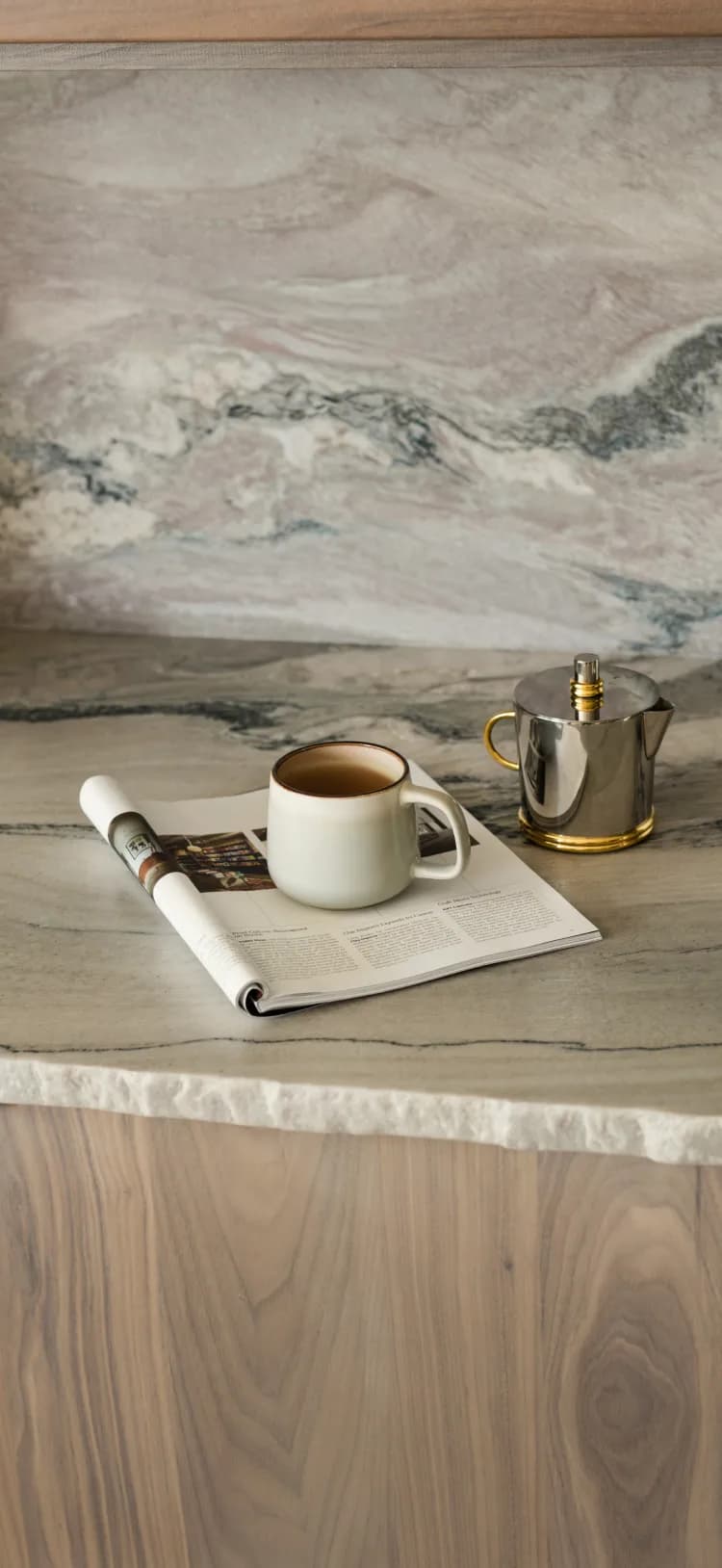

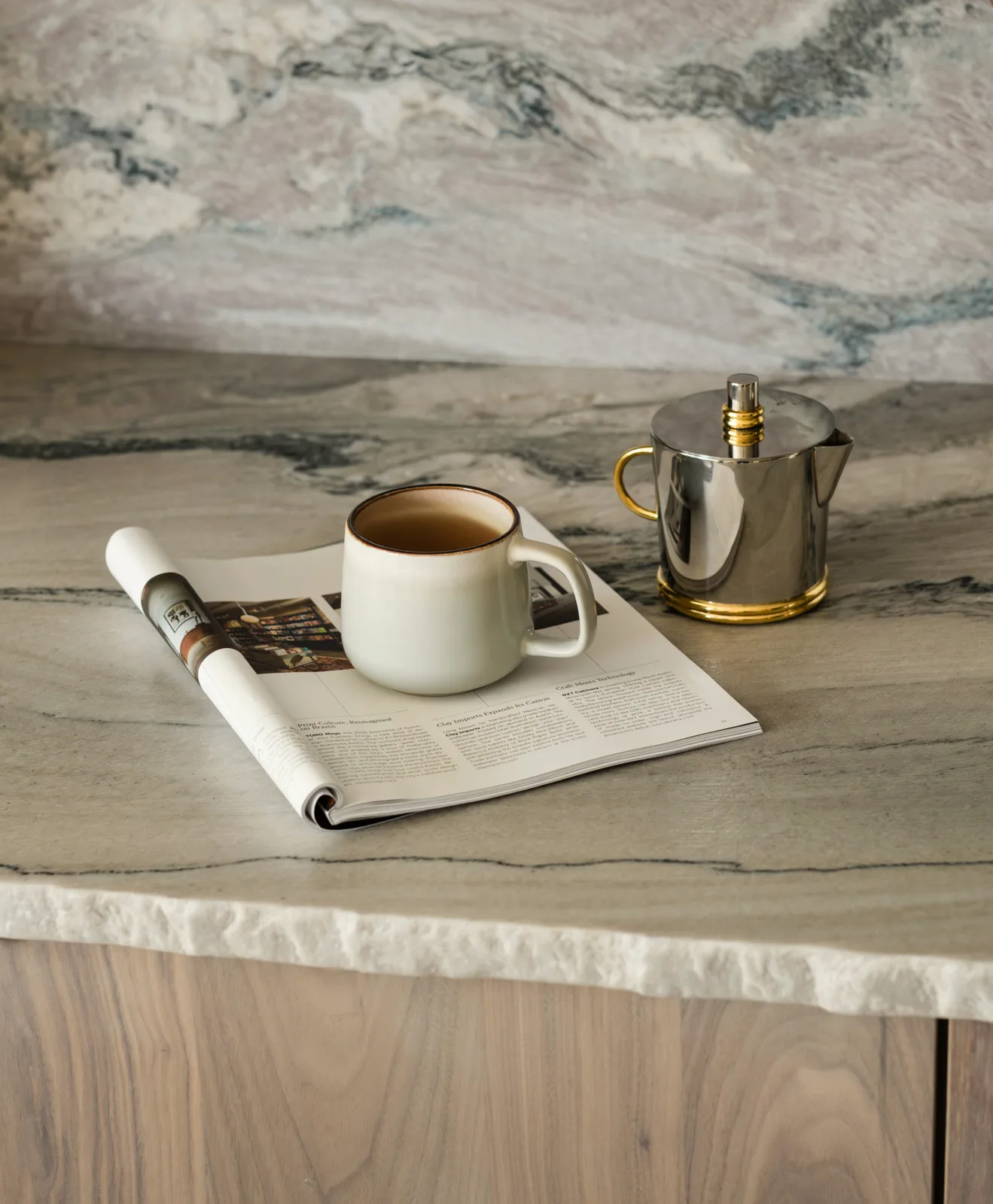



Quartz is made in a factory, so its color follows a recipe and each production run carries a batch number. When a kitchen needs more than one slab, they should share a batch. Veined quartz still places its veins differently on every slab.

Countertop Slabs in Johns Creek, GA
A color name is only the starting point
Countertop slabs in Johns Creek, GA kitchens usually get picked by a color name first. That name covers a range, though. Two granite slabs sold under one name can differ in background tone, and quartz shifts slightly from batch to batch.
The gap tends to show up on install day. The small sample looked right. The slab that arrives has a darker cast, or a vein where you didn't expect one.
At Cabinet IQ of Gwinnett, we narrow the choice with you at your in-home design consultation. Samples sit right beside your cabinet doors. Natural stone is chosen from full slabs before anything is cut. Our own team then templates, cuts and installs it.
Quartz, granite & quartzite slabs
Each stone reaches your kitchen as a slab in its own way, and that changes how you choose it. Here's what to know about the three we're asked about most.
Granite is quarried in blocks, then sawn into slabs in sequence and sold in bundles. Slabs cut next to each other from one block look the most alike. Thin natural lines called fissures are part of the stone, not damage.
Quartzite often carries bold movement and small crystal pockets, and many slabs arrive with resin filling tiny natural gaps. One slab can look quiet at one end and dramatic at the other. That's why the whole face is worth seeing before you decide.
How choosing a slab works with us
Your stone decision happens in stages, from samples at home to the finished counter. Here's what each one involves.
Your first look at countertops happens in your own kitchen, at the free design session. We bring samples, so you can see quartz and stone in your light, beside your floors and a cabinet door.
Your 3D rendering then shows the counters with the rest of the new kitchen. That's the moment to spot a busy stone pattern fighting with a detailed door.
Granite, quartzite and other natural stone get approved as a whole slab, never from a chip. Many stone suppliers sell mainly to fabricators and installers, so we handle the order once you've chosen.
Bring a cabinet door along and set it right next to the slab. Check both ends of the slab as well, because color and movement can change along its length.
The number of slabs depends on your run lengths, the island and any stone backsplash. A standard quartz slab measures about 120 by 56 inches. Jumbo slabs reach roughly 130 by 65 inches.
We work out the count from your measured layout before you commit. Knowing it early also tells you whether a stone you love comes in a size your island needs.
Templating waits until the new cabinets are fixed in place, since the stone is measured off them. The pieces are then mapped onto your slab. A natural fissure can often go inside the sink cutout, where it's removed with the opening.
Our own team cuts, edges and installs the stone. Your slab stays with us from approval to install day.
Our showroom on Satellite Blvd in Duluth is opening soon. When it does, you'll be able to compare doors, finishes and countertop samples side by side. Until then, every stone decision starts in your home.
Planning slabs for larger Johns Creek kitchens
Long islands and kitchens that open onto a pantry or bar are common in Johns Creek. Both raise the amount of stone a project takes. Here are four features to plan for:
| Your kitchen | What it means for the slabs |
|---|---|
| An island longer than about 10 feet | It runs past a standard slab, so it needs a jumbo slab or a planned seam. |
| A butler's pantry or bar beside the kitchen | Buy every slab from one bundle or batch, so the pantry top matches the main run. |
| Waterfall ends on the island | The stone turns down both sides, so the island alone can use most of a slab. The veins should carry over the corner. |
| A full-height slab backsplash behind the range | It adds a slab to the count, and its pattern should line up with the counter below. |
Planning two or more of these? Ask for your slab count early, since it shapes both the price and which stones will work.
Checking a slab before you approve it
A few minutes at the slab catches most surprises. Look for these before you say yes:
- Run a fingernail across any line. A fissure feels flush, while a line that catches your nail may be a crack
- Look at the back. Mesh and resin there are normal support, but peeling or bubbled mesh is not
- Check filled spots on the face. Resin should blend with the stone, not show as dark patches
- Look at the cut edges, since that color is what your counter edge and sink opening will show
- Set the slabs side by side if your kitchen needs more than one
If something looks off, raise it before cutting starts. Once the stone is cut to your template, it can't go back to the supplier.

What's included with your countertops
Your countertops come with samples at the in-home consultation and a 3D rendering of them in your kitchen. Templating, cutting and installation are all done by our team. Sinks come from elsewhere, so have your model picked by template day, since the cutout is sized to it.
Still comparing stones?
Quartz, granite, quartzite and solid surface each suit a different kind of kitchen. Save photos of counters you like and bring them to the consultation, so we can find slabs with a similar look. If the counters are part of a bigger project, start with kitchen remodeling in Johns Creek.
View kitchen countertopsCountertop slabs near Johns Creek
Our team templates and installs countertops in Johns Creek and across the river in Gwinnett County. Design sessions take place in your home until the Duluth showroom opens. We also install countertops in:
Suwanee, Duluth, Lawrenceville, Buford, Sugar Hill, Hamilton Mill, Flowery Branch, Grayson, Snellville, Loganville, Lake Lanier.
Frequently asked questions
Slab price depends on the stone, its color group and how many slabs your layout needs. Cutting, edge work and cutouts add to the total. The kitchen cost estimator gives you a rough figure to start from.
A jumbo slab is a larger quartz format, usually around 130 by 65 inches. A standard slab is closer to 120 by 56. The extra size can cover a long island in one piece, without a seam.
Usually not. A fissure is a natural line that sits flush with the surface and runs with the stone's grain. A crack is an open break your fingernail catches on, and it's worth raising before cutting.
Mesh and resin on the back hold many natural slabs together while they're moved and cut. It's standard practice. Once installed, the back sits on the cabinets, so you'll never see it.
The color will be close, but batches can vary slightly. Veined quartz also lands its veins differently on each slab, so a sample shows color, not layout. Ordering all your slabs from one batch keeps them consistent.