Porcelain, Sintered Stone, and Dekton Countertops Explained
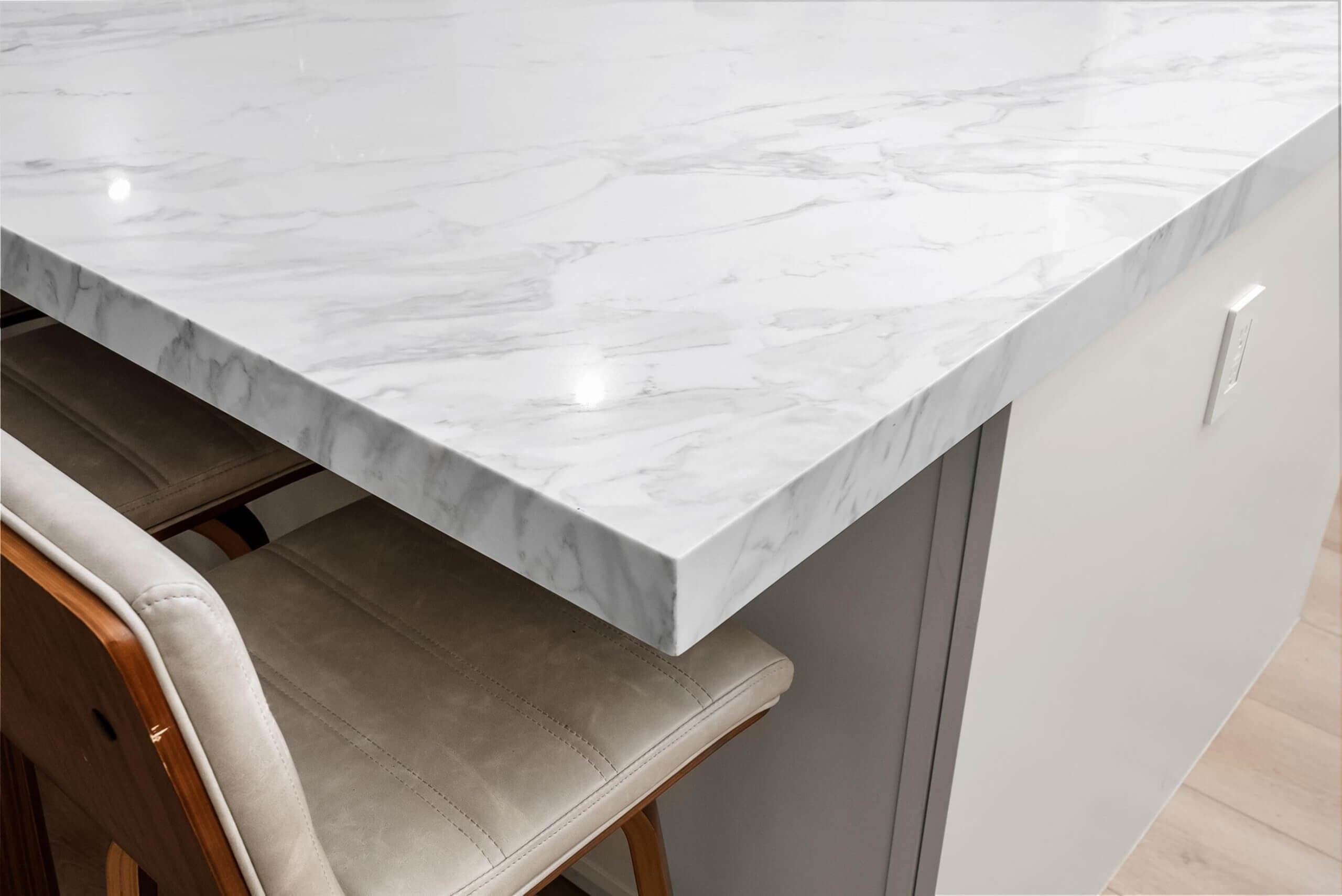
Choosing a countertop used to mean comparing a relatively familiar group of materials: granite, marble, laminate, solid surface, and, more recently, quartz. Today, homeowners have another category of high-performance surfaces to consider.
And for many of the newer options, the labels can feel like alphabet soup—porcelain, sintered stone, specific brands like Dekton—while the stakes are high because countertops can be expensive and disruptive to redo.
At first glance, porcelain countertops and sintered stone can look remarkably similar, and both combine sophisticated designs with characteristics that make them particularly interesting for kitchens, bathrooms, and even some outdoor projects when compared to the other natural or engineered stone materials.
However, they are not the same material. And to make the terminology more confusing, you'll also frequently see Dekton countertops included in the same conversation.
Most explanations either get lost in chemistry or skip the real-world tradeoffs that fabricators, installers, and designers deal with every week. This guide is information to help you ask better questions, not a substitute for project-specific advice from a local professional who has seen how these materials behave in the field.
But, by the time you’re done, you’ll know what porcelain and sintered stone actually are, how they compare to quartz and natural stone, where they shine (and where they don’t), and how to decide if these ultra-compact surfaces make sense for your kitchen or investment property.
Why Kitchen Designers Frequently Group Sintered Stone and Porcelain Countertops Together
Sintered stone and porcelain countertops are ultra-dense, engineered slabs made by fusing carefully selected minerals under extreme heat and pressure, without the resins used in many quartz products.
That process creates a thin but very hard, low-porosity surface that offers strong stain resistance, dependable UV resistance, and brief fire resistance and heat tolerance while delivering tightly controlled colors and patterns.
In practice, porcelain slabs sit at the more ceramic, tile-adjacent end of this family, while sintered stone brands blend ceramic ingredients with minerals such as quartz and glass into thicker, ultra-compact slabs.
Fabricators who handle these materials every week tend to group them together as one design toolkit: large-format tiles or surfaces that can run across countertops, full-height backsplashes, and even wall or cabinet cladding for a seamless, modern look.
However, it's worth taking a few moments to clarify how these two manufactured stone materials differ before deciding which will be the better option for your kitchen.
What Are Porcelain Countertops?
Porcelain has been used for tile and other architectural surfaces for generations, but advances in manufacturing have made it possible to produce much larger porcelain slabs suitable for countertops, walls, floors, and other applications.
Porcelain is a type of ceramic manufactured primarily from refined natural clays and minerals.
During the manufacturing process, these raw materials are formed into a dense surface and fired at extremely high temperatures. The resulting material has very low water absorption and can provide impressive resistance to heat, stains, and everyday wear.
For countertops, the important development is format.
Instead of assembling a work surface from numerous small tiles and grout joints, manufacturers can now produce large porcelain slabs. These slabs allow fabricators and interior designers to create expansive kitchen countertops, islands, backsplashes, bathroom countertops, and bathroom vanities with relatively few seams.
You may encounter several terms when researching these products, including large-format porcelain, porcelain slab tiles, porcelain slabs, and porcelain stoneware countertops.
Product composition, thickness, dimensions, finishes, and approved uses can vary by manufacturer, so the specifications for the particular collection matter more than the terminology alone.
Why Kitchen Interior Design Now Loves Porcelain Countertops
One of porcelain's biggest design advantages is the amount of control manufacturers have over its appearance.
A porcelain slab can reproduce the visual character of marble, granite, concrete, metal, and other natural stone surfaces without requiring the countertop itself to be quarried from a block of stone.
Manufacturers can offer collections with subtle movement, dramatic veining, neutral colors, contemporary patterns, and a variety of surface finishes.
That versatility makes porcelain suitable for considerably more than kitchen countertops. Depending on the product and its manufacturer's specifications, it can be used for bathroom vanities, wall cladding, residential kitchens, and even some outdoor surfaces.
Porcelain is also highly dense and typically does not require the periodic sealing associated with many natural stone countertops. For a homeowner who loves a marble-inspired appearance but wants a low-maintenance manufactured surface, that combination can be compelling.
What Is Sintered Stone?
Sintered stone takes a different manufacturing approach to creating a dense mineral-based surface.
The precise formulation and production method differ among manufacturers, but sintered surfaces are generally created from selected mineral raw materials that are compacted and subjected to both intense pressure and high temperatures.
This process bonds the particles together to form a highly dense slab.
The Sintering Process
The name of the countertop material comes from the sintering process itself.
In simplified terms, sintering uses heat and pressure to consolidate mineral particles into a solid material without treating the slab like a conventional poured resin product.
That distinction is particularly useful when comparing sintered stone with engineered quartz.
Conventional quartz countertops typically combine mineral content, including natural quartz crystals, with synthetic adhesives (polymer binders) or petroleum-based resins.
Sintered surfaces use a different composition and manufacturing process. The exact ingredients should always be checked against the technical information supplied by the individual manufacturer rather than assuming every product marketed within a category is identical.
Is Sintered Stone Actually Natural Stone?
Not in the same sense as granite or marble.
Granite and marble are geological materials extracted from the earth and cut into slabs. A sintered stone slab is manufactured.
The confusion comes from its ingredients. Sintered surfaces can be made primarily from naturally occurring mineral materials, so descriptions such as "natural minerals" or "mineral-based" may be accurate for a particular product. But transforming those raw materials through an industrial manufacturing process means the finished slab should not be confused with quarried natural stone.
That doesn't inherently make one material better than another. It simply tells you what you're buying.
Natural stone offers geological variation that is genuinely unique to the slab. Sintered stone gives manufacturers considerably more control over characteristics such as color, pattern, format, and performance.
What Are Dekton Countertops?
Dekton is a branded surface produced by Cosentino, rather than the generic name for all sintered stone.
This is an important distinction because "Dekton" is sometimes used conversationally as though it describes the entire material category, similar to the way a well-known brand name can become shorthand for a type of product.
For a homeowner comparing countertops, the useful way to think about it is:
Sintered or ultracompact surfaces describe a broader class of manufactured mineral surfaces; Dekton is a specific branded product within that conversation.
Dekton is available in numerous collections, colors, formats, patterns, and finishes, including designs intended to recreate the appearance of marble and other stone. Its performance characteristics have also made it a common consideration for applications where heat, UV exposure, and weather conditions matter.
As with porcelain countertops, however, specifications should be evaluated at the product level.
Don't assume that a performance claim made for one Dekton collection—or one manufacturer's sintered surface—automatically applies to every material marketed as sintered stone.
Porcelain vs. Sintered Stone: A Direct Comparison
| Feature | Porcelain Slabs | Sintered Stone / Dekton |
| Primary composition | Refined clays and minerals | Formulated mineral-based raw materials |
| Manufacturing | Formed and fired at high temperatures | Compacted and processed using intense pressure and heat |
| Designs | Extensive printed and stone-inspired designs | Extensive stone and architectural designs |
| Porosity | Very low | Very low |
| Heat resistance | High | High |
| UV resistance | Strong for appropriate products | Strong for appropriate products |
| Sealing | Generally not required | Generally not required |
| Common uses | Kitchens, bathrooms, walls, selected exterior uses | Kitchens, bathrooms, high-traffic and exterior applications |
| Fabrication | Specialized fabrication recommended | Specialized fabrication recommended |
The practical takeaway is that homeowners shouldn't choose between sintered stone or porcelain countertops solely by category name.
Two products that appear almost identical in a showroom can have meaningful differences in construction and recommended use.
Benefits of Porcelain and Sintered Stone Countertops
The growing interest in these surfaces isn't based only on their appearance. Their combination of durability, low porosity, heat resistance, and design flexibility addresses several of the concerns homeowners have when selecting kitchen countertops.
Durability and Everyday Performance
Kitchens ask a lot from a countertop.
There are spills, cooking oils, food preparation, heavy cookware, water around the sink, cleaning products, and the inevitable dropped utensil. Porcelain and sintered surfaces are designed to provide a hard, dense work surface capable of handling demanding environments.
Their low porosity also means liquids have little opportunity to penetrate the surface. Unlike many natural stone products, these materials generally don't require routine sealing to maintain stain resistance.
That doesn't mean they're indestructible.
Hard surfaces can still be damaged, and both porcelain and sintered stone tend to have exposed edges that can be particularly vulnerable to a concentrated impact. Cutting practices, cleaning recommendations, and care requirements should follow the surface manufacturer's instructions. Durability should mean well-suited to everyday use, not "impossible to damage."
Heat, Fire, and Temperature Resistance
Heat performance is another reason porcelain and sintered stone attract attention for kitchens.
The high-temperature processes used to manufacture these surfaces contribute to their ability to tolerate heat. Depending on the specific product, manufacturers may cite resistance to extreme heat, fire, thermal shock, or temperature fluctuations as performance characteristics.
Those qualities can be valuable around cooktops and other areas exposed to changing temperatures.
Still, "heat resistant" shouldn't automatically be translated into "nothing hot can ever hurt it," so don't throw away those hot pads yet.
Countertop performance also involves seams, edge treatments, cabinetry, adhesives, and installation conditions. Following the manufacturer's recommendations for trivets, hot cookware, appliances, and thermal exposure remains the sensible approach.
UV Resistance and Outdoor Applications
Countertop materials used outdoors face a challenge that indoor surfaces don't: continuous exposure to ultraviolet rays.
Strong UV resistance can therefore be an important advantage of appropriate porcelain and sintered products. It opens possibilities for outdoor kitchens, entertaining areas, outdoor terraces, and other exterior projects where a surface may experience sunlight and significant temperature fluctuations.
This is also an area where product selection matters. An attractive indoor countertop isn't automatically an outdoor countertop. Before specifying any surface for exterior use, confirm that the manufacturer approves that particular product, finish, installation system, and application.
For homeowners who want the same design language to extend from an indoor kitchen into an outdoor living space, however, porcelain and sintered surfaces can create some intriguing possibilities.

Sintered Stone and Porcelain Countertop Design Options
Performance matters, but countertops also occupy a huge amount of visual space in a kitchen. That's where porcelain and sintered stone have another advantage: manufacturers have considerable control over their designs.
Colors and Patterns
Today's collections include solid colors, concrete-inspired surfaces, subtle stone patterns, and dramatic marble-inspired veining. Some designs reproduce the long veins and color transitions associated with natural marble, while others deliberately embrace a more contemporary manufactured appearance.
Large-Format Slabs and Seams
Large slab formats can also reduce the number of visible joints across countertops and islands. You'll sometimes hear these installations described as having seamless slabs, but that's not always literally the case. Seams may still be necessary depending on the porcelain slab tiles' dimensions, countertop layout, transportation access, cutouts, and installation requirements.
Surface Finishes
Surface finishes add another layer of design flexibility. Depending on the manufacturer and collection, options may include polished, matte, textured, or finishes that create an appearance similar to a leathered finish found on some natural stone surfaces.
Edge Profiles
Edge design requires more thought.
Because many porcelain and sintered stone slabs are comparatively thin, the visible countertop edge may be constructed differently from a traditional thick granite slab. Experienced fabricators can use techniques such as mitered edges to create the appearance of a thicker countertop.
Available edge profiles vary by material and fabricator. Straight or eased edges are common, while beveled edges, bullnose profiles, and other treatments may be possible with particular products. The porcelain slab's thickness, pattern, fabrication requirements, and manufacturer recommendations should all be considered before choosing an edge simply because it looks good in a photograph.
Potential Drawbacks to Know Before Choosing Either Material
Porcelain and sintered stone have impressive performance characteristics, but no countertop material is perfect.
Before choosing either material, consider these potential drawbacks:
- Chipping: These are hard, durable surfaces, but their impact resistance can be lower compared to concrete or natural granite. A hard impact concentrated on an exposed edge can cause damage. That makes fabrication, handling, and installation particularly important.
- Specialized fabrication and installation: Large-format slabs can require specialized equipment and techniques for transportation, cutting, and installation. Sink openings, cooktop cutouts, corners, seams, and complex edge profiles all introduce areas where fabrication experience matters.
- Repair challenges: Damage to some natural stone or solid-surface materials can sometimes be blended or repaired relatively inconspicuously. Repairing a chip or break in a highly patterned porcelain or sintered surface may be more difficult, particularly when the damaged area interrupts printed veining.
- Variable price and availability: The slab itself is only one component of the installed cost. Fabrication complexity, edge construction, cutouts, transportation, local labor, and the availability of qualified fabricators can all influence the final investment.
Those factors are why countertop shopping shouldn't stop at selecting a color from a sample.
Porcelain and Sintered Stone vs. Quartz, Granite, and Marble
Homeowners rarely evaluate porcelain or sintered stone in isolation. They're usually deciding among several countertop materials, particularly quartz, granite, and marble.
Porcelain and Sintered Stone vs. Quartz
Quartz and sintered surfaces are both manufactured products, but their composition and manufacturing methods differ.
Conventional engineered quartz countertops typically combine high mineral content, including natural quartz crystals, with polymer binders or petroleum-based resins.
Porcelain is manufactured primarily from refined clay and mineral ingredients, while sintered surfaces use mineral-based formulations consolidated through specialized manufacturing processes involving heat and pressure.
These differences can affect characteristics such as heat and UV performance. That can become especially important when considering countertops for exterior applications.
None of this means one category is universally better. Quartz remains popular because of its extensive colors and designs, established fabrication network, and broad availability.
The better comparison is between the exact products you're considering and the demands of your project.
Porcelain and Sintered Stone vs. Granite
Granite is a natural stone.
It is quarried, cut into slabs, finished, and fabricated into countertops. That gives every granite slab geological characteristics created by nature rather than a manufacturing design.
Porcelain and sintered stone take the opposite approach: manufacturers can exercise greater control over pattern, color, finish, and consistency.
Maintenance can differ as well. Some granite countertops benefit from periodic sealing, depending on the particular stone and finish, while porcelain and sintered surfaces generally do not require routine sealing.
The decision often comes down to priorities. If you want authentic geological variation, granite has something a manufactured surface cannot truly duplicate. If you want controlled veining, low porosity, and consistency between slabs, a manufactured surface may be more appealing.
Porcelain and Sintered Stone vs. Marble
Marble remains one of the most recognizable materials in kitchen design, which is precisely why so many porcelain and sintered stone collections imitate it.
These manufactured surfaces can provide dramatic veining options inspired by marble without sharing every characteristic of the natural material. Natural marble can develop patina and is susceptible to issues such as etching from acidic substances. For some homeowners, those characteristics are part of marble's beauty. For others, they create more maintenance than they want from a working kitchen.
Porcelain and sintered stone provide an alternative: the visual direction of marble combined with the performance characteristics of a manufactured mineral surface.
The tradeoff is authenticity. A porcelain slab marble-look countertop can be beautiful, but it isn't marble. Homeowners who specifically value the depth, variation, and geological character of natural stone should make that distinction part of the decision.
Where Do Porcelain and Sintered Stone Countertops Work Best?
The versatility of these materials allows them to be used in a variety of projects.
Residential Kitchens
For residential kitchens, porcelain and sintered stone can be strong candidates for homeowners seeking low-maintenance, stone-inspired designs, low porosity, and high resistance to heat and everyday wear.
Large slab formats also work particularly well with contemporary islands and backsplashes, where minimizing visual interruptions is part of the design.
Bathroom Countertops and Vanities
Low porosity also makes these surfaces worth considering for bathroom countertops and bathroom vanities, where regular exposure to water, cosmetics, soaps, and cleaning products is expected.
The broad range of colors and finishes can make it easier to coordinate countertops with cabinetry, tile, flooring, and fixtures.
Outdoor Kitchens and Terraces
Suitable porcelain and sintered products can be especially interesting for outdoor projects because of their resistance to UV ray exposure and temperature changes.
Outdoor kitchens, bars, and outdoor terraces expose their surfaces to conditions that simply don't exist inside the home. UV resistance, moisture exposure, heat, cold, and temperature fluctuations, therefore, need to be considered together.
Always verify that the specific surface is approved by its manufacturer for the intended exterior application.
High-Traffic Professional Spaces
The durability and low-maintenance characteristics of these materials can also make them candidates for selected high-traffic professional spaces.
Commercial applications introduce their own building codes, fabrication requirements, cleaning protocols, and performance demands; however, residential product assumptions shouldn't automatically be carried into a professional environment.
Caring for Porcelain and Sintered Stone Countertops
One attraction of both materials is relatively straightforward maintenance. Nonetheless, know this: Low maintenance does not mean no maintenance.
What it does mean is that these materials typically require an elaborate care routine when used appropriately.
Some simple rules are:
- For routine care, spills should be cleaned rather than allowed to accumulate.
- Homeowners should use manual cleaning products and methods recommended by the surface manufacturer.
- A cleaner that is appropriate for one countertop isn't automatically appropriate for every other one.
- Routine sealing generally isn't required for porcelain or sintered surfaces because of their low porosity. That's a meaningful difference for homeowners accustomed to natural stone surfaces that may require periodic sealing.
It's still worth keeping the manufacturer's care documentation. That provides specific guidance about stubborn stains, chemical exposure, abrasive products, cookware, and any cleaning products that should be avoided.
Installation Matters: Choose an Experienced Fabricator
The performance of a countertop depends on more than the material.
Porcelain and sintered stone slabs require careful templating, transportation, cutting, edge fabrication, and installation. Sink and cooktop openings must be planned correctly, seams need to be positioned thoughtfully, and the supporting cabinetry needs to be properly installed and prepared before the countertop goes into place.
This is one reason the experience of the fabricator matters so much.
Different materials can require specific blades, equipment, handling procedures, adhesives, edge techniques, and installation methods.
Manufacturer-approved fabrication guidelines should therefore be part of the project, and not an afterthought.
The countertop also needs to be considered as part of the complete kitchen.
Cabinet IQ's remodeling process includes professional measurements, design planning, product selection, a 57-point design quality assurance check, and professional installation, rather than treating each component as an isolated purchase.
That coordination becomes especially valuable when an expensive, large-format slab needs to align precisely with cabinetry, appliances, sinks, walls, and the overall kitchen design.
Are Porcelain or Sintered Stone Countertops Right for Your Kitchen?
The best countertop isn't necessarily the one with the longest list of performance claims.
It's the one whose appearance, maintenance requirements, fabrication needs, price, and performance fit how you'll actually use the space.
Consider porcelain countertops if you want:
- A thin, contemporary slab aesthetic
- Extensive colors and stone-inspired designs
- Low porosity and straightforward maintenance
- Strong heat and UV performance
- A countertop that generally doesn't require sealing
Consider sintered stone or Dekton countertops if you want:
- A dense, high-performance manufactured surface
- Strong heat, fire, and UV characteristics
- Indoor and potential outdoor design flexibility
- Large-format architectural designs
- An alternative to conventional quartz or natural stone
Consider natural stone if you prioritize:
- Authentic geological variation
- The unique characteristics of individual granite or marble slabs
- The depth and natural irregularities that manufactured designs intentionally imitate but cannot literally reproduce
Whichever direction you choose, compare actual slab samples and technical specifications rather than making the decision from online photographs alone.

Frequently Asked Questions About Porcelain and Sintered Stone Countertops
Is Dekton the Same as Porcelain?
No. Dekton and porcelain share some characteristics, including mineral-based ingredients and high-temperature manufacturing, but they aren't identical products. Porcelain is a ceramic material traditionally based on refined clays and minerals. Dekton is Cosentino's branded ultracompact surface manufactured using its own formulation and production process.
Is Dekton the Same as Sintered Stone?
Dekton is commonly discussed within the broader category of sintered or ultracompact mineral surfaces, but Dekton is a brand name, not the generic name for all sintered stone. Other manufacturers produce their own sintered surfaces using different formulations and manufacturing processes.
Do Porcelain Countertops Need to Be Sealed?
Porcelain countertops generally do not require routine sealing because porcelain has very low water absorption. Always check the care instructions for the specific slab and installation, particularly where other materials are incorporated into seams or adjoining surfaces.
Do Sintered Stone Countertops Need Sealing?
Sintered stone surfaces generally don't require the periodic sealing associated with many natural stones. Manufacturer recommendations should still determine the proper care procedure for the specific product.
Can You Put Hot Pans on Porcelain or Dekton Countertops?
These materials are known for strong heat resistance, but the safest practice is to follow the manufacturer's instructions for hot cookware. A countertop installation includes more than the slab itself, and concentrated or abrupt thermal exposure can involve seams, adhesives, edges, and surrounding components.
Can Dekton Countertops Be Used Outdoors?
Many Dekton products are designed for exterior applications, and UV resistance is one of the characteristics that makes the material attractive for outdoor projects. Confirm that the specific product, finish, and installation method are approved for your intended application before specifying it.
Can Porcelain or Sintered Stone Chip?
Yes. Their surfaces are hard and durable, but exposed edges can chip if struck with sufficient concentrated force. Good fabrication, appropriate edge design, careful installation, and normal use all help reduce that risk.
Which Is Better: Porcelain, Dekton, Quartz, or Granite?
There isn't one countertop material that's best for every kitchen.
Porcelain may appeal to homeowners seeking thin slabs, stone-inspired designs, and low maintenance. Dekton and other sintered surfaces can be attractive when heat, UV exposure, and indoor/outdoor flexibility are priorities. Quartz offers enormous design variety and broad availability, while granite provides authentic natural variation that manufactured materials cannot duplicate.
Your budget, kitchen design, preferred appearance, maintenance expectations, fabrication options, and intended use should determine the winner.
Explore Your Countertop Options With Cabinet IQ
A countertop isn't just a surface placed on top of cabinets. Its thickness, pattern, edge profile, overhangs, seams, sink configuration, and relationship with the backsplash all influence how the finished kitchen looks and functions.
That's why material selection works best as part of the larger kitchen design process.
Cabinet IQ helps homeowners evaluate cabinetry and countertop options together, with a process that includes education, accurate measurements, 3D renderings, product selection, quality assurance, and professional installation. Cabinet IQ's countertop services are also part of its broader kitchen design and remodeling offering.
Whether you're comparing porcelain countertops, sintered stone, Dekton countertops, quartz, granite, or marble, look beyond the sample and consider how the material will perform in your actual kitchen.
Schedule a consultation with Cabinet IQ to compare countertop materials and find the right surface for your kitchen design.