
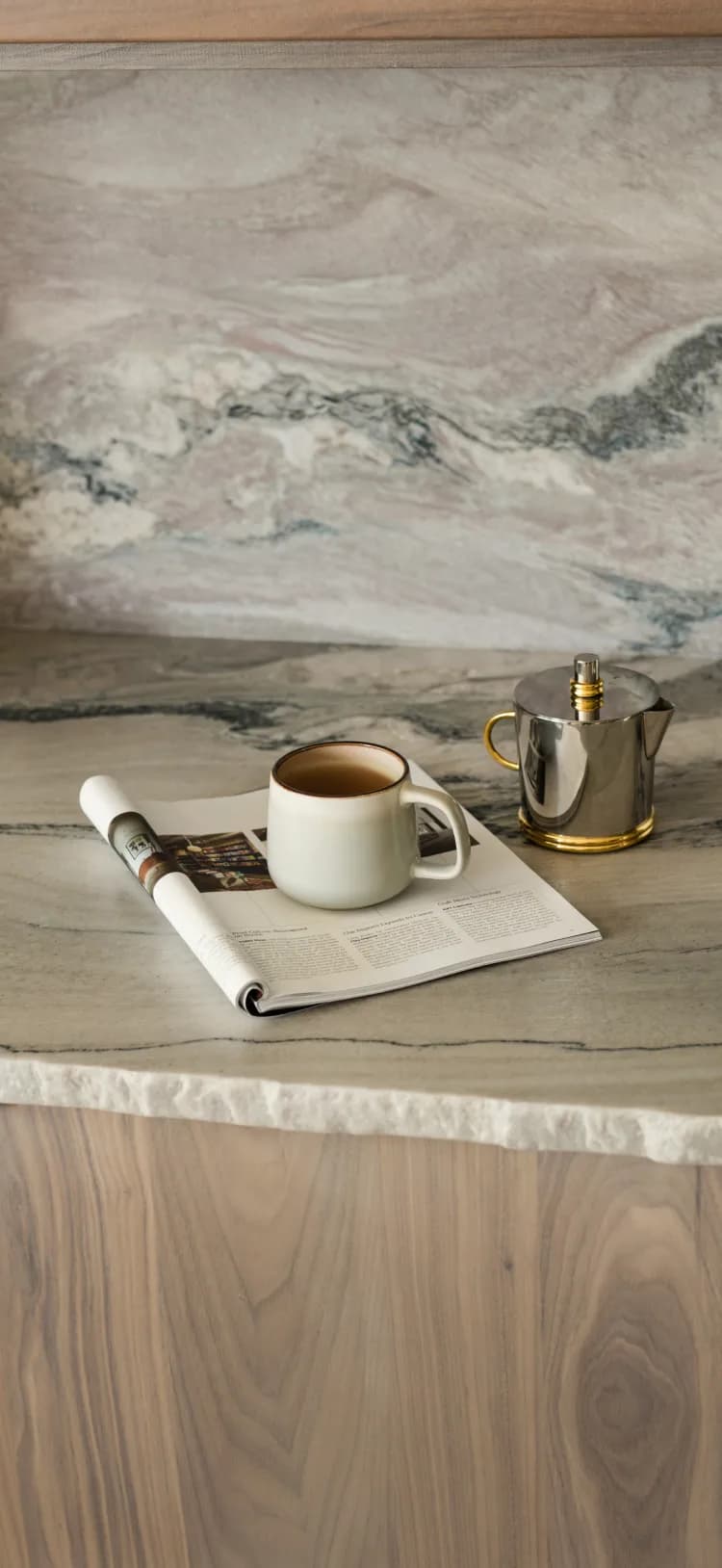

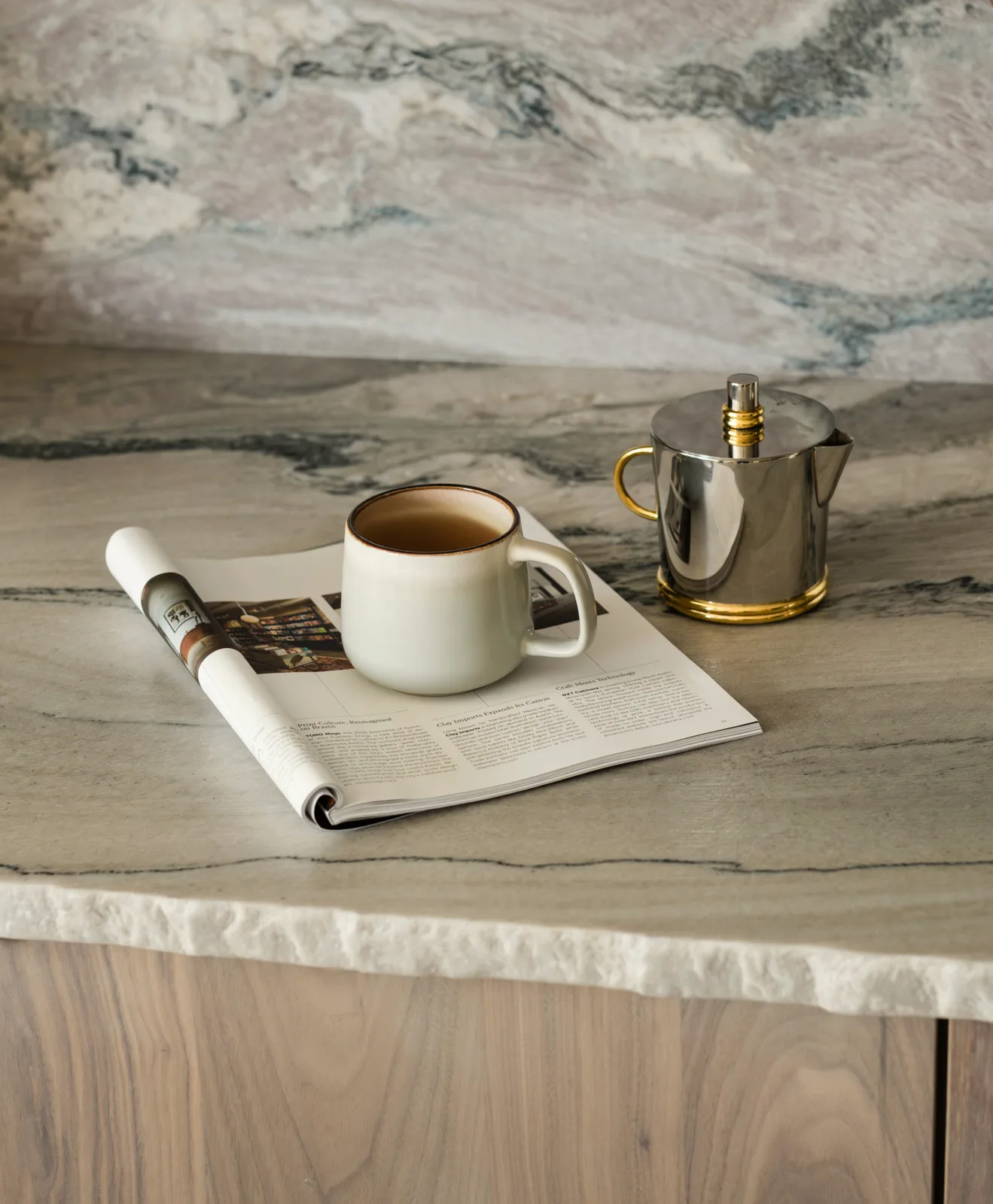
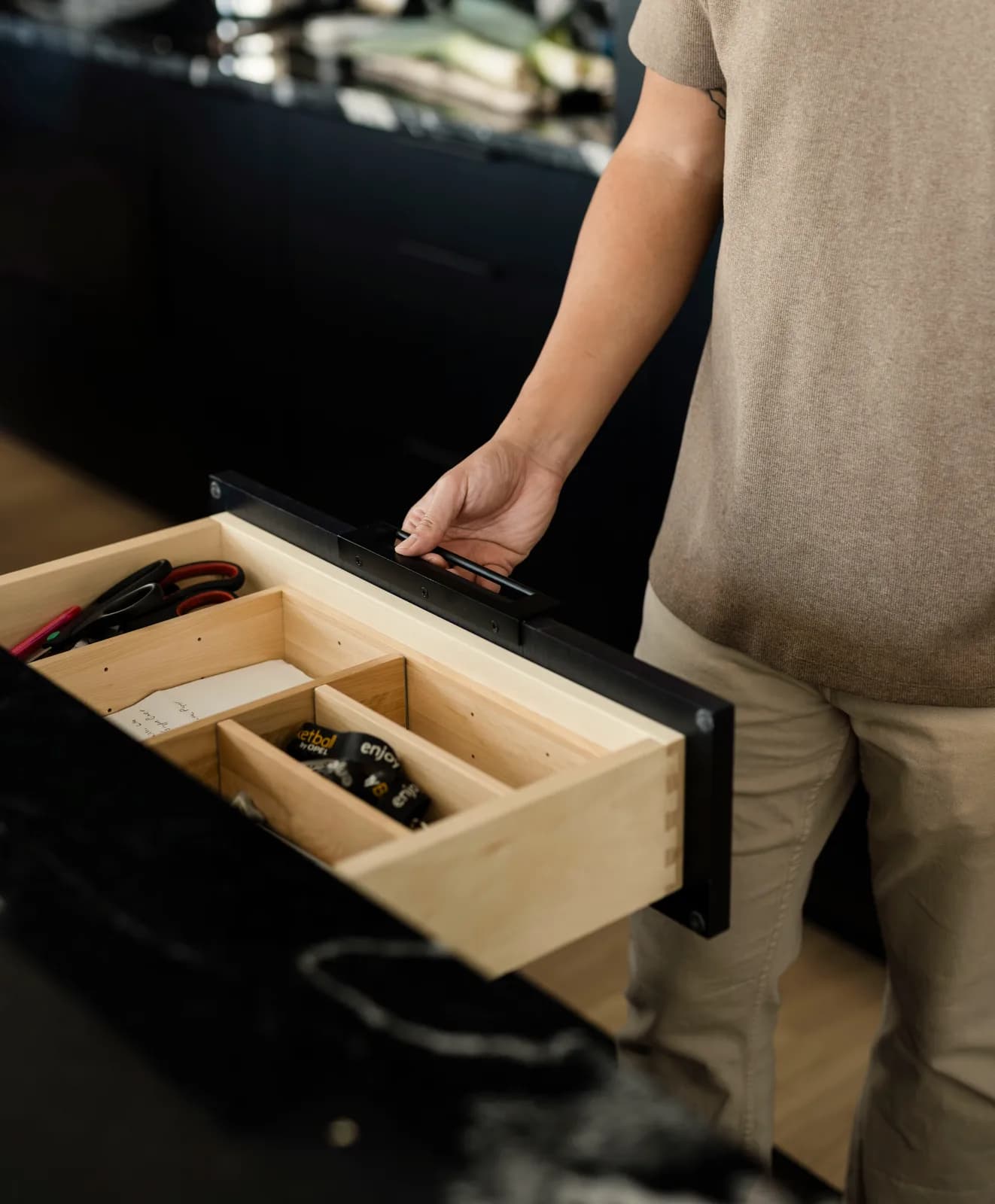
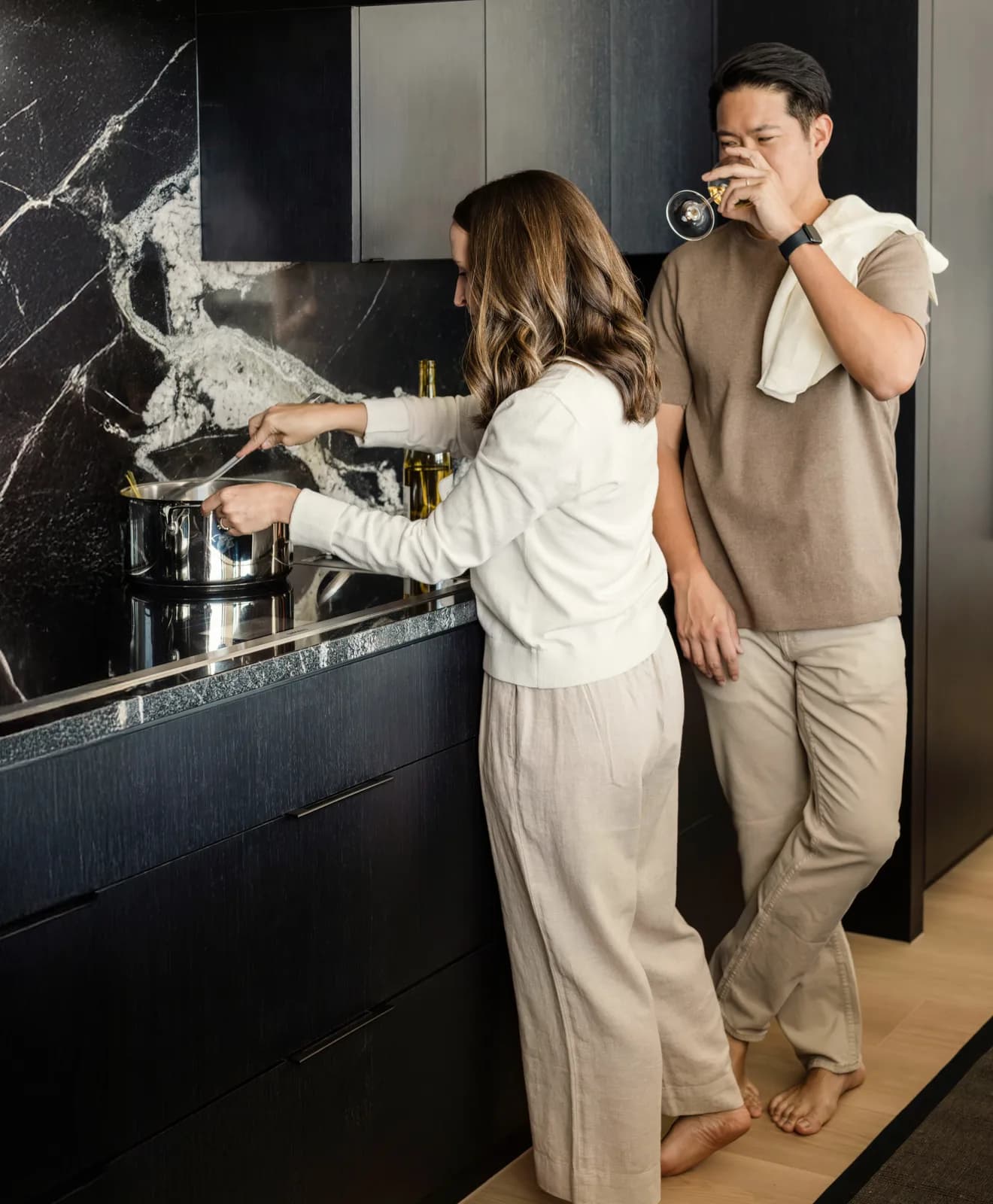
Granite is the natural stone most buyers compare quartz with. Each slab is a one-off, and it shrugs off heat better than resin-bound quartz. It does need resealing over the years, which quartz never asks for.
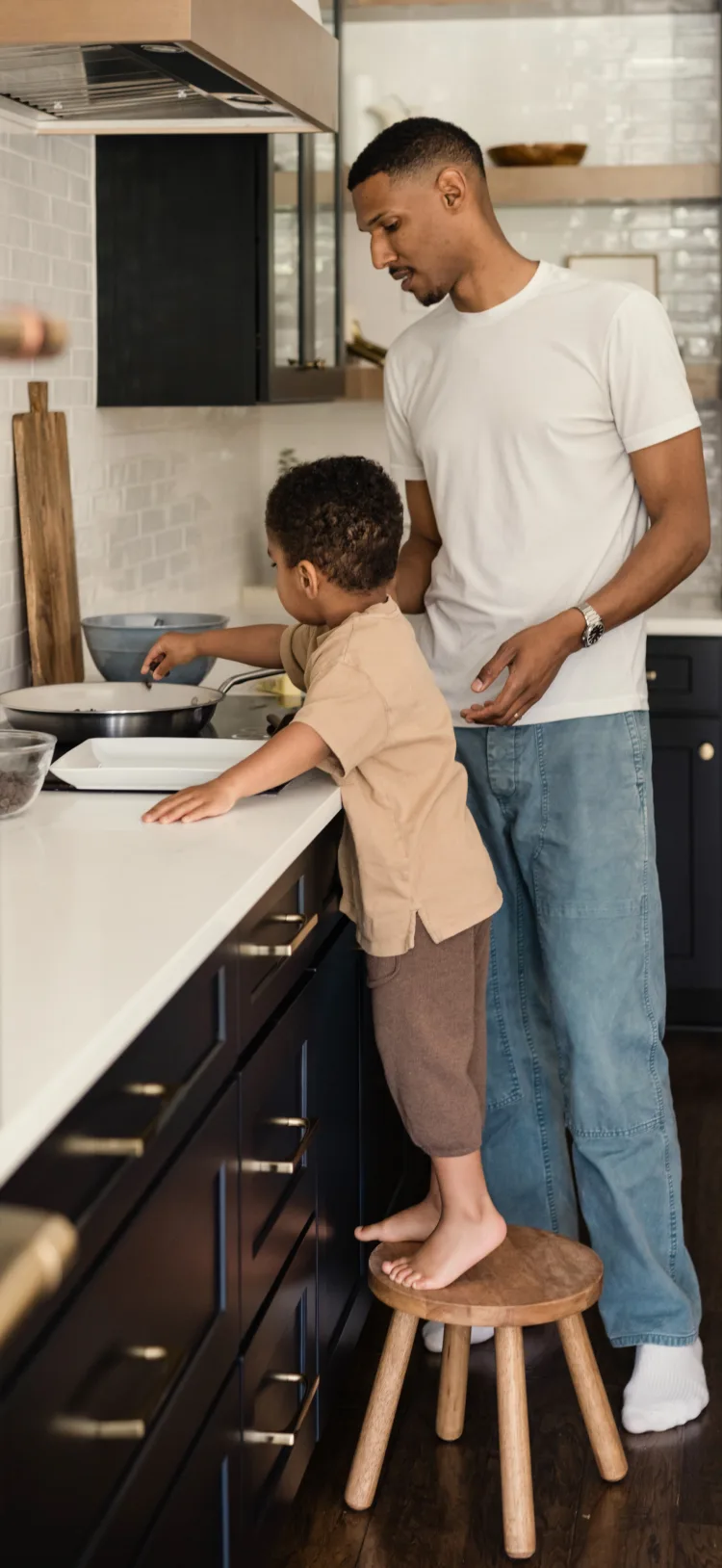
Quartz Countertops in Pittsburgh, PA
A counter you wipe down and never seal
Quartz countertops in Pittsburgh suit households that want a work surface they can clean and then forget about. Quartz is engineered mostly from crushed quartz, held together with resin and pigment. That makes the surface nonporous, so it never needs a sealer.
The payoff shows up in a hectic family kitchen in Gibsonia or Allison Park. School lunches get packed on the island at 7 a.m., and homework spreads across it by 4 p.m. Coffee rings and juice spills wipe straight off.
Cabinet IQ of North Pittsburgh plans your quartz together with the semi-custom or custom cabinets you choose. Our installers template the counters once the cabinets are in, then set the quartz themselves. Our Wexford showroom on Perry Highway is on its way.
How quartz fits the wider project
Most quartz orders come bundled with other kitchen work. These are the decisions that usually travel with it.
When the whole kitchen is being redone, the counters can't be measured until the new base cabinets are level. One team handling both keeps the two jobs in the right order. You also see the door style and the quartz together before ordering.
Quartz arrives as a slab and leaves as counters cut to your exact runs. Templating, cutting the openings for the sink and cooktop, then setting and seaming the pieces all happen in sequence. Knowing that order helps you plan when the kitchen is out of use.
Picking the right quartz for your kitchen
Quartz looks uniform from across a room, but the choices up close are wide. Work through brand, color and finish before you think about edges.
Charcoal and deep gray quartz give weight to a kitchen with white or light wood cabinets. A dark top grounds a large island and keeps the eye on the counter line. It also pairs well with brass or black hardware.
Dark quartz shows different things than white does. Flour dust, dried water spots and fingerprints stand out on a flat charcoal surface. A charcoal with fine flecks or soft veining hides them far better. Judge dark samples in the dim evening light your kitchen actually gets.
White quartz covers a wider spread of shades than the word suggests. Bright whites carry a faint blue or gray cast. Warm whites lean toward cream, and a few read almost ivory next to a painted door.
Hold the sample against your actual cabinet color, since two whites side by side rarely agree. A bright white quartz can make a creamy painted door look dingy. Check both under the bulbs you use at night, because warm LED light shifts whites more than daylight does.
Veined quartz gives the look of Carrara or Calacatta marble without marble's etching. The question to ask is whether the veins run through the slab or sit mainly on the face. Through-body veins carry over the edge, while face-printed patterns can stop at the profile.
Veins also have to meet at a seam. On an island longer than one slab, or a run that turns a corner, ask where each seam falls. Ask too whether the pattern will line up across it. A bold vein that stops dead at a joint draws the eye every time you walk in.
For finished kitchens with white and veined quartz, browse these quartz kitchen countertops for ideas.
Polished quartz has a glassy surface that wipes clean with one pass and bounces light around a dim room. Matte finishes, sometimes sold as honed or suede, look softer and more like stone. They show fingerprints and gray marks from pots and pans more readily.
Those metal marks sit on the surface and come off with a non-abrasive cleaner. If your family cooks with heavy cast iron daily, polished is the lower-effort choice.
What quartz handles, and what it doesn't
Quartz resists most everyday spills, but the resin holding it together sets a few limits. Here's how it holds up to the things that happen in a real kitchen:
| In your kitchen | How quartz responds |
|---|---|
| Coffee, red wine & tomato sauce | Nonporous, so spills stay on the surface and wipe away. |
| Turmeric, permanent marker & hair dye | Strong pigments can leave a shadow on light colors if they sit for hours. |
| A pan straight off the burner | The resin can scorch or discolor under direct heat, so use a trivet every time. |
| Slow cooker or electric griddle | Long, steady heat in one spot can mark the surface; set them on a board. |
| Hard water drips by the faucet | Minerals dry on top rather than soaking in, and lift off with a damp cloth. |
| Bleach, oven cleaner & degreasers | Harsh chemicals can dull the resin, so keep them off the counter. |
Most quartz problems trace back to heat, not stains. A trivet by the range prevents nearly all of them.
Everyday care for quartz countertops
Quartz needs less care than any stone counter. A soft cloth, warm water and a small amount of dish soap handle almost every cleanup.
- Scrape dried-on dough or candle wax with a plastic putty knife, never a metal blade
- Use a cleaner made for quartz on stubborn spots instead of scouring powder
- Rinse off any spray cleaner, since residue can leave a film that looks like a smear
- Cut on a board, which protects your knife edges as much as the quartz
You'll never need to seal it, so there's no maintenance calendar to keep.

What's part of your quartz project
It starts with a free consultation. You leave it holding a colored 3D plan of your kitchen, quartz included. Once your cabinets are installed and level, our team templates every run. The quartz is then cut, finished and set by our own installers. Sinks aren’t something we supply. Settle on yours before we template, since the opening is cut around the model you pick.
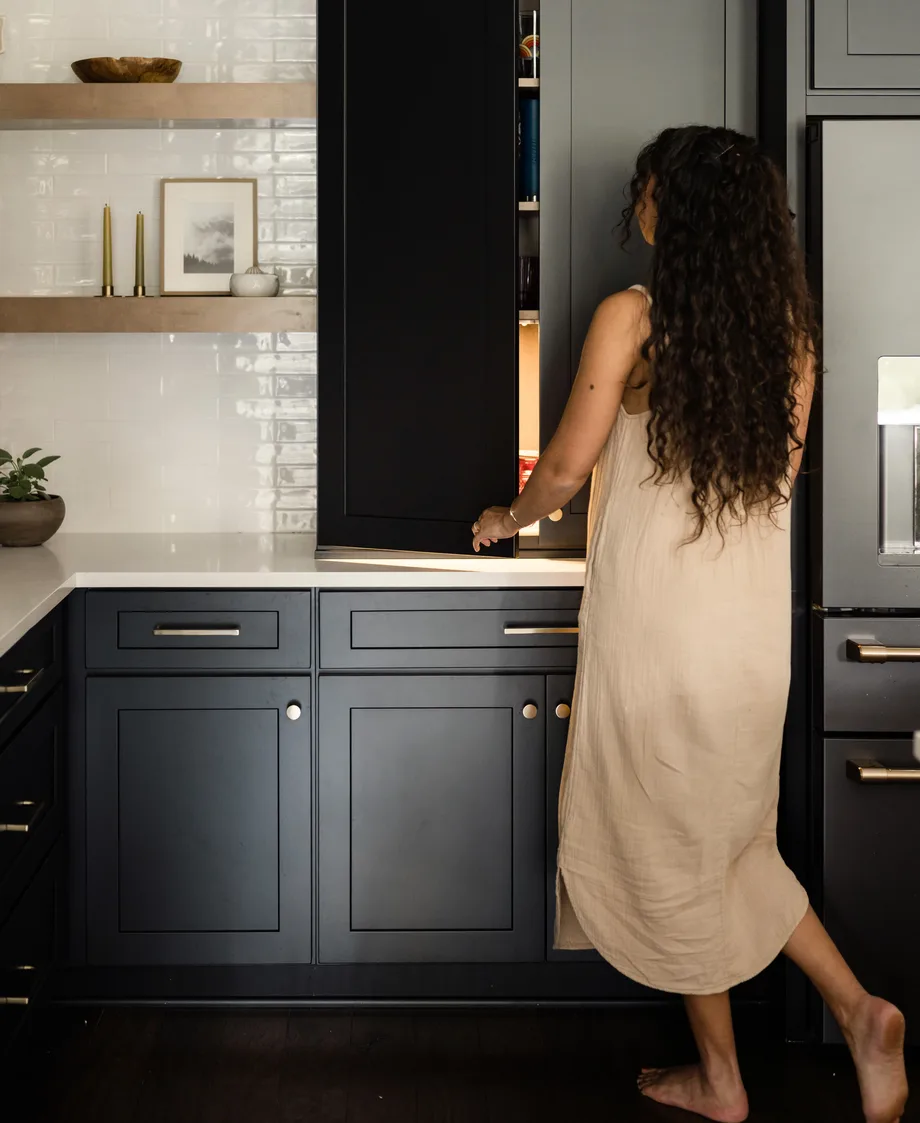
Weighing quartz against granite?
Quartz wins on predictable color and zero sealing. Granite wins on heat and on a pattern no one else will have. Seeing a sample of each next to your cabinet door usually makes the choice clear.
View kitchen countertopsQuartz countertops from Upper St. Clair to Cranberry
From Wexford, our installs cover the North Hills, the South Hills and the towns west toward the airport. We set quartz countertops throughout Pittsburgh and in:
Upper St. Clair, Mt. Lebanon, Carnegie, Coraopolis & Moon Township, Sewickley, Wexford, Cranberry Township, Mars, Gibsonia, Allison Park.
Frequently asked questions
Yes. The silica risk with engineered stone affects workers cutting and grinding slabs, who need dust controls. A finished, installed countertop doesn't release silica dust during normal use.
Quartz is a manufactured slab made from crushed quartz and resin. Quartzite is quarried natural stone, harder than granite and in need of sealing. The names sound alike, but they behave very differently.
Most of the time. A minor chip on an edge or corner can be filled with color-matched resin and polished flush. Repairs blend best on speckled or veined colors and show more on solid whites.
Yes. A full-height quartz backsplash uses the same material as the counter, so there are no grout lines to clean. Mention it early, because it changes how much slab your kitchen needs.
It can, slowly. Long exposure to harsh direct sun can yellow the resin in some quartz, most visibly on bright whites. For a counter in a sunroom or under a big south-facing window, ask which colors resist it.
The color collection comes first, then total square footage. Each seam, the edge profile, the sink cutout, the cooktop opening and any full-height backsplash add to it. Bring rough measurements to your consultation for a price that fits your kitchen.