




Granite Countertops in Tampa, FL

No Two Slabs Are the Same, Which Is the Point

Granite countertops in Tampa get chosen from the slab, not from a sample. Movement, color, and pattern shift within a single quarry, so the piece that ends up in your kitchen is specific to your kitchen.

That variation is what people want from granite and also what makes it harder to buy. A photo flattens it, and a four-inch chip tells you almost nothing about how a full slab reads across a run.

Cabinet IQ of Tampa handles slab selection, templating, and installation, so what you approve at the yard is what gets fabricated.

Granite Countertops in Tampa Homes

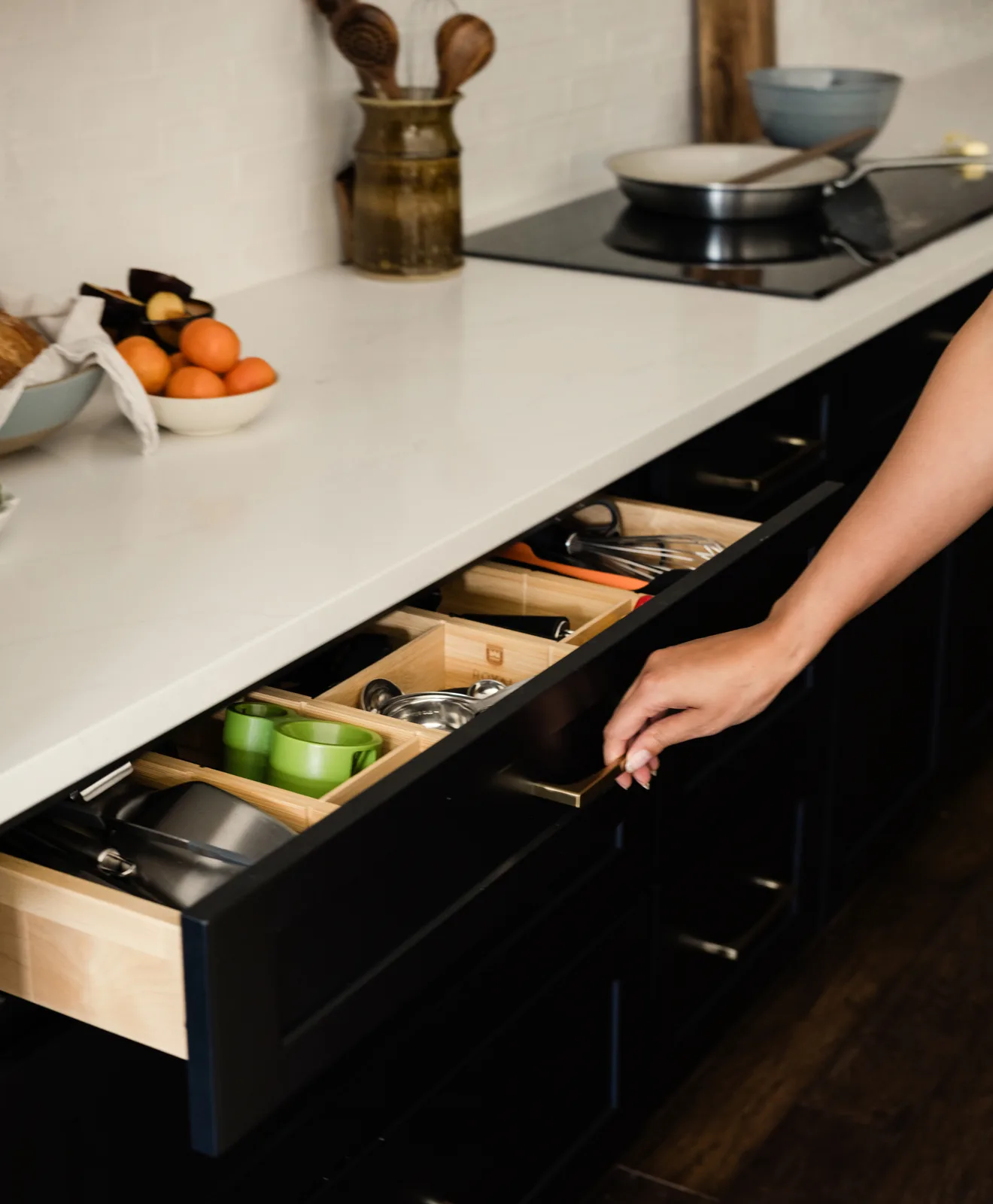
Granite worked into every surface in the house, from the main run to the vanity.

The main run is where granite earns its cost. It handles heat straight off the burner, takes daily knife work and cleanup without complaint, and outlasts most of what goes around it.

Slab selection matters most here because the run is long enough to show movement. Cabinet IQ of Tampa walks you through the yard so the piece you approve is the piece that gets cut.

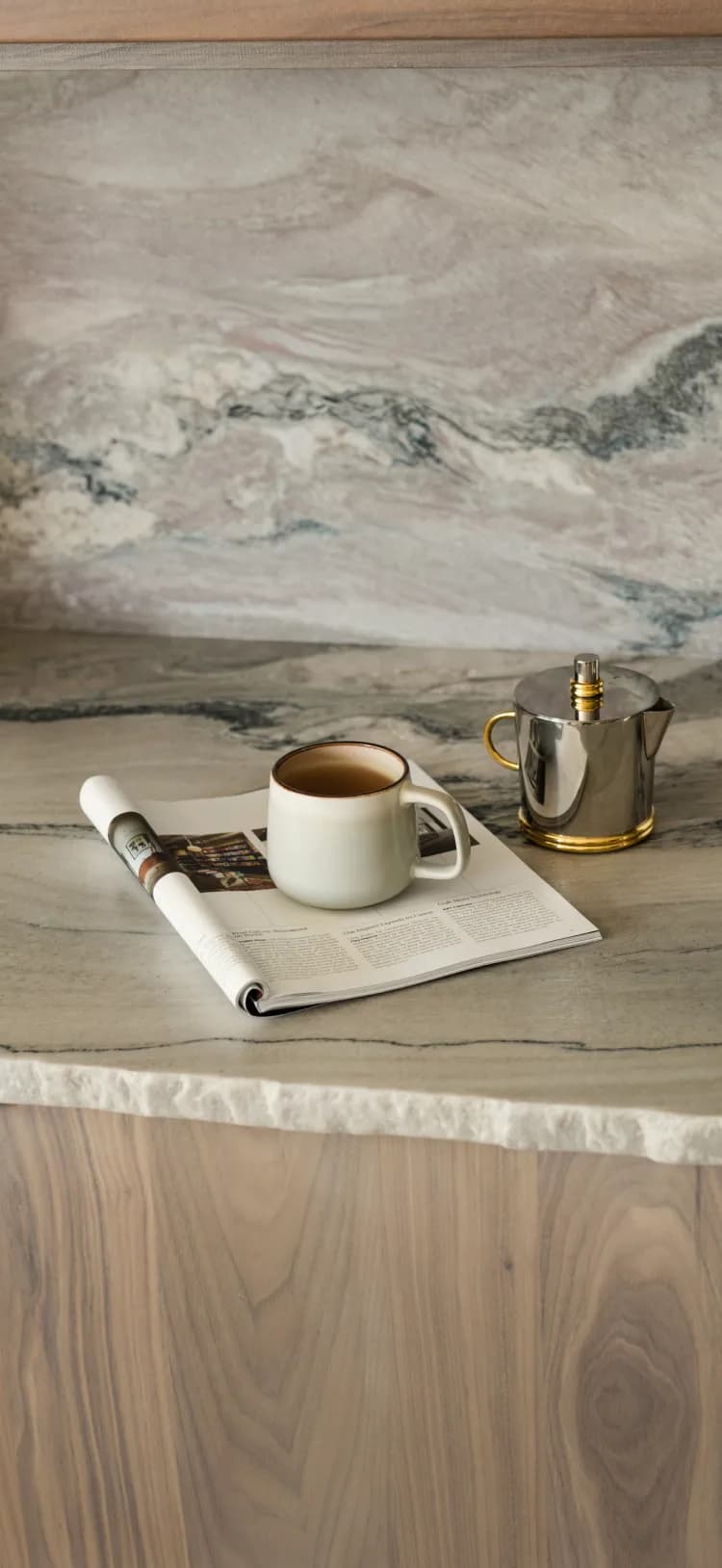
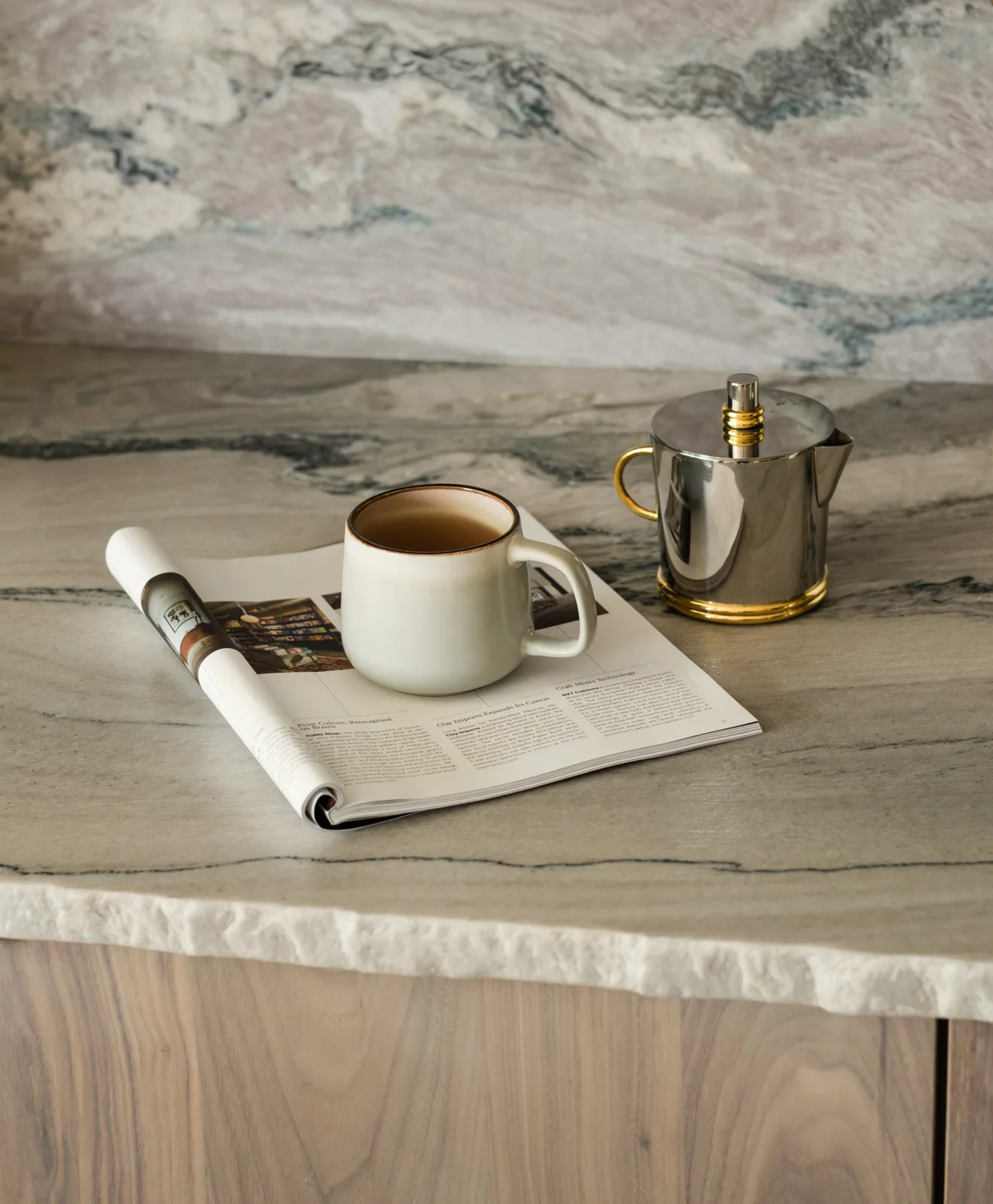
Granite countertop surface

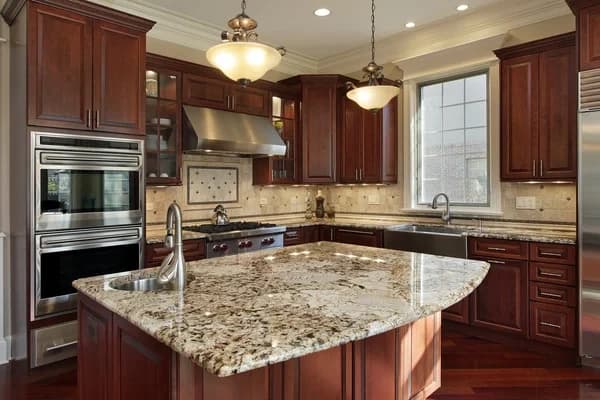
An island is seen from every angle in the room, so the slab gets chosen differently than a perimeter run. Movement that reads busy against a wall often reads deliberate on an island.

Seating overhang is the other decision. Past twelve inches the stone needs bracket or corbel support, and that gets planned during design rather than discovered at templating.

A granite-topped kitchen island in a cherry cabinet kitchen

A vanity takes a smaller piece, which opens up remnant slabs that would never cover a kitchen. That often puts a higher grade of granite in reach than the square footage would suggest.

Sink type drives the cutout. Undermount, vessel, and integrated each template differently, so the sink gets selected before fabrication rather than after.

A four-inch granite backsplash cut from the same slab continues the counter up the wall and eliminates the caulk line homeowners dislike. Full-height granite behind the range is the other option.

Full-height reads more finished and costs more, since it takes additional slab and precise fabrication around outlets and the hood. Both get templated with the counter.

Templating happens after the cabinets are set, measured against what is actually built rather than what was drawn. In older Tampa homes those two rarely match, and granite has no tolerance for the difference.

Seam placement, overhang, edge profile, and sink cutouts all get decided at that stage. Cabinet IQ of Tampa builds the cabinets underneath, so the slab is planned against them rather than fitted afterward.

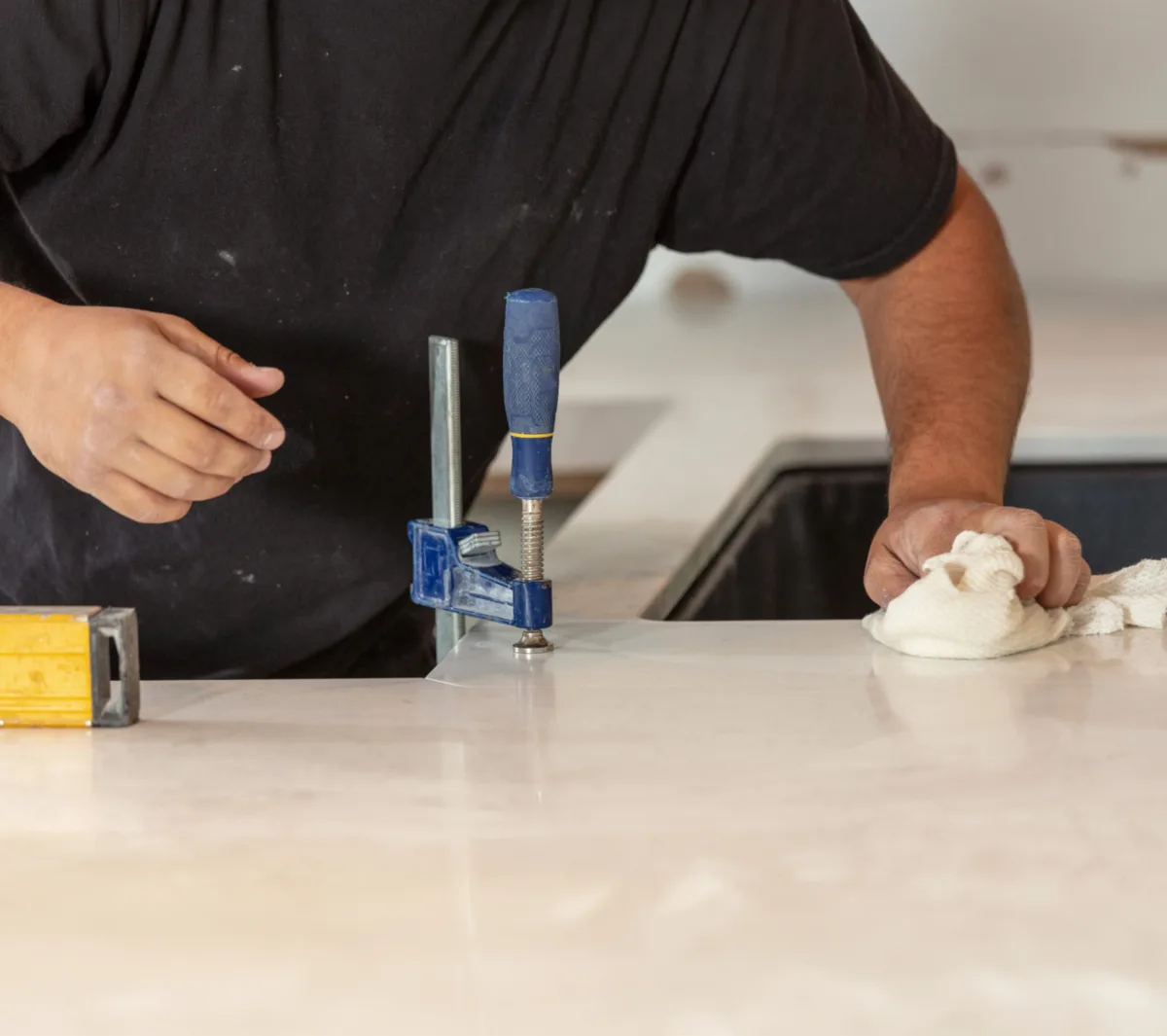
Countertop installation

Still Deciding on Material?

Granite is one of four surfaces worth considering. Quartz, quartzite, and porcelain each handle heat, sealing, and seam placement differently.

View kitchen countertops

FAQs

  • Granite is priced per square foot and varies widely by slab grade. Entry-level stones sit well below exotic slabs with heavy movement. Edge profile and cutout count add to it. Cabinet IQ of Tampa provides pricing during consultation.

  • Grades reflect rarity, thickness, and pattern rather than durability. A level one granite performs like a level five. You are paying for appearance and availability, so a lower grade is not a lower quality stone.

  • Test rather than schedule it. Leave water on the surface a few minutes. If it darkens, seal. If it beads, wait. Dense granites can go two years or more, porous ones need it annually.

  • Unsealed granite absorbs oil and standing water, which is where stains start. Cooking oil near the range and water at the sink are the two most common. A maintained sealer prevents nearly all of it.

  • Granite is hard and brittle. Cracks come from stress rather than use, usually inadequate support at an overhang, an unlevel cabinet run, or impact at a sink cutout. Proper installation prevents most of it.

  • Quartz overtook granite in volume, not in performance. Granite still handles heat better and offers variation quartz cannot reproduce. Lighter and more contemporary granites read current while the dark speckled stones of the 2000s do not.

  • Lighter granites with soft movement have replaced the dark uniform speckles that dominated a decade ago. Whites, greys, and warm neutrals pair better with the painted cabinetry most Tampa kitchens are choosing.

  • Small chips along an edge can usually be filled with color-matched epoxy and polished. Larger damage depends on location and pattern. Repairs are visible on uniform stone and nearly invisible on heavily veined slabs.

  • Three centimeters is standard for kitchens and installs without plywood support. Two centimeters is thinner, costs less, and typically requires a substrate. Mitered edges build apparent thickness from thinner stone.

  • No. Contrast usually works better than matching. Busy granite pairs with quiet cabinetry and the reverse holds true. Cabinet IQ of Tampa reviews slab and door samples together under the light in your kitchen.

  • Yes, and you should. Photos flatten granite and a sample chip shows a fraction of a slab. Selecting in person is the only way to know what movement lands in your kitchen.

  • Granite handles heat and moisture well, and Florida sun does not fade it the way it fades some engineered surfaces. Sealing matters more outdoors, since rain and irrigation keep the stone wet.

  • Granite contains trace natural radiation at levels well below any health concern, confirmed by EPA testing. It is used in millions of kitchens and poses no risk in normal residential use.