Kitchen Cabinet Door Styles: A Guide for Your Tampa Home
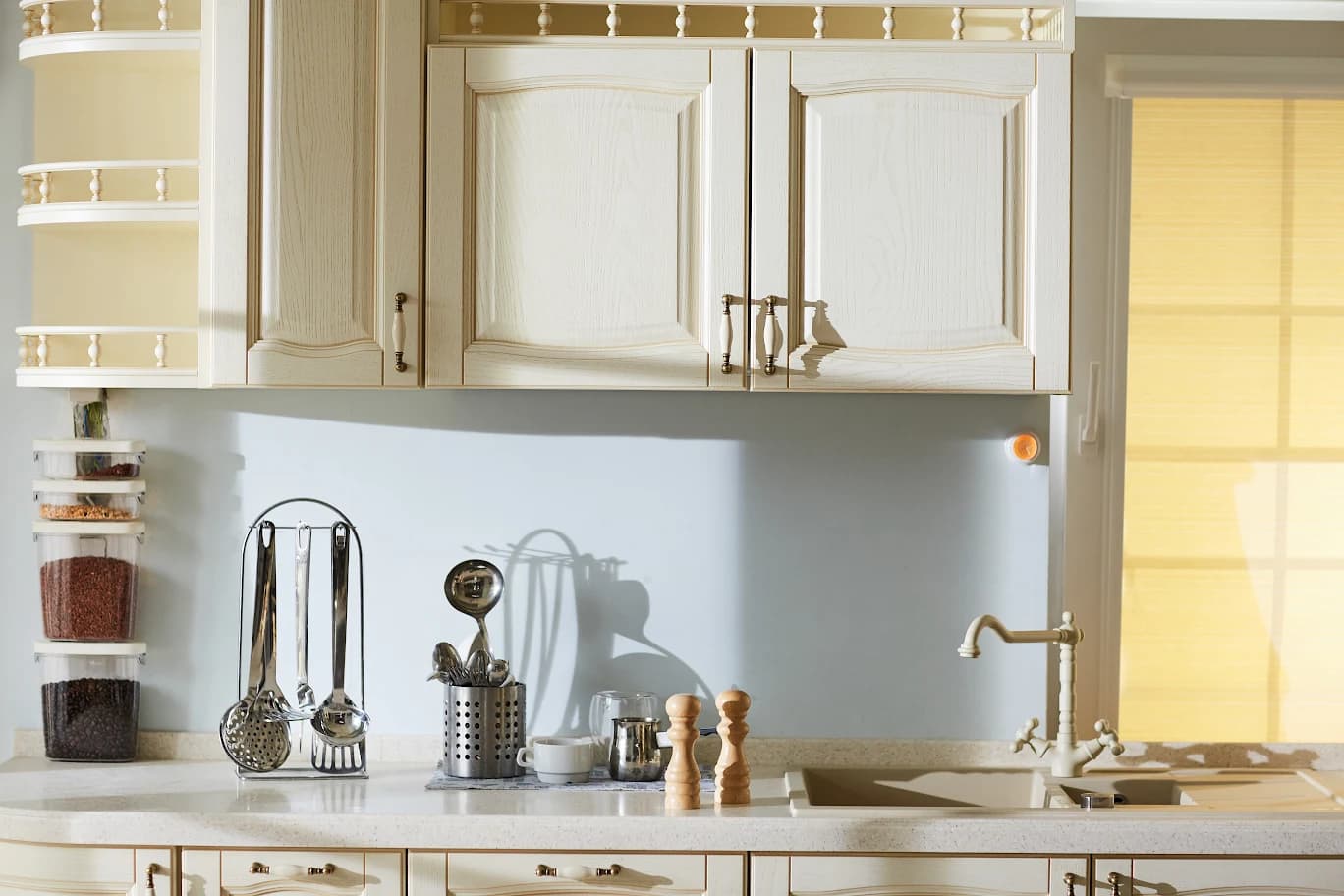
Kitchen cabinet door styles cover roughly seventy percent of the visible surface in a room, which means they set the style of a kitchen more than the countertop or the flooring does.
Homeowners still tend to choose them last, after color and layout are settled. That order works against you, because door profiles carry cost differences and finish limitations that are far easier to plan around than to discover halfway through a project.
Here is what each option means for your kitchen and where it makes sense.
Two decisions come before the door style
Before you compare kitchen cabinet door styles, you are really making two separate choices, and they interact.
The first is overlay. Full overlay doors cover nearly the entire cabinet face, leaving thin reveals between them. Partial overlay leaves several inches of frame exposed, which reads as more traditional and costs less.
Inset doors sit flush inside the frame, which is the most expensive option and the least forgiving, since the gaps around each door have to stay consistent as the house moves.
The second is cabinet construction. Framed cabinets accept any of the three overlay options, while frameless boxes work with full overlay only. If you have your heart set on inset doors, that decision has already been made for you.
Worth checking early: some door profiles are only produced at the custom cabinet level, so a profile you fall for in a showroom may not exist in the tier you budgeted for.
Shaker doors
A shaker door is a five-piece door with a flat recessed center panel and square edges on the surrounding rails and stiles. It has been the most requested profile in American kitchens for over a decade.
The reason is range. Shaker reads traditional in a painted cream, transitional in a soft gray, and nearly modern in matte black with slim hardware. It also photographs well, which matters more than most people admit.
Variations shift the effect. Narrow rail shaker uses thinner frames for a cleaner look, while wider rails feel heavier and more traditional. Some manufacturers offer a slight bevel or a beaded inner edge, which softens the profile without changing the category.
Rail width and edge detail vary between manufacturers, so two doors both sold as shaker can look noticeably different. That variation is one of the practical reasons choosing a cabinet company in Tampa matters as much as choosing the profile.
Cleaning is straightforward compared to detailed profiles, though the inner corners of the recessed panel still collect grease near a cooktop.
Slab doors
A slab door is a single flat surface with no frame or panel. It is the defining profile of modern kitchens, and it is the easiest door in a kitchen to wipe down.
Material matters more here than with any other profile. Wide flat surfaces show every seam and imperfection, so slab doors are usually built from thermofoil, laminate, or veneer over an engineered core rather than solid wood, which would move too much across that span.
Grain direction becomes a design decision. Horizontal grain running continuously across a bank of drawers creates the seamless look most people are picturing, and it requires sequencing panels from the same sheet.
Slab doors also expose hardware choices completely. There is no detail on the door to compete with, so pulls carry the entire visual weight.
Raised panel and cathedral doors
A raised panel door has a center panel that steps forward with a contoured edge. Depending on the profile, the effect ranges from subtle to ornate.
Cathedral doors add an arched top rail on wall cabinets, a look strongly associated with kitchens built between the mid-nineties and the mid two thousands. It reads as dated to many buyers now, though it remains appropriate in traditional and Mediterranean homes, which Tampa has plenty of.
Raised panel doors work best in stained wood, where the profile catches light and shows grain. In solid paint, the extra detail tends to read as busy rather than refined.
Expect more cleaning. Every contour is a place for cooking residue to settle, and painted profiles show it sooner than stained ones.
Glass front, beadboard, and accent doors
These are not usually the primary door style. They work as accents, used on a few cabinets to break up a long run.
Where those accents land is a layout question rather than a style one, and it gets worked out during kitchen design alongside sightlines and storage planning.
Glass front doors come with clear, frosted, reeded, or mullion inserts. Clear glass means the contents become part of the design, which suits a display cabinet and punishes an everyday storage cabinet. Frosted and reeded options give you the visual break without the commitment.
Beadboard center panels bring vertical grooves into the door. They suit coastal and cottage kitchens, and they are among the harder profiles to keep clean because each groove holds dust.
Louvered doors show up occasionally, mostly on pantry cabinets where airflow is useful.
Choosing kitchen cabinet door styles for a Tampa home
Two local factors deserve weight in this decision, and both get overlooked.
Humidity is the first. Wood gains and loses moisture as ambient conditions change, and it changes dimension as it does, a relationship documented in the USDA Forest Products Laboratory Wood Handbook. In practice, this affects painted solid wood five-piece doors most, where seasonal movement can open a hairline at the joint between panel and frame. Quality manufacturers account for it with engineered center panels, and it is worth asking what a given line uses.
Light is the second. Tampa kitchens get bright, direct light that flattens subtle profiles and exaggerates sheen. A satin finish that looked refined under showroom lighting can read glossy at home, and a door profile that seemed detailed can disappear entirely.
Construction quality sits underneath both. The Kitchen Cabinet Manufacturers Association certifies cabinet lines against a performance standard that includes door operation and finish quality, tested by independent laboratories. The certification seal is a useful filter when you are comparing lines that look similar in a showroom.
Style direction is the last layer. Kitchen design trends in Tampa have moved toward simpler profiles and warmer finishes, though a door style should outlive the trend that made it popular.
Seeing them side by side
Door samples behave differently in your kitchen than in a showroom, which is why designers send them home with clients.
Hold a sample against your own wall color, in your own light, at the times of day you actually use the kitchen. Pair it with a countertop sample as well, since a busy stone and a detailed door compete with each other in ways that photographs hide.
Narrow it down with someone who has seen the mistakes
Door style is a decision you live with daily and see constantly. Getting it right is less about picking correctly and more about ruling things out for the right reasons.
Cabinet IQ of Tampa walks homeowners through profiles, finishes, and overlay options together, so the choices reinforce each other rather than fight.
Book your free consultation with Cabinet IQ of Tampa today.