How Long Do Kitchen Cabinets Last? Lifespan by Material & Quality
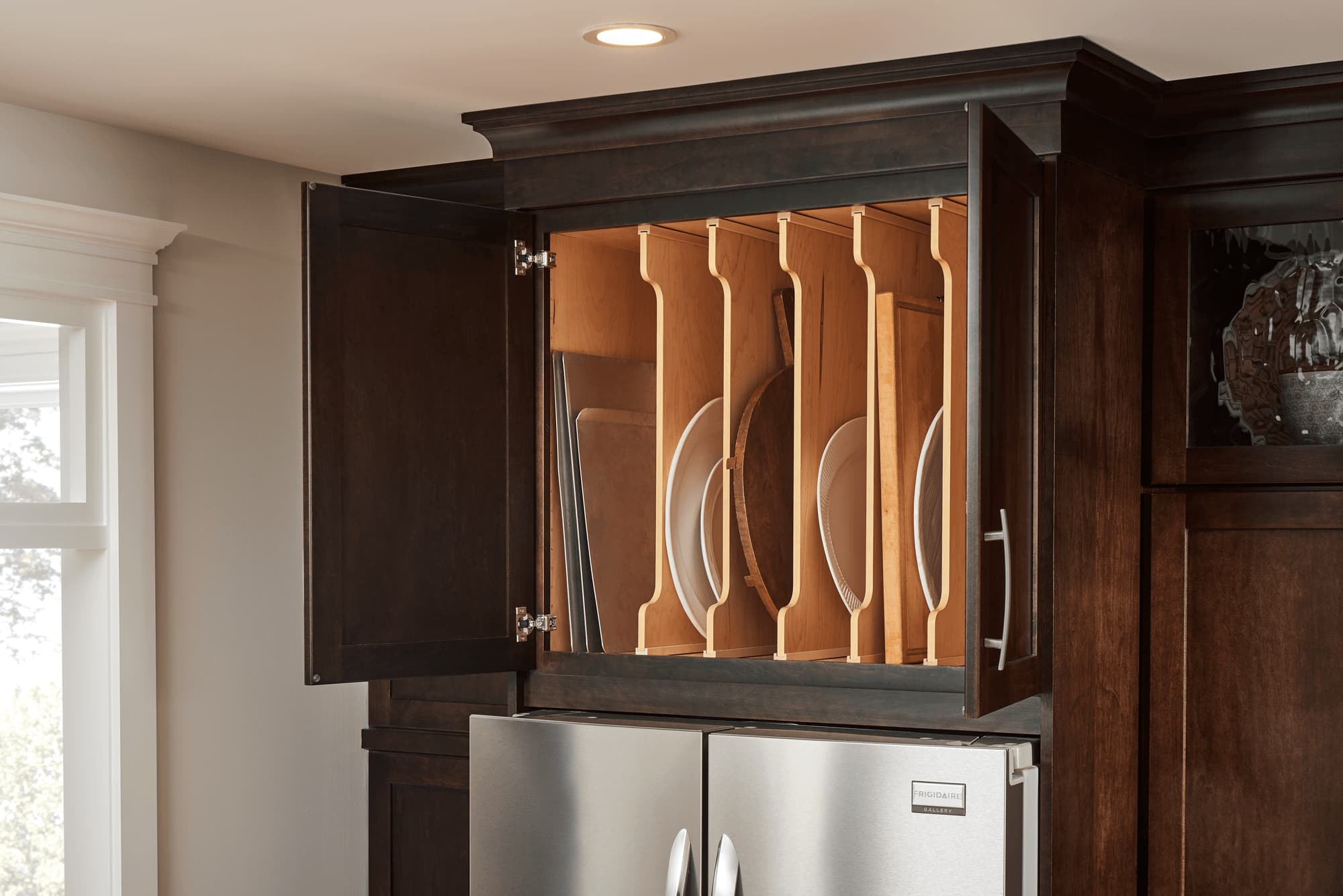
You probably see your kitchen cabinets dozens of times a day but only really notice them when something feels off: a sagging hinge, a swollen sink base, doors that never quite close right anymore.
That’s usually when the same questions show up: These aren't that old, are they? Did they wear out early? If I replace them now, how long will the next set actually last?
Many homeowners need to know just how long quality cabinets, hardware, countertops, and kitchen fixtures are supposed to last so they can decide if a full kitchen makeover is in order or just a quick paint job.
Don't worry, we're here to help. This guide gives you a practical, big-picture way to think about your kitchen's lifespan.
You’ll see how cabinet materials and build quality change the real number of years you get, what quality cabinets that last 20+ years have in common, how to distinguish between normal wear and tear and low-quality boxes, and how to match your next choice of cabinetry to how long you plan to stay in your home.
Why Kitchen Cabinets Often Wear Out Sooner Than Their Materials
In theory, well-built kitchen cabinets can stay structurally sound for decades.
However, in real homes, they’re usually replaced much sooner, and not because the box literally falls apart, but because life changes faster and:
- Families grow
- Cooking habits shift
- Appliances get bigger
- Styles date out
- The layout that once worked starts to feel cramped or inconvenient
Many of these changes appear long before the particle board or oak plywood boxes are truly “dead.”
Mostly, it's because day-to-day use quietly shortens the timeline.
A busy household that cooks most nights, has kids hanging on doors, and hosts often will stress hinges, shelves, and finishes far more than a low-use kitchen.
The Silent Kitchen Killer: Water Damage
Water and moisture damage are other big culprits for worn cabinet bases or peeling veneer.
Next to the bathroom, the kitchen is the living space where water and moisture need to be constantly under control, and that means looking out for:
- Slow water leaks under sinks and taps.
- Steam from the dishwasher.
- Constant splashes from cooking.
- Drips and spills from prepping food in work zones (countertops and kitchen islands).
- Wet mopping can swell cheaper cores, loosen screws, and warp doors.
- Moisture from poor ventilation after years of cooking.
On paper, a cabinet box might be capable of 30–50 years in ideal conditions; in practice, many kitchens are remodeled around the 10–20 year mark because function, style, or damage forces the decision.
How Cabinet Material Can Really Change The Lifespan of Your Kitchen
Material is one of the main reasons two kitchens of the same age can look so different.
Kitchen remodelers and installers can often predict which cabinets will fail early just by seeing what the cabinet doors and boxes are made from, because they see the same patterns across hundreds of homes.
Entry-level stock and builder-grade lines may use particle board or lower-grade MDF cores, especially when affordability is the main priority. Those materials can work well in dry, lightly used kitchens, but the cabinet bases, doors, and back panels will be more vulnerable to moisture damage, heavy loads, and repeated hardware stress.
Swelling edges, crumbly screw holes, and sagging sink bases are typical failure points.
Furniture-grade wood cabinet boxes, by contrast, have cross-laminated layers that hold screws better and tolerate normal humidity swings, which is why many upgraded stock, mid-range, and custom lines use plywood when they want 20+ years of service.
To connect materials to real-world lifespan, think in broad bands:
- Plywood boxes with solid-wood frames/doors – strong and repairable; often comfortable for 20–30+ years.
- Plywood boxes with high-grade MDF doors – smooth, stable doors; typically 15–25+ years with occasional repainting.
- Particleboard or low-grade MDF boxes with thin thermofoil – budget-friendly, but often feel tired in 10–15 years.
Around ovens and dishwashers, you’ll often see peeling or yellowing thermofoil first if there's no heat shielding or ventilation. Small details like sealed cut edges and quality edge banding do a lot to protect vulnerable cores from everyday steam and splashes.

Cabinet Quality Levels: Builder-Grade vs Mid-Range vs Custom
Two kitchens can use similar materials on paper, but age very differently because of how they’re put together. Most professionals think in three simple tiers: builder-grade, upgraded stock or mid-range, and custom or high-end.
- Builder-grade and entry-level stock lines: These often rely on thinner boxes, basic hinges and slides, and simpler finishes. In a normal family kitchen, it’s common to see noticeable signs of wear somewhere in the 10–15 year range: sagging shelves, chipped edges, or failing hardware, especially around sinks and dishwashers.
- Upgraded stock or mid-range cabinets: This step up usually brings stronger box construction, better hardware, and more durable factory finishes. These cabinets often perform well for 15–25 years and are frequently replaced for style or layout reasons rather than structural failure.
- Custom or high‑end lines: Here, those same ideas are pushed further with thicker plywood, solid wood cabinet frames and doors, robust joinery, and premium soft-close hinges and slides. In a well‑installed, well‑maintained kitchen, it’s realistic for the boxes to stay structurally sound for 30+ years, even if the cabinet doors and finishes are updated along the way.
The goal is not to overbuy, but to match the quality level to how long you plan to live with the kitchen and how demanding your household will be on it.
What Cabinets That Last More Than 20 Years Look Like Up Close
Cabinets that still feel solid after 20 years almost never get there by accident.
They tend to share the same handful of construction details, no matter the door style or color. When kitchen designers walk into a 15–25‑year‑old kitchen, these are the clues they look for before saying, “Yes, this was built to last.”
Strong cabinets usually combine:
- Sturdy box construction
- Well‑built drawers
- Quality hardware
- A hard, factory‑applied paint finish.
Installation matters just as much: even excellent cabinets can feel cheap if they were never leveled, properly anchored into studs, or protected from direct heat and steam. When you’re comparing options, looking for these signals tells you a lot more than marketing language about “lifetime quality.”
Long‑life cabinets often check boxes like:
- Sturdy boxes – 1/2–3/4‑inch plywood or equivalent, full backs, glued and screwed joints.
- Solid drawers – plywood or solid‑wood boxes with dovetail or similar interlocking joints.
- Quality hardware – soft‑close, full‑extension slides and reliable concealed hinges.
- Durable factory-finish look – painted cabinets with a smooth coating that handles everyday cleaning.
- Careful installation – proper leveling, wall anchoring, shimming, and protecting from direct heat and leaks.
Realistic Lifespan Ranges by Cabinet Tier
Once you understand materials and build quality, it’s easier to attach honest lifespan ranges to each tier. Think in ranges, not promises, because climate, humidity, installation, and how hard your household is on the kitchen all move the needle.
As a simple, big‑picture guide:
This table puts the main cabinet tiers side by side:
| Cabinet Tier | Typical Construction | Approximate Lifespan* |
| Builder-grade or entry-level stock | Particleboard boxes, basic hardware, simple finish | 10–15 years |
| Upgraded stock or mid-range | Plywood boxes, upgraded hardware, durable factory finish | 15–25 years |
| Custom or high-end | Thicker plywood, solid-wood frames, premium hardware, paired with quartz or natural stone countertops that protect wood | 30+ years |
*Assumes reasonable installation, everyday use, and basic care.
When comparing cabinet lines, look for tested quality signals rather than relying only on marketing terms.
Real homes pull those ranges up or down. A light‑use kitchen in a dry climate with careful cleaning might comfortably sit at the top of the range. A busy, heavy‑cooking family, a damp climate, poor ventilation or no range hood, or a hard‑used rental can shift everything earlier.
In those higher‑stress settings, upgrading materials and hardware, and paying attention to installation quality, matters more if you want to stay toward the long end of the band.
Which Cabinet Parts Usually Wear Out First?
When homeowners ask how long kitchen cabinets last, they are often asking a more specific question: Does one worn-out part mean the whole cabinet system is failing?
Usually, no. In many kitchens, the cabinet boxes last longer than the moving parts, exposed edges, finish surfaces, and moisture-prone areas that take daily abuse.
Common early wear points include:
- Doors and drawer fronts: chipped cabinet paint, faded stain, peeling thermofoil, or worn areas around handles. These are often cosmetic problems, so repair, a simple paint job, or a refacing may still make sense if the boxes are solid.
- Hinges and drawer slides: loose doors, sticking drawers, noisy movement, or soft-close hardware that no longer works smoothly. These issues are often repairable if the screws still hold and the cabinet boxes remain square.
- The sink basin: swelling, soft spots, odors, staining, or crumbling material under the sink. This is one of the biggest warning areas because slow leaks and trapped moisture can shorten cabinet life quickly.
- Shelves: sagging, bowing, loose supports, or edges that crumble under weight. This may point to overloading, moisture damage, or weaker box construction.
- Drawer boxes: cracked joints, loose fronts, crooked movement, or drawers that no longer glide straight. Some drawer issues can be repaired, but repeated failure may signal deeper cabinet wear.
A simple rule of thumb:
- If the wear is mostly on doors, finishes, or hardware, cabinet refinishing or refacing may still be worth considering.
- If the boxes are swollen, out of square, or unable to hold screws, the cabinets are likely nearing the end of their useful life, and it might be time for a kitchen renovation.
Should You Keep, Reface, or Replace the Cabinets You Have?
For cabinets already in your kitchen, age on its own is less important than condition.
Kitchen remodeling pros will start with the boxes, then look at doors and drawers, and then layout and style. You can walk through the same logic before deciding whether to patch, reface, or plan a full replacement.
First, open the sink base and lower corner cabinets and check for swollen, flaking, or crumbling material at the bottom and along edges. Soft, spongy particleboard or MDF is a strong sign that the boxes have been damaged by moisture and are poor candidates for refacing.
Secondly, open and close every door and drawer. If hardware tightens and holds, you may just need minor maintenance. If screws refuse to hold or drawers keep pulling loose, the underlying box material may be too far gone.
A simple way to frame the decision:
- Good refacing candidates: square, solid plywood or solid‑wood boxes that are cosmetically tired.
- Good partial‑upgrade candidates: sound boxes with a few failing doors or drawers that can be replaced.
- Better full‑replacement candidates: swollen, crumbling, or repeatedly patched boxes where hardware will not stay secure.
A kitchen design or installation expert will add layout, code, and appliance changes on top of this checklist, but these basics tell you a lot about whether it’s worth investing in the cabinets you already have.
Maintenance Habits That Quietly Add Years to Kitchen Cabinets
How you live with your cabinets can easily add five or more comfortable years before replacement feels urgent. The habits are simple, but remodelers see the difference every time they step into a well‑cared‑for 15‑ or 20‑year‑old kitchen compared with one that has been ignored.
Easy long‑life habits include:
- Gentle cleaning: Use mild, non-abrasive cleaners and a damp, not soaking, cloth, then dry surfaces quickly. Harsh chemicals, scouring pads, and standing water are hard on finishes and edge banding.
- Humidity control: Keep an eye on humidity as well; large swings between very dry and very humid air cause panels to move more, which can throw doors out of alignment and stress joints. Aim roughly for 30–50% indoor humidity where your climate allows.
- Annual tune-up: A quick annual checkup to tighten screws, slides, and adjust hinges pays off more than most people expect.
- Moisture vigilance: Check under sinks and around dishwashers regularly for slow leaks.
How Long Do Your Next Kitchen Cabinets Need to Last?
The “right” lifespan is not the same for every home. A smart choice for a five‑year stay is different from a forever kitchen, and getting clear on that timeline helps you choose the right materials and quality level without overspending or underbuilding.
Think about how long you realistically plan to stay, how intensely you use the kitchen, and how important resale will be.
If you expect heavy daily cooking and lots of entertaining, that also argues for stronger wood cabinet boxes and hardware, even if your time horizon is shorter. On the other hand, a lightly used condo kitchen for resale in a few years may not need top‑tier custom work to feel great to the next buyer.
These simple scenarios can help you match tier to plans:
- Staying about 5–7 years: solid mid‑range cabinets typically serve well and support resale.
- Staying about 10–15 years: mid‑range with plywood boxes and upgraded hardware reduces the urge to remodel again.
- Planning a “forever” kitchen: custom or upper mid‑range, with solid wood cabinet bases and doors, paired with quartz or granite countertops, and is more likely to feel right at 20–30+ years.
It’s also worth counting disruption and waste.
One very cheap 12‑year kitchen plus a partial remake later is not always a better value than building just once in more than 20 years, especially when you factor in time, stress, and what future buyers will see.
Know What Good Cabinets Look Like Before You Commit
Choosing cabinets is really choosing how you want your kitchen to feel and function, not just next year but many years from now. When you know what separates a 10–15‑year box from a 20–30‑year one, strong materials, thoughtful construction, quality hardware, careful installation, and a little ongoing care, you can walk into any showroom with clearer eyes and a better sense of what you’re paying for.
If you’d like help matching cabinet lifespan to a real remodeling plan, a Cabinet IQ designer can walk you through construction, material samples, stock and custom cabinet options, soft-close hardware, layout choices, and countertop pairings. From measurements and 3D renderings to product selection and the 57-point design quality assurance check, the goal is to choose cabinets that fit your home, your budget, and how long you plan to stay.
For homeowners planning a kitchen remodel in a Cabinet IQ service area, book a consultation with Cabinet IQ to compare cabinet lifespan, budget, layout, and installation quality before committing to a full project.

Kitchen Cabinet Lifespan FAQs
How long do kitchen cabinets last on average?
Most kitchen cabinets last 10–30+ years. Builder-grade and entry-level stock cabinets often show wear after 10–15 years, upgraded stock or semi custom cabinets often last 15–25 years, and custom or high-end cabinets can last 30+ years when well built, properly installed, and maintained. Average lifespan depends on construction techniques, quality materials, and usage, especially in high traffic kitchens and other high traffic areas.
Can kitchen cabinets last 30 years?
Yes, when the boxes are sturdy, the hardware is durable, the finish is protected, and the kitchen avoids excessive moisture. High quality cabinets built from durable cabinet materials, with proper ventilation and proper care, outlast cabinets made from cheaper materials. Often, existing cabinets are replaced for layout, storage, or style reasons before the boxes actually fail.
Do plywood cabinets last longer than particleboard cabinets?
Generally, yes. Plywood holds screws better and tolerates humidity swings better than particleboard or MDF cabinets, making it one of the most durable cabinet materials available. Particle board and medium density fiberboard can work well in dry, lightly used kitchens, but are more prone to swelling, crumbling, and hardware failure after moisture exposure. Metal cabinets offer exceptional durability and resist moisture entirely, though they're less common in a typical dream kitchen. Common signs of failing cabinets include warping, sagging, and extensive water damage, usually the first clues of lower quality materials breaking down.
Is it worth refacing 20-year-old cabinets?
It can be, if the boxes are square, sturdy, dry, and structurally sound. Cabinet painting or a simple cabinet refresh gives an outdated style a fresh look, and repainting cabinets is more cost effective than a full kitchen cabinet replacement. How long painted cabinets last after refacing depends on the condition of the boxes underneath. If the sink base is swollen or hardware won't hold, replacing cabinets is the better long-term choice. Partial replacement can save money over full replacement when damage is limited to certain areas, extending cabinet longevity without buying new cabinets throughout.
What shortens the life of kitchen cabinets?
Water damage, poor installation, overloaded shelves, weak hardware, harsh cleaners, steam exposure, and humidity swings all shorten cabinet life. Broken hinges and loose hinges often signal hardware that needs to be replaced before it strains cabinet surfaces further. Proper construction quality extends kitchen cabinet life, and superior craftsmanship with premium, high quality materials means fewer issues with poor functionality. Usage frequency matters too, since busy kitchens wear faster than lightly used ones.
Regular cleaning, quick drying after spills, leak checks, and annual hardware adjustments help cabinets last longer. Use coasters and placemats to protect finishes, and liners in drawers to guard against spills and scratches. Avoid abrasive cleaners and abrasive pads; a soft cloth or microfiber cloth is gentler on surfaces. Keeping humidity in check and drying spills quickly also helps prevent mold growth and other damaging elements.