Best Kitchen Cabinet Material Types: Durability, Aesthetics & Costs
Deciding on material for kitchen cabinets is among the important design decisions that you need to get right for your kitchen renovation. In addition to having a sturdy storage area, you also want a delightful and functional space for your culinary adventures. Choosing the right cabinet materials ensures your investment lasts longer and makes all […]
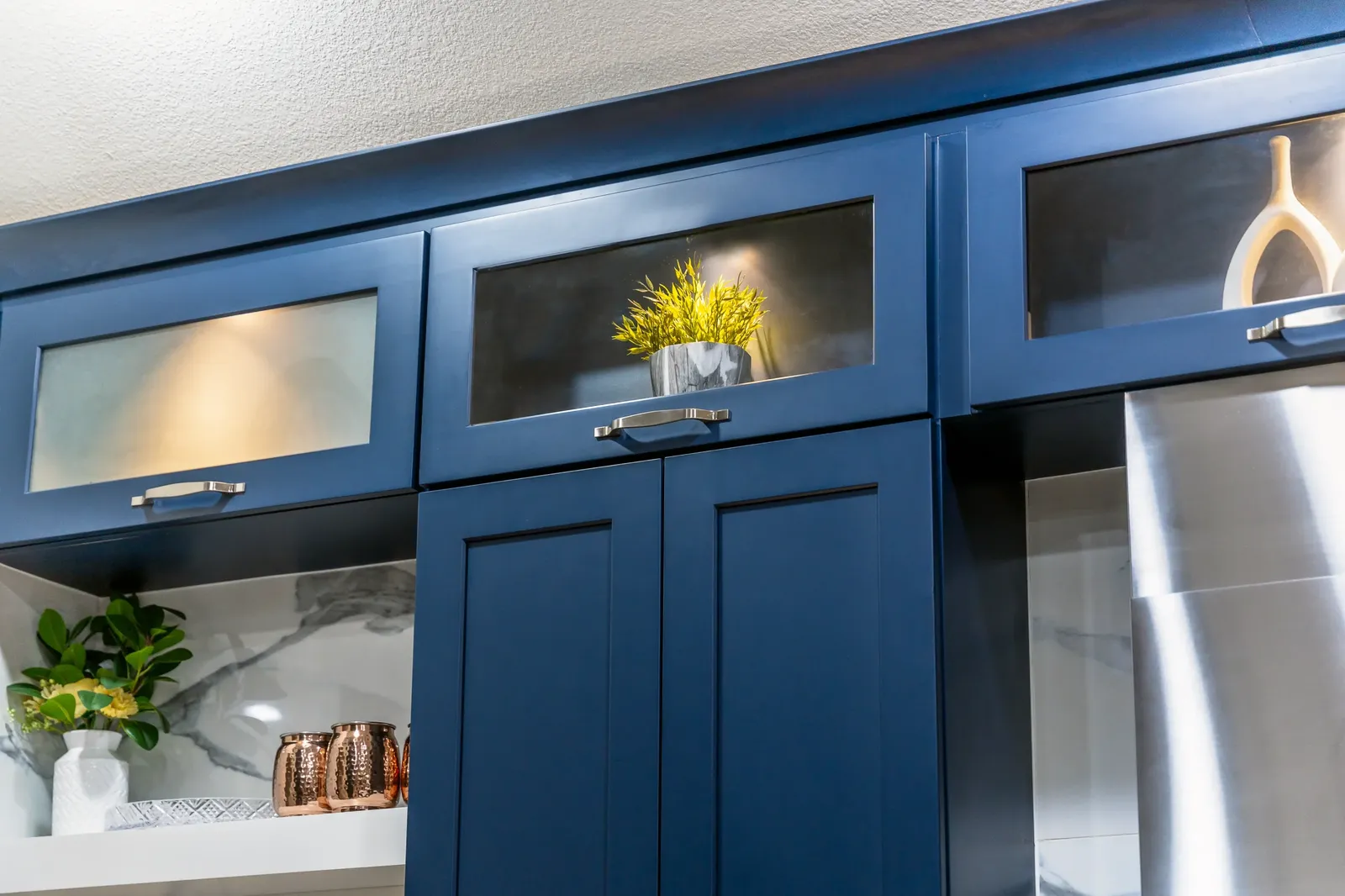
Deciding on material for kitchen cabinets is among the important design decisions that you need to get right for your kitchen renovation. In addition to having a sturdy storage area, you also want a delightful and functional space for your culinary adventures. Choosing the right cabinet materials ensures your investment lasts longer and makes all the difference.
Main Types of Cabinet Materials
When searching for the perfect kitchen cabinet material, you will encounter a wide range of options. Knowing their durability, aesthetic appeal, and affordability helps you make a more informed decision. Below are some of the top cabinet materials available, along with a comprehensive overview of each one.
1. Natural Wood
Natural wood has remained a popular kitchen cabinet material for many years and maintains its timeless appeal. Going for wood cabinets gives any kitchen that timeless effect while adding warmth and character to the space.
Wood for kitchen cabinets is more expensive than most materials for kitchen cabinets. However, it is also one of the most durable options, making it worth the cost, considering that wood cabinets last a long time.
Pros:
- High-quality and durable material choice
- Add natural variation and timeless beauty
- It is easy to repair for that fresh look
- It is highly customizable to match your design preference
- Increases the value of your home
- You can find eco-friendly choices such as reclaimed wood
Cons:
- Among the most expensive materials
- Susceptible to water damage
- Prone to termite infestation
- Requires high maintenance to keep it looking good
2. Plywood Cabinets
Plywood is a type of engineered wood made of a mix of thin layers of natural wood, shredded wood fibers, and wood scraps. These are pressed and glued together to make a sturdier material that can be used for kitchen cabinets. It is among the most common materials used by cabinet makers.
Plywood material comes in different types that include:
-
-
Hardwood Plywood: Made from hardwood trees such as birch, this type of plywood is famed for its durability and strength.
-
-
-
Softwood Plywood: This is made from gymnosperm trees such as pine and cedar. It is also strong and is resistant to cracking or warping.
-
-
-
MDF-core Plywood: A medium-density fiberboard is used in this case, resulting in a uniform and consistent plywood option.
-
-
-
Veneer-core Plywood: This is made by alternatively layering crossband veneers on both sides of a center veneer. The end product is a strong material with impressive weight-bearing and screw-hold abilities.
-
- Fully customizable
- Cost-effective
- There is a variety of choices
- Easy to clean
- Eco-friendly
- Lightweight
Cons:
- Less durable compared to solid wood
- Warps and cracks easily
- Prone to water damage
3. MDF Cabinets
This type of material is moisture-resistant Medium Density Fiberboard (MDF) option is among the best for kitchen cabinets. It is an engineered wood product made from the process of breaking down pieces of solid hardwood or softwood into wood fibers.
The best thing about it is that special additives make it capable of withstanding humidity and moisture.
MDF is very durable and almost effortless to care for and maintain. However, it is not as strong as solid wood to withstand a lot of weight.
MDF is an excellent choice because of its boundless aesthetic possibilities. You will be spoilt with choices between laminate, wood veneer, or melamine for a beautiful finish and a natural wood feel. You can even choose to paint it in the color you love or customize it to your taste.
This material is relatively affordable compared to solid wood and plywood material for cabinet panels.
Pros:
- Highly customizable to match existing décor and personal preferences
- Resistant to warping
- Consistent in quality, giving it a smooth finish
- Less expensive compared to other materials like wood and plywood
- Smooth, even grain for that sleek finish
Cons:
- Lacks the strength of solid wood, making it prone to cracking
- Low water resistance and susceptible to water damage and scratches
- Less eco-friendly due to the use of resins and adhesives
- Lacks the natural beauty of solid wood
- Can not withstand high temperatures
4. Particleboard
Particleboard is made by merging together wood chips and particles, and sawdust using resin and other adhesives. This results in a lightweight material strong enough for cabinets and furniture uses.
There are different types of particleboard, including single-layer, three-layer, laminated particleboard, and veneered particleboard. Other less famous types include melamine, cement-bonded particleboard, and thermofoil particleboard.
Particleboard is relatively durable but not as durable as wood, MDF, or plywood. Its ability to hold weight is also average. However, the strength of each board depends on the type of particleboard. For instance, the cement-bonded choice is stronger than other options.
Likewise, the aesthetic characteristics depend on the type you choose. For instance, laminated particleboard has a smooth finish, while veneered particleboard imitates the look of natural wood.
The use of affordable and recycled wood byproducts makes particleboard very cheap in terms of cost. This offers a cost-effective way to renovate your cabinets on a budget.
Pros:
- Affordable
- Lightweight
- Environmentally friendly
- Easy to cut and design
Cons:
- Less durable
- Inability to support heavy weights
- Prone to cracking and warping
- Prone to water damage
- Contains VOCs that are harmful to health
5. Laminate Cabinets
Laminate is a popular material choice for kitchen cabinets due to its durability and versatility. It is made by pressing together multiple layers of synthetic materials, typically a mix of paper and plastic resins.
The top layer is a printed, smooth surface designed to mimic the appearance of wood, stone, or other textures. This surface is then sealed with a protective coating to resist scratches, stains, and moisture.
Affordable and easy to maintain, laminate cabinets come in a wide range of colors and styles, making them suitable for various kitchen designs. Although not as luxurious as natural materials, modern advancements in laminate technology have significantly improved its aesthetic appeal, making it a practical option for those seeking a stylish yet budget-friendly kitchen solution.
Pros:
- Affordable alternative compared to other materials, making it budget-friendly.
- Available in a wide range of colors, patterns, and finishes, offering great design flexibility.
- Easy to clean and maintain, as it is resistant to stains and moisture.
- More durable surface against scratches and impact than some natural materials.
Cons:
- Less heat resistant than wood or metal, making it prone to warping or bubbling if exposed to high temperatures.
- Limited repair options; if damaged, laminate cannot be refinished or restored like wood.
- It may not have the same high-end look or feel as solid wood or other premium materials.
- Over time, seams can become visible and may not hold up as well as solid construction.
6. Wood Veneers
Wood veneers are thin slices of natural wood that are typically glued onto a substrate, such as plywood, MDF (medium-density fiberboard), or particleboard, to create the appearance of solid wood kitchen cabinets. This option offers the look and feel of real wood without the high cost associated with solid wood cabinetry, making it a popular choice for homeowners who want a sophisticated and natural aesthetic without the expense.
Pros:
- Wood veneers provide the rich, warm appearance of solid wood at a fraction of the price.
- Since veneers are made from real wood, they come in a wide range of wood species, grains, and finishes. This allows for a variety of styles, from traditional to modern, with the ability to stain or finish the surface to your preference.
- Wood veneers use significantly less wood than solid wood cabinets, making them a more environmentally friendly option.
- Wood veneer cabinets tend to be lighter than solid wood, making installation easier and reducing strain on cabinet hardware over time.
- Veneers, when adhered to a stable substrate like MDF or plywood, are less prone to warping or cracking due to changes in temperature and humidity compared to solid wood cabinets.
Cons
- While veneers are more stable than solid wood, they are still relatively thin and can be prone to peeling or chipping over time, especially with heavy use as cabinet doors. Care must be taken to avoid scratches or moisture exposure.
- Veneers can be difficult to repair if damaged. Deep scratches or chips may require a professional to replace the veneer layer, whereas solid wood cabinets can often be sanded and refinished.
- While veneers offer a wide variety of wood finishes, they do not allow for as much intricate carving or design work as solid wood, which may limit options for highly custom or ornate cabinetry.
- Over time, if the veneer isn’t properly adhered or exposed to excessive moisture, it may start to separate from the substrate, leading to delamination and an uneven appearance.
Other Types of Cabinet Materials
While not as common as traditional wood cabinets or plywood construction, the following kitchen cabinet materials are still used in many projects and can be the right material depending on your design preferences, kitchen space, and budget during a kitchen remodel. These other materials each offer unique benefits and may provide a practical choice for certain cabinet boxes, cabinet doors, and drawer fronts across the entire kitchen.
Melamine
Melamine cabinets are a type of engineered wood cabinetry often used as a cost effective choice in modern kitchens. Melamine cabinets are typically made from particle board or medium density fiberboard, both of which are forms of density fiberboard made from wood fibers mixed with wood chips and wood particles bonded together under pressure. In many cases, particle board stands as the core material for cabinet boxes or drawer boxes, while the exterior surface is coated with a melamine laminate. This laminate can also be considered a type of high pressure laminate that creates a smooth surface with a consistent look and smooth grain.
Melamine cabinets offer many style options, including painted finishes, wood grain appearances, and colors that mimic natural wood species such as cherry wood, red oak, or white oak. Because melamine surfaces resist scratches and provide moderate resistance to moisture and water damage in the short term, they can be a practical choice for busy kitchen cabinets. Their smooth finish also makes them easy to clean, which is helpful in high-traffic kitchen space. However, melamine cabinetry is more vulnerable to heat and prolonged moisture exposure, which can lead to moisture damage over time. Chips or deep scratches are difficult to repair, and once damaged the cabinet doors, drawer fronts, or cabinet boxes often require replacement. While melamine is a cost effective choice among cabinet materials, it is less eco-friendly than some natural wood or hardwood options because it is not derived from renewable natural wood sources.
Thermofoil
Thermofoil cabinets are another engineered wood option used in cabinetry. They consist of a core made from medium density fiberboard (MDF), also referred to as medium density fiberboard or density fiberboard, which is formed from compressed wood fibers. The MDF core is wrapped with thermofoil surfaces, a vinyl-based laminate coating that is heated and sealed around the cabinet doors and drawer fronts under intense pressure. This process creates a smooth finish and consistent look that can replicate painted cabinets or even the smooth grain of real wood.
Thermofoil surfaces come in a wide variety of styles, including matte finishes, painted finishes, and high gloss thermofoil with a reflective surface that gives cabinets a modern feel. Because of this flexibility, thermofoil cabinets are often used in modern kitchens and contemporary cabinetry designs where a sleek appearance is desired. These cabinets can provide the refined look of painted cabinets without the higher cost of solid wood or veneer cabinets made from natural wood species. They are also resistant to moisture and humidity changes better than some other materials, making them a practical choice in kitchens where humidity and moisture levels fluctuate.
However, thermofoil surfaces are sensitive to heat, which can cause the laminate to peel away from the medium density fiberboard core over time. Once peeling occurs, repair options are limited and cabinet doors typically need to be replaced. While thermofoil can be considered among the best cabinet material options for affordability and design flexibility, it may not match the long term durability of hardwood, solid wood cabinetry, or wood veneer cabinetry. Still, for homeowners seeking a smooth surface, painted finishes, and a modern feel at a lower price point, thermofoil cabinets can be the right cabinet materials.
Stainless Steel
Stainless steel cabinets are high-end cabinet materials commonly found in professional kitchens but increasingly used in residential kitchen cabinets during upscale kitchen remodel projects. These cabinets may be constructed entirely of stainless steel or feature stainless steel cabinets with a veneer over cabinet boxes made from plywood or engineered wood. The result is cabinetry that delivers exceptional durability and long term performance.
Stainless steel cabinets are highly durable, resistant to rust, corrosion, and staining. Their non-porous surface resists bacteria and allows for easy sanitizing, which makes them ideal for food preparation environments. In modern kitchens, stainless steel cabinets create a sleek, modern feel that pairs well with contemporary appliances and fixtures. This makes them a great choice for homeowners looking to create a refined look and a cohesive design throughout the entire kitchen space.
However, stainless steel cabinets are among the most expensive kitchen cabinet materials when compared with wood cabinets, laminate cabinets, veneer cabinets, or melamine cabinets. Their reflective surface tends to show fingerprints, smudges, and streaks, meaning they require regular cleaning to maintain their polished appearance. The hard surface can also create more noise when pots and pans contact cabinet doors or drawer boxes. For some homeowners, the cool industrial style may not offer the natural beauty or warmth provided by solid wood cabinetry, hardwood cabinet doors, or wood veneer cabinets made from real wood species such as cherry wood, white oak, or red oak.
When comparing cabinet materials for a kitchen remodel, it’s important to consider the best material for cabinets based on durability, style, maintenance, and cost. Solid wood, hardwood, plywood, veneer cabinets, laminate cabinets, melamine cabinets, thermofoil surfaces, and stainless steel cabinets each provide different grades of durability, appearance, and long term performance. Choosing the best cabinet material ultimately depends on your kitchen space, design preferences, and how you want your cabinetry, cabinet doors, face frames, drawer boxes, and built ins to function within your entire kitchen. The right cabinet materials can create the perfect balance between durability, natural beauty, and style while ensuring your kitchen cabinets remain durable and functional for years to come.
Choosing the Best Cabinet Material for Your Kitchen
Choosing the best cabinet material can be tricky, considering that each has pros and cons. However, you can turn this process into a walk in the park if you prioritize the following:
Durability
Kitchen cabinets aren’t something you want to replace every other day. Factoring in the longevity of each material can help you settle for materials that will serve you longer. First, consider their strength to support weight. You want to be able to store your items without worrying about breaking or cracking.
Cabinets also undergo a lot of opening and closing, so you’ll want a material that can withstand all the wear and tear. In this case, plywood and solid wood make the best options.
The material’s reputation for combating moisture also comes into play when considering its lifespan. Materials that are susceptible to moisture end up swelling, warping, or cracking. Wood and plywood make the best choices in this regard. However, MDF and particleboard can also withstand moisture for longer as long as you ensure proper sealing.
Aesthetics
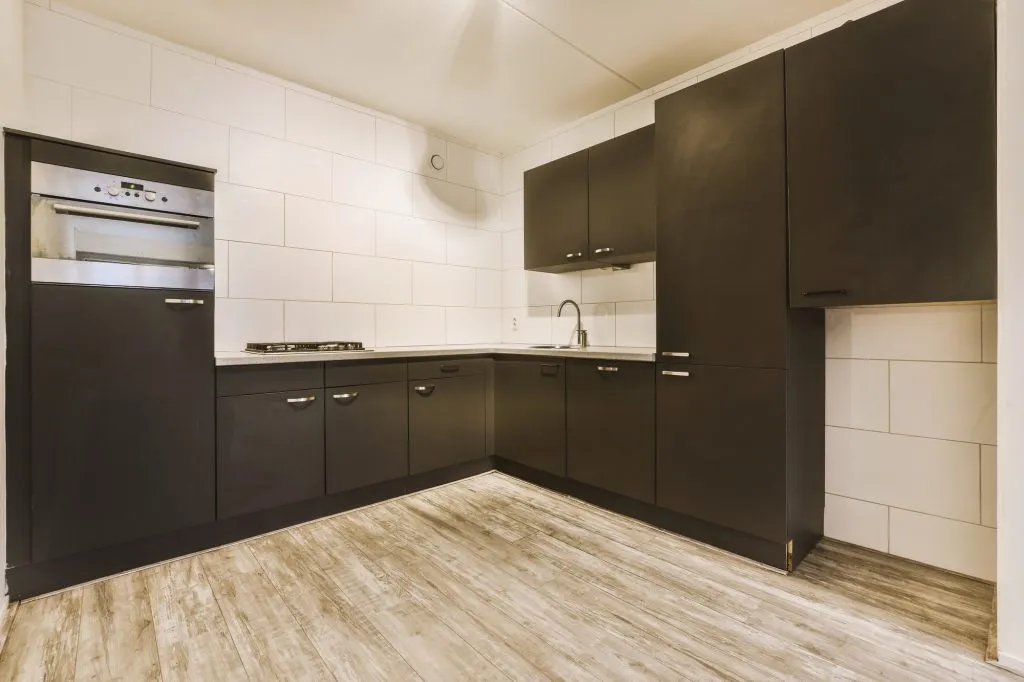
The aesthetic appeal of each material doesn’t necessarily come first, but it is quite relevant. If you are factoring in aesthetics, the cabinets need to align with the other existing features.
For a timeless charm, go for solid wood or veneer finishes. If you want to customize the look to your liking, go for MDF or plywood. If aesthetics are something you can compromise on to get an affordable material, particleboard can make a great choice as well.
Budget
At the end of the day, you want a cabinet material that will not dent your finances beyond repair. If you are working on a budget, cost-effective choices like particleboard or MDF are ideal. Otherwise, solid wood and plywood are best when money is not a limitation.
Why Consulting a Professional Is Important
Cabinetry takes up the majority of the kitchen space, and the choice of material influences it. A professional team of experts has the knowledge and equipment to help you select the best material to unify the entire design within your budget.
A professional will also advise you on the best layout design to maximize material use and reduce waste. Professional cabinet installation skills guarantee a professional look and feel of the end product, which is the end goal of any kitchen makeover project.
Wrapping Up
To find the best kitchen cabinet material, there is a checklist you can follow. Consider your budget to ensure your investment makes financial sense for you. In addition, decide what matters most to you between longevity and beauty.
Ultimately, consider hiring an expert to walk you through the process. So, reach out to your local Cabinet IQ vendor and simplify your decision-making process with practical suggestions that align with your durability, aesthetic, and cost goals