Kitchen Cabinet Construction Explained: What Actually Matters
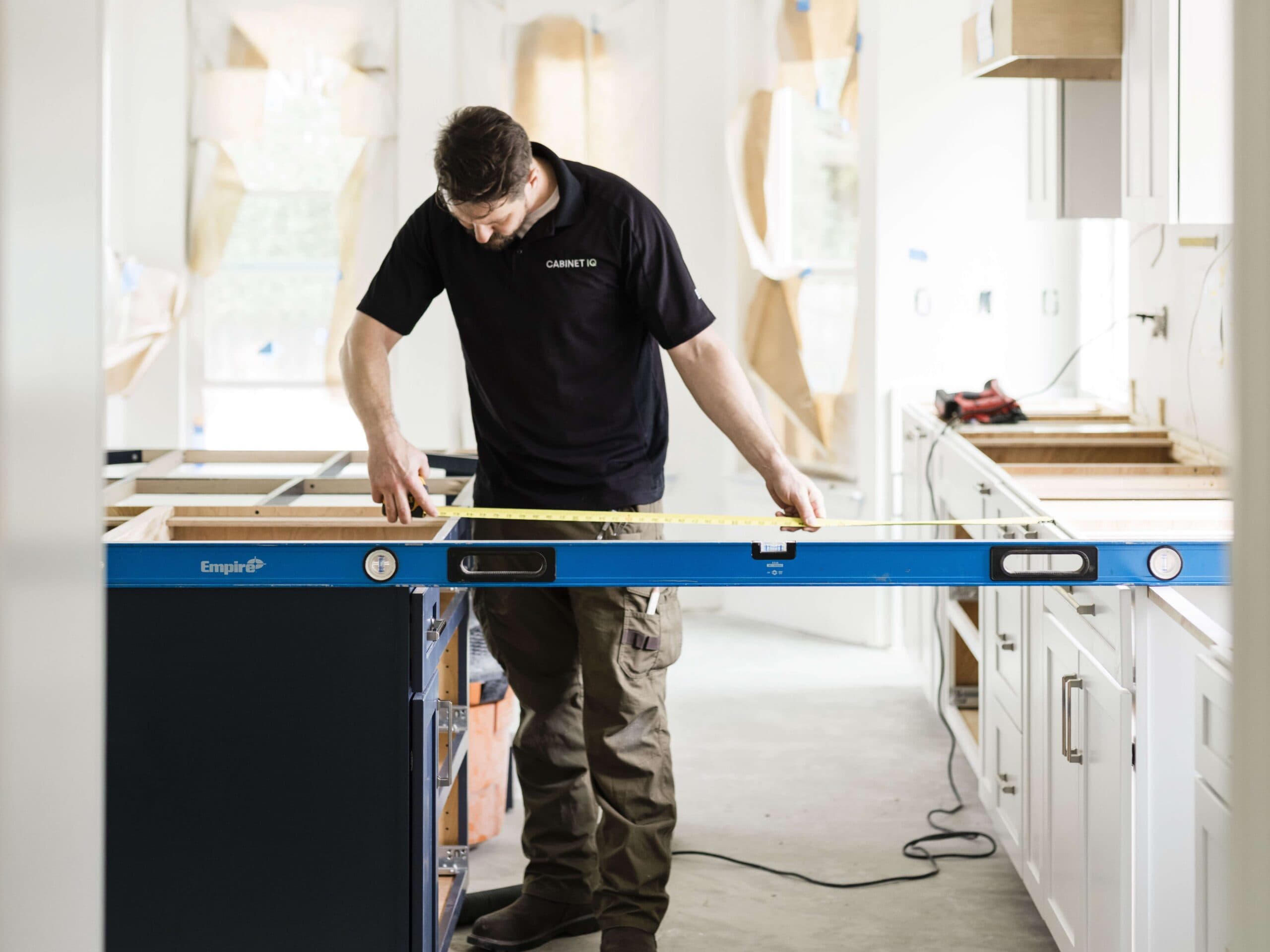
Shopping for kitchen cabinets means wading through terms like "full overlay," "face frame," and "plywood box" before you've even looked at a single door style. Understanding cabinet construction types, though, isn't insider jargon; it's the difference between a kitchen that holds up for 20 years and one that starts showing wear in five.
Cabinet construction type determines four things: how the box is built, how the cabinet doors hang, what materials are used, and whether you're buying stock, semi-custom, or custom. Those choices shape how much you can store, how your kitchen looks, and what you'll spend on repairs down the road.
This guide breaks down every major cabinet construction type so you can evaluate options before you buy. By the end, you'll be able to read kitchen remodel proposals with confidence, spot weak construction in a showroom, and match the right kitchen cabinet styles and types to your home, your tastes, and your budget.
What Are the Main Kitchen Cabinet Construction Types?
Most homeowners think of kitchen cabinet construction types as the different ways they're built and configured.
At the structural level, there are indeed two primary cabinet box construction types: framed cabinets and frameless cabinets. However, the quality and performance of different kitchen cabinet types are influenced by more than the box construction alone.
Kitchen cabinet door styles, materials, hardware, joinery, and customization options all play a role in how your kitchen looks, functions, and holds up over time. That's why evaluating cabinet construction involves more than simply choosing between framed and frameless cabinets.
The next section introduces a simple framework for comparing all of the construction choices that affect cabinet quality, durability, storage, appearance, and cost.
The 4-Layer Framework for Comparing Kitchen Cabinet Construction Types
At a high level, every kitchen cabinet quote can be boiled down to four layers of decisions.
Together, they form a simple, repeatable way to compare very different-looking bids side by side.
Those four layers are:
- Box system: framed or frameless box.
- Door and reveal style: inset or overlay door styles.
- Materials: what the cabinet box, shelves, and drawers are made from, such as solid wood (walnut, mahogany, white oak, etc.), hardwood plywood, MDF, or particle board.
- Product customization tier: stock cabinets, semi-custom options, or custom builds.
For each quote you review, you want four clear answers:
- What kind of box system is this?
- How do the cabinet doors and drawer fronts sit on that system?
- What are the cabinet boxes, shelving, and cabinet drawer fronts made from?
- And is this a stock, semi-custom, or custom kitchen cabinet design?
Get those four answers on one page for each bid, and the differences that were invisible become obvious.
Here’s how those layers translate into decisions:
| Layer | What It Controls | Biggest Impact |
| Box System | Openings, hardware mounting, and access | Storage needs and kitchen style direction |
| Door Style & Reveal | Gaps, lines, and visual appearance | Traditional vs. modern kitchen design |
| Materials | Rigidity, moisture resistance, and durability | Repairability and longevity |
| Product Tier | Size options, finishes, accessories | Budget and design flexibility |
Start with the box system, such as framed cabinets with face frames or frameless box options, because that choice quietly sets the stage for everything else. It’s completely reasonable to ask a home designer to spell out these four layers in writing for every bid, so you’re never guessing what you’re buying.
One thing we see regularly is homeowners comparing cabinet door styles, such as shaker, raised panel doors, or slab doors, and colors, while overlooking construction details that have a much bigger impact on long-term performance.
Cabinet construction affects how kitchen cabinets handle daily use, how much kitchen storage you gain, and how well the kitchen holds up over time. That's why understanding cabinet construction types is one of the first steps in evaluating any proposal.
Framed vs Frameless Cabinet Boxes: What's The Real Difference?
At a foundational level, when considering kitchen cabinet construction types, you’re usually choosing between framed (face-frame) and frameless (full-access or European-style) cabinet door styles.
Kitchen pros almost always start here, because this decision locks in both the look of the kitchen design and how much usable kitchen storage space you get inside.
Both systems can be excellent when the materials, such as solid wood or engineered wood, and installation are handled well.
Among all cabinet construction types, framed cabinets and frameless cabinet boxes are usually the first distinction homeowners encounter. Understanding the strengths of each system makes it much easier to compare kitchen cabinet proposals accurately.
What Frames Do to Your Kitchen
Framed cabinets have a solid wood frame on the front of the box.
Cabinet doors and drawers attach to that frame, and you see a bit of it between door and drawer fronts. This traditional North American style adds rigidity and can be more forgiving on older, uneven walls because the frame can hide small imperfections. Many long-running kitchen cabinet brands still build most of their lines this way because it’s proven and familiar.
Cabinet door styles that go well with framed boxes can be raised panel cabinets, mitered doors, and even shaker-style cabinets if looking for something less strict.
Advantages of Going Frameless
Frameless cabinets skip that front frame.
The box sides are thicker, often constructed from engineered wood like MDF or particle board, and cabinet doors and drawers mount directly to the box. Openings are slightly wider, so cabinet drawers and pull-outs can be a bit larger for the same overall box width.
In many frameless lines, a 24-inch-wide base cabinet can give you a drawer that is noticeably wider inside than a similar framed box. Visually, frameless tends to look cleaner and more modern, especially with slab and shaker cabinet doors, or even a more cabana or tropical look with louvered doors and beadboard doors, because doors sit close together with tight, consistent gaps.
Glass-front cabinets go well with both framed and frameless boxes, but are typically now used in more contemporary frameless designs.
A few practical guidelines:
- Choose framed cabinets if you want a traditional or transitional kitchen look and appreciate a slightly more forgiving install.
- Choose frameless if you want a sleek, modern look and care about squeezing out every bit of kitchen storage and access.
- In either case, judge the line by box thickness, hardware quality such as hinges and drawer glides, and installer skill; those factors drive long-term durability.
Once you’ve picked framed or frameless, you’ve quietly set the tone for both style and storage in your kitchen, potentially impacting choices like cabinet finishes and hardware.
Construction Details That Often Matter More Than Cabinet Style
Many homeowners spend a lot of time comparing door styles but overlook construction details that often have a bigger impact on long-term durability.
When comparing cabinet construction types, pay attention to:
- Cabinet box thickness
- Plywood versus particle board construction
- Shelf thickness
- Soft-close hardware quality
- Hinge and drawer slide manufacturers
A well-built cabinet with quality hardware can provide decades of reliable performance. In many kitchens, these construction details have a greater impact on long-term satisfaction than the door style itself.
Inset vs Overlay Cabinet Doors: How Do Reveals Change The Look?
Once you know the box type, the next layer is how the doors and drawer fronts sit on that box. Installers and designers call the gap around each door the reveal, and they pay close attention to it because those lines are what your eye notices first when you walk into the kitchen.
Inset Doors
Inset doors sit inside the frame or opening so the front of the door is flush with the surrounding face. The look is high-end and furniture-style.
It also demands very accurate construction and installation; small shifts in humidity or settling can show as uneven gaps, and you may need occasional hinge tweaks to keep everything aligned.
Overlay Doors
Overlay doors sit on top of the frame or box front. With a partial overlay, more of the frame shows around each door and drawer, which you’ll see in many classic stock lines.
With full overlay, fronts cover most of the frame or box, leaving small, consistent gaps that read cleaner and more contemporary.
Where Each Cabinet Door Style Works Best
In practical terms:
- Inset cabinet doors look beautiful but cost more and are less forgiving; it’s best when you’re willing to pay for precision and occasional adjustment.
- Full overlay is the go-to for modern, crisp lines that visually simplify the kitchen and still work well for everyday living.
- Partial overlay softens the look, pairs well with framed boxes, and can help hide small wall irregularities.
Most homeowners land on some form of overlay for a high-end look without the maintenance demands of inset, and that is exactly what many experienced designers recommend.

Cabinet Box Materials: Where Quality Matters Most
Under the finish, cabinet boxes are almost always built from engineered wood products, plus some solid wood in strategic places.
Knowing what each material does well helps you decide where to invest and where you can safely save. Seasoned installers will almost always check a sink base and dishwasher-adjacent cabinet first, because that is where cheap materials tend to fail first.
Particle board
Particle board is made from small wood particles and resin. It’s inexpensive and very uniform, which is why it shows up in budget and ready-to-assemble boxes. Its weaknesses are moisture and screw-holding strength; if it gets wet, it can swell and crumble, and fasteners can loosen more easily over time. In a showroom, you may see particle board edges wrapped in melamine or foil; if you see raw, crumbly edges inside a sink base, that is a red flag.
Plywood
Plywood is a popular choice for cabinet boxes due to its strength and resistance to warping and humidity. Built from layers of veneer glued with the grain alternating directions, it provides better support for hardware such as hinges and drawer slides. This ensures that kitchen cabinets maintain their integrity even after extended use. Plywood is frequently used for base cabinets, especially around moisture-prone areas like sink bases and near dishwashers.
MDF (Medium-Density Fiberboard)
MDF is a type of particleboard that is dense and smooth, and is perfect for painted cabinet doors and detailed door styles due to its lack of wood grain telegraphing through paint.
While MDF is excellent for creating smooth and intricate door designs like shaker cabinet doors, it is often paired with sturdier materials like plywood for kitchen cabinet boxes to ensure durability in wet areas. MDF is common in flat-panel cabinet doors and may be seen in kitchen cabinet door styles requiring intricate details.
Solid Wood (Hardwood)
Solid wood, or hardwood, is generally used for face frames and door frames, not the full boxes, to minimize movement with humidity changes. In high-quality kitchen cabinets, solid wood is used wherever it offers structural and aesthetic benefits.
Cabinets that feature solid wood often display variations in grain and tone, authenticating their natural origins from wood species that range from walnut to white oak and mahogany.
Solid wood works well for face frames in framed cabinets and can enhance the beauty of kitchen cabinet finishes.
A strategic approach to selecting the best material for your kitchen includes:
- Choose plywood or moisture-resistant materials for sink bases and areas exposed to water.
- Going with a natural hardwood for door and drawer panels.
- Utilizing engineered wood panels for other cabinet parts if they are well-sealed and thick.
- Opting for upgrades like dovetail drawer boxes and heavy-duty hardware where possible to accommodate the highest stress points.
This approach ensures you invest in quality kitchen cabinets that provide long-lasting functionality and beauty tailored to the demands of kitchen organization and storage needs.
Cabinet Construction Types by Product Tier
Even with the same basic construction, how far you can tweak sizes, finishes, and accessories depends on whether you’re buying stock or custom cabinets.
Flexibility and cost rise together, and the right tier depends on how tailored your space and expectations are.
- Stock cabinets: These are manufactured in predetermined sizes, finishes, and configurations. They are typically the fastest option to order and install, making them a practical choice for straightforward kitchen layouts and budget-conscious projects.
- Custom cabinets: These are built specifically for your project. They can be designed around unique room dimensions, specialized storage requirements, architectural details, and personalized design preferences. Because they are made to order, custom cabinets offer the highest level of flexibility.
For many homeowners, the decision comes down to whether standard box sizes can accomplish their goals. If they can, stock cabinets often provide excellent value.
When a project requires specialized storage, non-standard dimensions, or highly personalized design details, custom cabinetry may justify the additional investment.
It’s completely reasonable to ask your designer to identify whether a proposal uses stock or custom cabinetry so you can better understand how those choices affect both cost and flexibility.
How Do Joinery And Hardware Reveal Real Cabinet Quality?
When materials look similar on paper, joinery and hardware are what separate flimsy cabinets from long-lasting ones. This is where you move beyond marketing labels and look at how the box is actually held together and how smoothly it moves.
Experienced installers often decide which lines to trust based on these details alone.
For joinery, watch for:
- Stronger boxes often use glued dowels, screws, or dado/rabbet joints that increase the contact area between panels.
- Cheaper boxes may rely heavily on staples and thin backs tacked into place.
- For drawers, interlocking joints like dovetails or well-executed dowel and screw systems generally outlast simple stapled ends. Be aware that very thin or shallow “dovetail” caps can be more decorative than structural; you want full, well-fitted joints, not just a pretty pattern at the front edge.
- Reputable installers also watch how cabinets are fastened to the wall and tied to each other, because fronts can look nice even when the structure behind them is weak.
Hardware is the moving part of the system, and here:
- Full-extension drawer slides let you see and use the whole drawer, making it easier to clean out the very back so crumbs and lost items don’t sit there for years.
- Soft-close hinges and slides reduce impact and noise, which protects both the box and the finish over time. At quality-focused firms such as Cabinet IQ, soft-close doors and drawers are typically treated as a baseline, not an optional upgrade, because they protect both the cabinets and your nerves over time.
In a showroom, a quick quality check is to:
- Open a base cabinet and measure the thickness of the sides, back, and the attachment for the back panel.
- Pull out the heaviest-looking drawer and see how far it extends and how solid it feels.
- Gently lift up and down on an open drawer to feel for wiggle.
- Open and close a door to see whether the hinges feel firm and smooth, not flimsy or grinding.
Those small tests tell you more about real-world durability than any label that just says “premium.”

Frequently Asked Questions About Cabinet Construction Types
There are several popular styles of cabinetry to consider when planning your dream kitchen, and understanding the components behind each option, from framed cabinet construction to frameless cabinetry, can make the decision-making process much easier.
Do cabinet construction types affect home resale value?
Yes. Buyers may not ask about cabinet construction directly, but they often notice signs of quality such as sturdy drawers, smooth hardware, and durable finishes. Higher-quality construction can help a kitchen feel more solid and well-maintained. The choice of cabinet construction affects durability, appearance, and storage space, whether you're comparing framed cabinet boxes with a cabinet face frame or frameless cabinet construction that opens up more usable space inside each cabinet opening.
Which cabinet types require the least maintenance?
Full-overlay cabinets are often easier to maintain because they have fewer exposed surfaces and clean, simple lines. Full overlay doors fully cover the cabinet box so the face frame or frameless construction underneath is barely visible, giving the whole kitchen a seamless look. Full overlay is only compatible with frameless cabinet boxes, since framed cabinetry typically requires slightly smaller doors to accommodate the rails and stiles of the face frame. Regardless of cabinet type, proper installation and routine care have the biggest impact on long-term performance.
How can I evaluate cabinet construction in a showroom?
Look beyond finishes and colors. Check box thickness, drawer construction, shelf strength, and hardware quality. High-quality joinery methods such as dovetail and mortise-and-tenon provide increased durability, and these details are worth checking in person. At Cabinet IQ, we encourage homeowners to open drawers, inspect materials, and compare construction details side by side before making a decision, including whether the drawers cover the opening fully or sit flush with a reveal, and whether doors are inset cabinetry with recessed panel doors or a more traditional overlay style.
Are more expensive cabinets always better?
Not necessarily. Price can reflect customization, finishes, or brand positioning as much as construction quality. A well-built stock construction box can outperform a poorly designed custom cabinet. Stock cabinets are pre-made in standard sizes and are cost-effective for quick projects, while custom cabinets are built to order and offer infinite design choices for homeowners who want a specific look or fit. Inset cabinetry is considered a luxury product today, often priced higher because of the precision required to get doors and drawer fronts to sit flush within the frame.
How long should quality cabinet construction last?
Quality cabinet construction can last for decades when supported by good materials, reliable hardware, proper installation, and regular maintenance. Plywood is considered the most durable cabinet box material, while particleboard is the most budget-friendly cabinet material but vulnerable to moisture. The core material impacts the cabinet's long-term durability and moisture resistance, so it's worth asking about regardless of whether you choose framed or frameless construction.
What should I ask before choosing a cabinet construction type?
Ask about box construction, materials, hardware, warranty coverage, and installation methods. These details often reveal more about long-term value than the product label alone. It also helps to ask whether the cabinets are frameless cabinets, sometimes also known as full-access cabinets, or framed cabinetry built around a face frame consisting of rails and stiles that outline each cabinet opening.
Make Confident Cabinet Construction Choices Before You Sign
Choosing between cabinet construction types becomes much easier when you can compare products side by side. If you're evaluating kitchen remodel proposals, visiting a Cabinet IQ showroom or scheduling a design consultation can help you understand exactly how construction methods, materials, and hardware affect long-term performance.
Our team can walk you through framed and frameless options, explain quality differences that may not be obvious in a quote, and help you identify the cabinet solution that fits your home, goals, and budget.