Soft Close Cabinet Hinges: Worth It for Huntsville Homes?
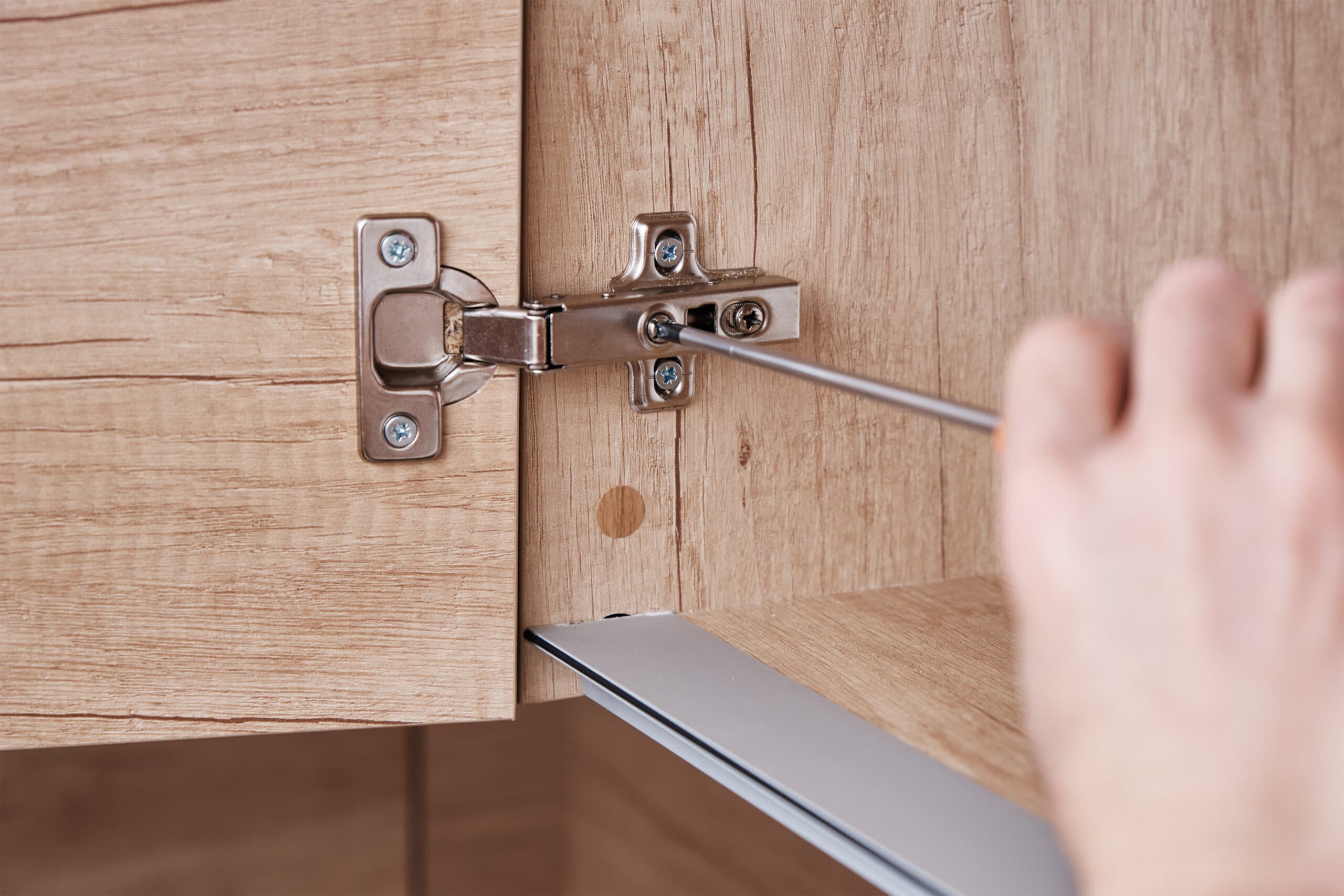
Soft close cabinet hinges were a premium upgrade ten years ago. Today they are the baseline, and a cabinet line that charges extra for them is telling you something about where it sits in the market.
At Cabinet IQ of Huntsville we do not list soft close as an option. It comes standard on every cabinet we sell, doors and drawers alike.
Here is why that decision matters more than it sounds.
What soft close cabinet hinges actually do
A soft close hinge has a damper built into the hinge cup, the round part recessed into the back of the door. As the door approaches the frame, the damper catches it and slows the last few inches of travel.
Better hinges adapt to the door. A heavy door and a light door need different resistance, and quality hardware adjusts automatically rather than applying the same braking force to both. The hinges we specify across our kitchen cabinet lines integrate that mechanism directly into the hinge cup, which is what allows the adjustment to happen.
Drawers use the same principle through the glide instead of the hinge. The result is identical, though the engineering differs.
Why we treat soft close cabinet hinges as standard equipment
Two reasons, and the first one is about longevity rather than comfort.
A slamming door transfers force into the hinge, the mounting plate, and the screws holding both. Over years, that shows up as loose hinges, stressed joints, and finish wear along the closing edge. Soft close removes most of that impact.
The industry measures this. The Kitchen Cabinet Manufacturers Association certifies cabinet lines against a performance standard that includes door operation testing, run by independent laboratories to simulate years of normal use. Hinges are one of the components that fails those tests.
If we are installing cabinets in your home, we want them working in fifteen years. That is a hardware decision as much as a box construction decision, which is part of what separates cabinets that last from cabinets that look fine on install day.
The second reason is daily use. Most people do not notice soft close until they live with it, then they notice its absence everywhere else. Getting a glass of water at three in the morning without waking anyone is a small thing that adds up across a decade.
Not all soft close hardware performs the same
This is where homeowners get caught, and it is the part almost nobody asks about.
There is a real gap between an integrated system engineered as part of the hinge and a basic damper added onto a standard hinge. Add-on dampers wear faster, lose consistency across the kitchen, and start failing in a handful of years. You end up with some doors closing softly and others slamming, which looks worse than having none at all.
Hardware brand rarely appears in a quote. It should. When you are comparing cabinet quotes, ask each company to name the hinge manufacturer and whether the soft close is integrated or clipped on. Two quotes that look similar on cabinet construction can differ substantially on the hardware doing the daily work.
Warranty terms tell you something too. Premium hinge manufacturers back their hardware for the life of the original owner. Budget hardware usually carries a short term warranty or none that reaches the homeowner.
Where you still find cabinets without soft close
Three places, mostly. Entry-level builder-grade homes, big box stock cabinet programs, and projects where the budget was set before the scope was understood.
None of those are unreasonable choices in the right circumstance. They are simply optimized for the number at the top of the estimate rather than how the kitchen performs in year eight.
The tradeoff shows up later. A kitchen with slamming doors reads as builder grade to anyone who opens a cabinet, and that impression carries into resale conversations. Whether the upgrade earns its cost is a fair question, and it is the same calculation behind whether custom cabinetry is worth it in Huntsville.
Adding soft close cabinet hinges later is harder than it sounds
You can retrofit. We have seen enough of these projects to be honest about how they go.
The first problem is the substrate. Many lower-cost doors are MDF or particleboard, and the existing screw holes were drilled for the original hardware. New hinges rarely line up exactly, and fresh screws in compromised material do not hold well. Doors start sagging within months.
The second problem is scope. What gets quoted as a hardware swap usually turns into repairing worn mounting points, adjusting doors that no longer sit square, and sometimes replacing doors outright. The labor tends to run well past what homeowners expect going in.
Add-on clip dampers exist and work reasonably on hinges they were designed for. They are a genuine improvement over nothing, though they are a fix rather than a solution.
If the cabinets are already worn enough that hardware is failing, the more useful question is whether you are looking at refacing or replacing rather than which hinges to buy.
What this tells you about a cabinet line
Soft close hinges are cheap relative to the cabinet they go on. When a company charges extra for them, or leaves them off entirely, the hardware is usually not the only place the cost was cut.
Look at what else the line does. Drawer box construction, box material, hinge adjustability, and finish quality tend to move together. A cabinet built to a price shows it in several places at once.
That is why we do not sell a lower tier without soft close. It would mean putting our name on a kitchen we know will feel worse in five years than it does on install day.
Come see the difference in person
Reading about hardware does not tell you much. Opening and closing a door does.
Our Huntsville showroom has cabinets you can actually operate, with the same hinges and glides that go into finished kitchens. It takes about ten seconds to feel the gap between quality hardware and the alternative.
Visit the Cabinet IQ of Huntsville showroom for a no-pressure conversation about your kitchen, your layout, and what will make the most difference in how you use the space. Book a consultation to set up a time.