Butcher Block Countertops: Pros, Cons, Cost, Care & Best Uses
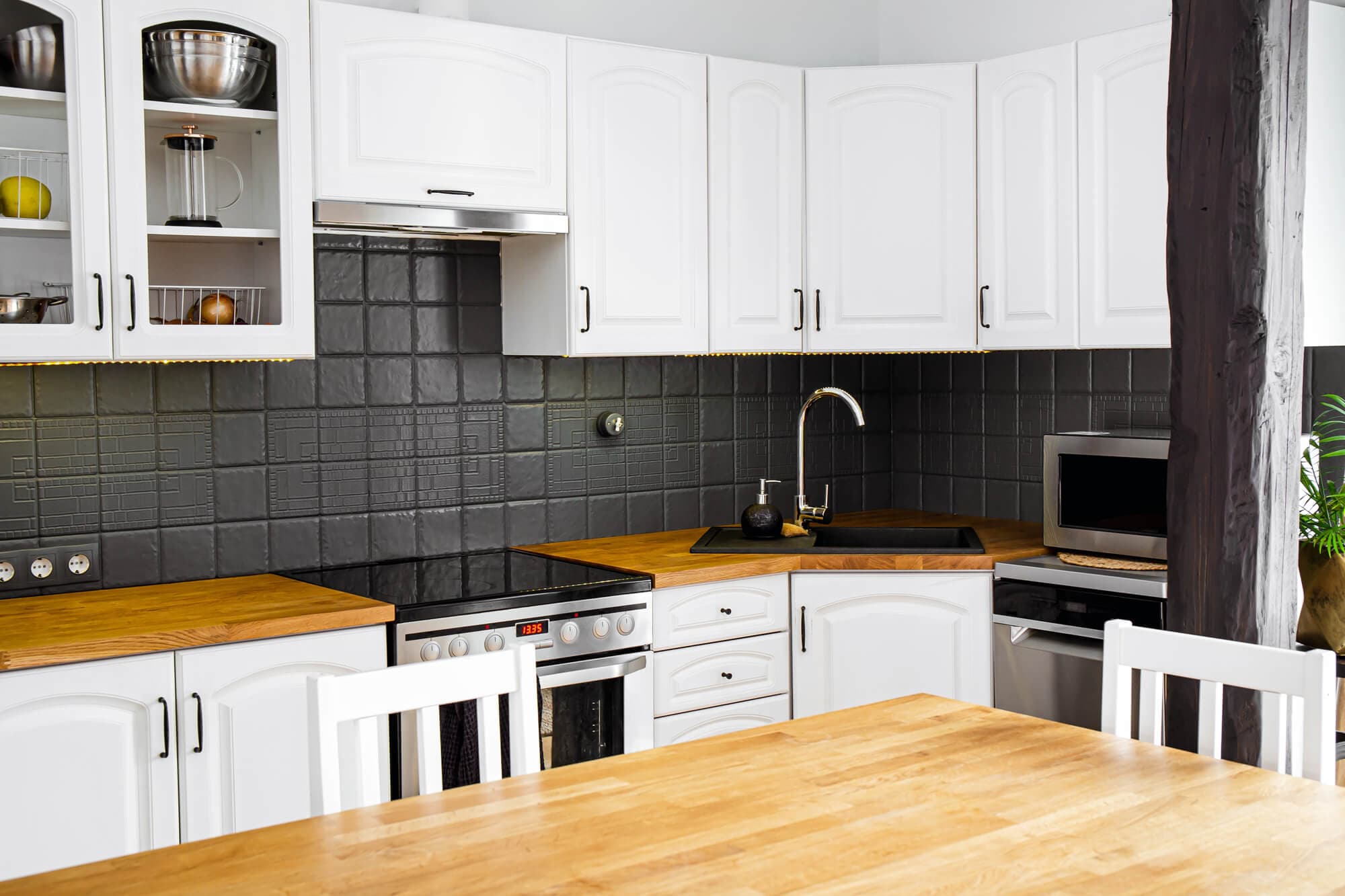
You’ve probably noticed the shift in kitchen style trends. For years, granite and quartz were the only “serious” countertop choices. Now those same inspiration photos are full of warm, solid-wood countertop islands, butcher-block breakfast bars, and furniture-like peninsula tops. They feel inviting and handcrafted, but you also hear horror stories about stains, warping, and constant maintenance, leaving owners feeling like they're babysitting an oversized premium walnut cutting board.
So you end up stuck between attraction and anxiety. Is that warmth worth the worry? Will wood hold up in your real kitchen, with kids, guests, and weeknight cleanup, not just in carefully staged photos? And if you do say yes to wood, where does it actually belong, how does the cost really compare to stone, and what kind of care are you signing up for?
That’s what makes butcher block worth a closer look: it can be a beautiful, practical choice in the right setting, but only if you understand where it performs well, where it needs more care, and how those tradeoffs compare with other countertop materials.
Why Wood Countertops Are Back – Sort of
Wood countertops are showing up in more kitchens because they bring something laminate, and some stones can't: warmth, softness, and a furniture-like quality that can make a kitchen feel more inviting.
Designers are using wood species like walnut, white oak, and maple, or even others like acacia wood and bamboo, in everything from modern kitchens to more traditional spaces, often as an island, bar top, or secondary work surface rather than across every countertop.
What are Butcher Blocks?
Butcher block countertops also fit naturally into that trend.
Made by joining pieces of hardwood into a solid surface, they bring visible grain, texture, and character into a room that can otherwise feel dominated by hard finishes like stone, tile, metal, and glass.
That warmth comes with a different set of expectations.
Wood can often be refreshed or refinished as it wears, but it is also more sensitive to moisture, scratches, and ongoing finish maintenance than many stone surfaces. The question is less whether butcher block is “good” or “bad” and more whether its strengths fit the way you actually use your kitchen.
Common Myths About Wood and Butcher Block Countertops
A few misconceptions about butcher block and wood countertops can make the material seem either easier or harder to live with than it really is.
In reality, not every wood countertop is constructed the same way, not every finish requires the same care, and some of the most common assumptions about butcher blocks are either outdated or too broad.
These are the myths that most often get in the way of a clear, practical decision:
- “All wood countertops are butcher block.” They aren’t. Butcher block is one type of wood countertop, and construction can vary. For example, the grain pattern significantly affects the durability of a butcher block. End-grain, face-grain, edge-grain, and wide-plank styles look and perform differently, a distinction we’ll cover in more detail below.
- “Wood is always unsanitary.” Smooth, intact, finished solid wood that’s cleaned and dried properly can be used safely. Finish condition and maintenance matter, so care instructions should match the specific product and finish system.
- “Wood is low-maintenance once it’s installed.” Not usually. Oiled surfaces may need periodic re-oiling, while film-forming finishes need to stay intact to resist moisture. The maintenance burden depends heavily on the finish and how the countertop is used.
- “Wood looks cheap.” In many current kitchens, wood is used deliberately as a premium accent, especially on islands, bars, and secondary work areas.
The takeaway is that butcher block countertops are neither as difficult to live with nor as carefree as some of the common advice makes them sound. How well wood performs depends on the construction, finish, placement, and the way you use your kitchen.
That’s why Cabinet IQ approaches kitchen countertop decisions as part of the larger kitchen design: the goal is to understand where a material makes sense, where another surface may serve you better, and how those choices work together before you commit.
Butcher Block Countertops: Pros and Cons at a Glance
If you’re weighing butcher block pros and cons, the biggest tradeoff is simple: wood gives you warmth, character, and repairability, but it asks for more attention than many stone surfaces.
| Pros | Cons |
| Warm, natural appearance | Requires more routine maintenance |
| Many scratches and marks can be sanded and refinished | Vulnerable to prolonged moisture |
| Softer and quieter than laminate, stainless steel, and some stone | Scratches and dents are more easily |
| Works well as an island or accent surface | Needs constant protection from excessive heat |
| Available in several species and construction styles | Finish condition affects stain and water resistance |
For many homeowners, that tradeoff makes butcher block countertops especially attractive in lower-risk zones such as islands, breakfast bars, or secondary prep areas.
Species, Construction Styles, and Finishes You’ll See in Wood and Butcher Block Countertops
Choosing the right species, construction style, and finish for your wood countertops involves more than just opting for a generic option. It’s about selecting a combination of appearance, hardness, maintenance, and ultimately, how it complements your kitchen.
The Top Solid Wood Species for Wood and Butcher Block Countertops
Hardwoods such as Maple, Oak, Walnut, and Cherry are common for solid wood countertops, including butcher block, because they’re dense enough to resist scratches and provide a solid feel, all while offering natural beauty that's hard to replicate with other materials.
- Maple offers a light and clean look
- Oak showcases visible wood grain for texture
- Walnut provides a rich, dark hue
- Cherry adds warmth
- Softer species like Mahogany can work in low-wear areas but may mark more easily compared to their counterparts on the Janka Hardness Scale.
Note: Be aware that most woods marketed as South American or Brazilian cherry are actually beech trees, and the same goes for other wood product names that might be just as confusing.
How Grain Pattern Determines Performance and Cost
The construction style directly affects performance and the overall kitchen decor:
- End-grain butcher block countertops, comprised of small blocks with growth rings facing up, excel at hiding knife marks, making them ideal for cutting boards, though they’re pricier.
- Face-grain butcher blocks are crafted by laying boards face up, resembling hardwood flooring. While visually appealing, they can be less durable than other grain types when used as butcher block countertops.
- Edge-grain butcher block, using long strips glued side by side, offers stability and a calm aesthetic, making it a popular choice for kitchen countertops and islands.
- Plank-style wood countertops, which utilize wide boards laid flat, feel akin to a table, making them suitable for bar tops or seating overhangs.
The Most Common Finishes for Butcher Block Countertops
The finish of the butcher block is crucial.
- Oiled tops, often treated with food-safe mineral oil, Tung Oil, or hardwax oils, need periodic re-oiling but provide the benefit of easy refreshing and spot-repairing.
- Film-forming finishes, like varnish or polyurethane, offer increased durability against spills but require careful maintenance to avoid water damage if chipped.
Follow the care instructions carefully for long-term maintenance.
Thanks to modern manufacturing methods and clear guidelines on care, wood countertops have become more durable and manageable for today's homes. With proper attention, they not only serve as a functional countertop covering but also enhance the kitchen style trends favored by interior designers and homeowners alike

How Much Do Butcher Block and Wood Countertops Cost vs. Quartz and Granite?
In many projects, wood countertops fall into a broad range of installed prices, although premium species, thicker profiles, custom fabrication, and complex installation can raise the cost substantially.
You’re not really deciding between “cheap wood” and “expensive stone” so much as choosing different combinations of material, fabrication, installation complexity, and long-term maintenance.
Typical installed costs for a 50-square-foot kitchen can vary widely depending on material quality, location, fabrication, edge details, cutouts, installation requirements, and local labor rates.
| Material | General installed cost position | What can raise the price |
| Butcher block/solid wide plank wood countertop | Often low to mid-range, but highly variable | Premium species, grain type, and thickness, custom fabrication, and finish |
| Quartz countertop | Typically mid to upper range | Brand, color, thickness, edge profile, cutouts |
| Granite countertop | Typically mid to upper range | Slab grade, rarity, fabrication, edge profile, cutouts |
These are general comparisons, not quotes. Your layout, local labor, region, product selection, and finish choices can move the final price significantly, so always confirm current pricing with a professional estimate for your own plan.
In practice, the following details often move your invoice more than the material label:
- Extra cutouts and seams: more joints, appliance, sink, and stove cutouts add fabrication time.
- Complex shapes and corners: angled runs, bump-outs, and curves require more layout and templating.
- Thicker edges or built-up fronts: that “chunky” look is beautiful, but adds material and labor.
- Full-height splashes and details: matching material up the wall increases square footage quickly.
- DIY vs. professional installation: simple butcher block runs may be more approachable for experienced DIYers; complex layouts benefit from professional installation.
When comparing materials for your own project, the more useful question is not simply, “Which material is cheaper?” It is, “Which material gives me the look, maintenance level, and durability I want at the installed price I’m comfortable with?”
Where Wood Countertops Belong in a Real Kitchen and Where They Don't
Wood performs best in “friendly” zones with limited water, steam, and direct heat, and it struggles in “hostile” zones that stay wet or extremely hot. The smartest layouts treat wood as a tactile accent where you lean, prep, or serve, while letting more water-resistant materials carry the heaviest load around sinks and cooking areas.
Friendly places to use wood include:
- Islands for prep and serving: comfortable to lean on and kinder to dishes and glassware.
- Baking stations: useful for rolling dough and working with dry ingredients.
- Breakfast bars and seating edges: warm where you rest your arms or laptops.
- Coffee or beverage zones: best where splashes are occasional rather than constant.
High-risk locations for wood include:
- Main sink and dishwasher surround: frequent splashes and pooled water near seams increase risk.
- Under dish racks or drying mats: trapped moisture can break down finishes over time.
- Tight spots next to ranges: repeated splatter, steam, and hot cookware can be hard on the surface.
- Areas used roughly by guests or tenants: less careful habits can amplify wear over time.
For many kitchens, a hybrid layout works well: stone on perimeter runs around sinks and cooking zones, wood on the island or a secondary run where you prep, bake, or sit.
Walking through your floor plan zone by zone with a designer makes it easier to see where wood will feel great and where it may create unnecessary maintenance.
Daily and Long-Term Care for Wood Countertops
Most wood and butcher block countertops stay attractive when you wipe spills promptly, wash with mild soap, dry thoroughly, and refresh the finish on an appropriate schedule.
Everyday Habits That Protect Your Wood
- Wipe spills promptly: especially colored liquids, oils, and acidic foods.
- Wash with mild dish soap and warm water: then rinse lightly and dry with a clean towel.
- Treat raw meat and eggs carefully: clean the area thoroughly and use only cleaning or sanitizing products that are appropriate for the specific finish and manufacturer recommendations.
- Use boards for heavy chopping: don't think of your wood countertop as a huge cutting board. Reserve the countertop for light prep to limit deep cuts and gouges.
Occasional Maintenance That Keeps It Looking Good
- Re-oil oiled tops as needed: frequency depends on the product, use, and finish system.
- Use the water-drop test when appropriate: if droplets soak in and darken the surface quickly, the finish may need attention.
- Protect film finishes: avoid harsh cleaners and repair chips before moisture works underneath.
- Refresh the surface when needed: many shallow stains and scratches can be sanded and refinished.
One of wood’s practical advantages is recoverability. Many surface scratches, stains, and signs of wear can be sanded and refinished, particularly when the damage is shallow and the existing finish system allows for repair.

How Butcher Block Countertops Perform in a Busy Kitchen
In a high-traffic kitchen, quartz and granite are generally more forgiving of stains, moisture, and day-to-day neglect, while wood is softer, quieter, and easier to refinish if you’re willing to maintain it.
Wood Can Be Repaired, but Won't Stay the Same Forever
Wood will pick up scratches, dents, and the occasional burn if it is not protected, but many damaged areas can be repaired or refinished instead of requiring replacement of the entire surface. That makes wood feel more like a piece of furniture you can periodically refresh than a surface that has to remain visually unchanged forever.
Constant Cleaning Is a MUST
On hygiene, condition, and cleaning matters. Research on wooden cutting boards suggests that wood can be hygienic when it is properly cleaned and maintained. For installed countertops, construction, finish, surface condition, and food-handling practices all matter, so manufacturer care instructions should always take priority.
Design and Hybrid Strategies for Mixing Wood with Stone
Hybrid designs often give you the best of both worlds: stone quietly handles heavy work and water, while wood adds warmth, character, and a furniture-like focal point. That’s why many design-forward kitchens pair a stone perimeter with a wood island or bar.
Some useful hybrid layouts include:
- Wood island, stone perimeters: wood for prep and gathering, stone for sinks and cooking.
- Dedicated baking or coffee run in wood: a smaller, warm work zone away from splash-heavy areas.
- Wood bar top with a stone work surface: tactile warmth where people sit, durable material where dishes and appliances are used.
Because wood expands and contracts with changes in humidity while stone behaves differently, the details where materials meet matter. Experienced installers account for movement, use appropriate fastening methods, and reduce opportunities for water to enter vulnerable seams.
Visually, decide whether you want contrast or calm. Light, white oak against white quartz feels airy and understated; dark walnut beside veined stone feels richer and more dramatic.
Whatever you choose, coordinate backsplash, flooring, and hardware so the wood looks like an intentional design decision rather than an afterthought.
Long-Term Value, Durability, and Replacement Risk
Over 10 to 20 years, wood can remain a practical choice if you’re comfortable with refinishing, while quartz and granite generally appeal to homeowners who want lower routine maintenance.
- Wood can offer a clear repair path: sanding and refinishing instead of full replacement when surface wear is limited. That can work especially well in owner-occupied homes where warmth and character matter and occasional upkeep is acceptable.
- Quartz and granite: by contrast, either engineered or natural stone countertops generally require less routine finish maintenance after installation. They can be a strong fit for rentals, high-traffic kitchens, and households where the owners want as little countertop maintenance as possible.
- No countertop is maintenance-free: Quartz should still be protected from excessive heat, and granite care depends on the specific stone and finish. The goal is to match the material to how the kitchen will actually be used.
If you like wood but worry about risk, a mixed-material approach, more water-resistant surfaces where you rinse and cook, wood where you prep or gather, can reduce exposure in the most demanding zones while still giving the kitchen a distinctive, warm feel.
Are Butcher Block Countertops Right for Your Kitchen?
Among kitchen countertop materials, butcher block countertops make the most sense when you value warmth, natural character, repairability, and a softer feel more than you value minimal maintenance. Butcher block is less likely to warp than laminate surfaces, and a properly finished butcher block can handle daily use well, which is part of why it remains a popular choice for kitchen islands and work surfaces alike.
They may be a strong choice if:
- You want a warm accent on an island, bar, or secondary work area.
- You're comfortable wiping water quickly and maintaining the finish.
- You like materials that develop character over time.
- You value the ability to sand and refinish surface wear, since light sanding can remove stains and scratches from butcher block without needing to replace the whole surface.
Another material, such as quartz or granite, may be a better fit if:
- You want as little routine maintenance as possible.
- Your countertop will be exposed to frequent standing water.
- You expect regular contact with high heat.
- The space will be used by people who are unlikely to follow special care instructions, since butcher block countertops can harbor bacteria if not properly maintained.
Construction Styles and Everyday Practicality
Butcher block comes in a couple of common constructions worth knowing about. End grain construction produces a classic checkerboard look and tends to be the most forgiving surface for knife work, while face grain butcher block offers a clean, linear look that suits a more understated island or a long butcher block kitchen counter. Both styles are gentle on knife edges compared to harder surfaces, which is one reason cooks who prep often gravitate toward wood.
Proper sealing is necessary to prevent moisture damage in wooden countertops, and staying on top of that sealing schedule, starting right after countertop installation, is really what determines how well the surface holds up over the years. Butcher block countertops are often more affordable than quartz countertops and other stone options too, which makes them an appealing way to add warmth to a kitchen without stretching the budget.
Beyond the kitchen, butcher block shows up in a lot of other spaces for good reason. It's ideal for utility rooms due to its durability, provides a tactile finish for retail and hospitality counters, and is commonly used in craft workshops and creative studios where a sturdy, repairable work surface matters. It's also suitable for custom cabinetry and furniture builds, so the same material you're considering for your island could carry through to other pieces in your home, from the top of a kitchen cabinet run to a built-in desk.
For many homeowners, the answer does not have to be all wood or all stone. The best countertop plan may use each material where its strengths make the most sense.
When You Want a Clearer Way Forward in Your Kitchen
At some point, more reading doesn't answer whether wood belongs in your kitchen, your layout, your habits, or your budget. The right choice is the one that puts warmth where you'll enjoy it, durability where you need it, and maintenance at a level you're comfortable living with for years.
If you're planning a kitchen remodel, a Cabinet IQ design consultation can help you compare countertop materials, maintenance requirements, design priorities, and available options for your project. Bring rough measurements, a few photos, and an honest sense of how you cook and entertain. That gives your designer a clearer starting point for building a countertop plan around the way you actually live.