Kitchen Countertop Materials Compared: The Ultimate Guide to Choosing the Right Countertop for Your Kitchen
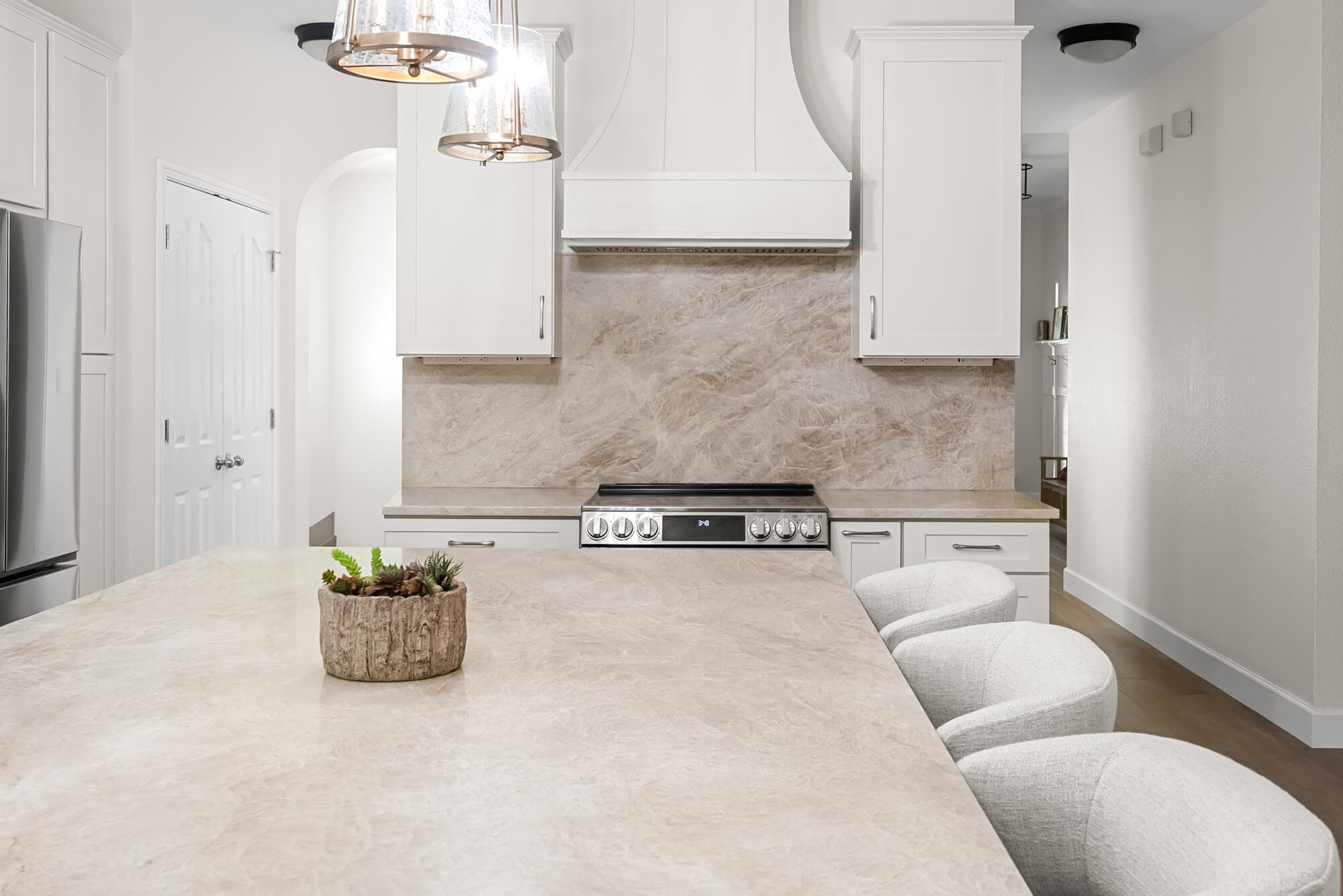
You don’t feel the weight of a countertop decision when you’re scrolling through beautiful kitchen photos. You feel it five years later, wiping up spilled juice, sliding a heavy pot across the edge, or noticing the first chip by the sink. Two surfaces that look identical on day one can age very differently once real life shows up with kids, hot pans, and everyday mess.
More than appearance, choosing the right kitchen countertop material is about selecting a surface that fits your lifestyle, cooking habits, maintenance preferences, and long-term budget.
Today's homeowners have more countertop choices than ever before. While quartz and granite remain two of the most popular kitchen countertop materials, premium options like quartzite and porcelain have become increasingly sought after for their unique combination of beauty, durability, and performance.
So, which is the best countertop material?
The truth is, there isn't a single "best" choice for every home. The right countertop depends on what matters most to you.
This comprehensive countertop comparison will walk you through the advantages and disadvantages of today's leading kitchen countertop materials, helping you confidently choose the surface that best fits your home.
At Cabinet IQ, our designers guide homeowners through this decision every day. Because we fabricate and install quartz, granite, quartzite, and porcelain countertops in-house, we help clients compare real materials, not just pictures, while managing every step of the remodeling process from design through installation.
What Are the Most Popular Kitchen Countertop Materials?
When researching kitchen countertop materials, you'll quickly discover dozens of available options, from tile countertops to laminate and butcher block surfaces, or concrete, marble, and even stainless steel and metal countertops.
While each material has its place, four surfaces consistently stand out for homeowners seeking the ideal balance of beauty, durability, and long-term value:
- Quartz countertops
- Granite countertops
- Quartzite countertops
- Porcelain countertops
Each material offers distinct advantages, and understanding how they're made provides valuable insight into how they'll perform in your kitchen.
Quartz Countertops: Engineered for Everyday Living
Quartz countertops are made from crushed natural quartz combined with polymer resins and pigments to create an engineered stone surface. This manufacturing process produces countertops that are exceptionally durable while offering remarkable consistency in color and pattern.
Because quartz is non-porous, it is moisture-, bacteria-, and stain-resistant without requiring periodic sealing. It's one of the easiest countertop materials to maintain, making it especially popular with busy families, professionals, and homeowners who want a beautiful kitchen without additional upkeep.
Modern manufacturing also allows engineered quartz to mimic the appearance of natural marble, concrete, limestone, and other premium materials while providing a much wider range of colors and finishes than many natural stones.
Granite Countertops: Timeless Natural Stone Beauty
Granite countertops are cut directly from slabs of natural igneous stone formed deep within the earth over millions of years. Every slab is unique, featuring distinctive mineral patterns, veining, and color variations that simply can't be duplicated.
This individuality is one of granite's greatest strengths. Homeowners who appreciate authentic natural materials often choose granite because no two kitchens will ever look exactly alike.
Quartzite is one of the fastest-growing choices among homeowners seeking a premium natural stone countertop.
Often confused with quartz because of its name, quartzite is actually an entirely natural metamorphic rock formed when sandstone is subjected to immense heat and pressure. The result is an exceptionally hard stone that combines the elegant veining often associated with marble with durability comparable to, and sometimes exceeding, that of granite.
Quartzite delivers a luxurious, high-end appearance while offering excellent scratch resistance and heat resistance. Like granite, however, it remains a natural stone and benefits from periodic sealing to remain stain-resistant.
For homeowners who love the sophisticated look of marble but want a more durable surface for an active kitchen, quartzite offers an outstanding balance of beauty and performance.
Porcelain Countertops: Modern Innovation
Porcelain countertops are among the newest premium countertop materials available for residential kitchens, yet they've quickly earned a reputation for exceptional performance.
Manufactured by firing refined clay and natural minerals at extremely high temperatures, porcelain slabs become incredibly dense, durable, and resistant to moisture. Their ultra-low porosity makes them highly resistant to stains, bacteria, and many household chemicals without requiring sealing.
Porcelain is also highly resistant to UV exposure, making it an excellent option for kitchens with abundant natural light as well as outdoor kitchens where color stability is important.
One of porcelain's biggest design advantages is its versatility. Manufacturers can create surfaces that convincingly replicate marble, concrete, natural stone, wood, and even metal while offering sleek, contemporary aesthetics and thinner countertop profiles that are increasingly popular in modern kitchen design.
Common Kitchen Countertop Materials Quick Comparison
Before diving deeper into each category, here's a high-level overview of how today's most popular countertop materials compare.
| Feature | Quartz | Granite | Quartzite | Porcelain |
| Material Type | Engineered stone | Natural stone | Natural stone | Engineered ceramic |
| Appearance | Consistent colors and patterns | Unique natural variation | Marble-like natural veining | Modern designs with realistic stone looks |
| Sealing Required | No | Yes | Yes | No |
| Stain Resistance | Excellent | Very Good (when sealed) | Very Good (when sealed) | Excellent |
| Heat Resistance | Good | Excellent | Excellent | Excellent |
| Scratch Resistance | Very Good | Excellent | Excellent | Excellent |
| UV Resistance | Limited | Excellent | Excellent | Excellent |
| Maintenance | Very Low | Moderate | Moderate | Very Low |
| Best For | Busy households | Traditional kitchens | Luxury kitchens | Modern kitchens & indoor/outdoor applications |
Appearance & Design Flexibility
A countertop often becomes the visual centerpiece of the kitchen, so appearance is just as important as performance. Fortunately, each material offers a distinct aesthetic that complements different design styles.
Quartz: Nearly Unlimited Design Possibilities
Because quartz is engineered, manufacturers have tremendous flexibility in creating colors, patterns, and finishes.
Whether you prefer crisp white countertops, dramatic waterfall islands, subtle concrete-inspired textures, or marble-look surfaces with delicate veining, quartz offers remarkable consistency from slab to slab. This predictable appearance makes it especially appealing for large kitchens where multiple slabs may be required.
Quartz works exceptionally well in:
- Contemporary kitchens
- Transitional homes
- Scandinavian-inspired spaces
- Minimalist designs
- Open-concept remodels
Granite: One-of-a-Kind Character
Granite offers something engineered materials can never provide: complete natural individuality.
Every slab features its own combination of minerals, crystalline movement, and color variation. Some granites are bold and dramatic with sweeping veins, while others display fine speckling and subtle movement.
For homeowners who appreciate authentic natural materials, granite delivers warmth, texture, and character that have made it a favorite for decades.
Granite complements:
- Traditional kitchens
- Rustic homes
- Craftsman architecture
- Farmhouse designs
- Luxury custom homes
Quartzite: Elegant Natural Luxury
Quartzite combines many of the visual characteristics homeowners love about marble with substantially greater durability.
Its flowing veining and soft color palettes create an upscale appearance that's equally at home in classic and contemporary kitchens. Because every slab is naturally formed, quartzite offers the exclusivity and individuality that many luxury homeowners seek.
It's particularly well-suited for:
- High-end kitchen remodels
- Bright, open kitchens
- Transitional interiors
- Luxury contemporary homes
Porcelain: Modern Design Without Limits
Porcelain has expanded the possibilities of countertop design in exciting ways.
Advanced manufacturing technology allows porcelain slabs to reproduce the appearance of marble, limestone, concrete, metal, terrazzo, and even wood with remarkable realism. Large-format slabs also reduce visible seams while thinner profiles contribute to the clean lines favored in modern architecture.
Porcelain is especially popular for:
- Contemporary kitchens
- European-inspired designs
- Minimalist interiors
- Indoor-outdoor living spaces
- Waterfall islands
- Full-height backsplashes

Durability Comparison: Which Countertop Holds Up Best?
A beautiful countertop should also stand up to everyday life. From dropped cookware and busy family dinners to hot pans and accidental spills, durability plays a major role in long-term satisfaction.
While all four materials are considered premium countertop surfaces, each excels in different areas.
Scratch Resistance
Granite, quartzite, and porcelain are all highly scratch-resistant countertop materials that hold up exceptionally well during normal kitchen use.
Quartz is also highly durable, although the resin used to bind engineered quartz can be more susceptible to surface damage from sharp knives or abrasive materials. As with any countertop, using a cutting board is always recommended to protect both the countertop and your kitchen knives.
Heat Resistance
Natural stone countertops, particularly granite and quartzite, offer excellent heat resistance, making them ideal for homeowners who cook frequently.
Porcelain is also exceptionally heat-resistant because it's manufactured using extreme heat during production.
Quartz can tolerate everyday kitchen temperatures and the occasional hot pan or baking sheet for a second or two, but prolonged or regular direct contact with hot cookware may damage the resins used during manufacturing. Using trivets or hot pads is the safest practice regardless of which countertop material you choose.
Chip Resistance
While all four materials are engineered or selected to withstand everyday use, no countertop is completely immune to chipping.
Granite and quartzite are incredibly hard natural stones, but like most stone materials, their edges can chip if struck with significant force from heavy cookware or appliances.
Fortunately, minor chips are often repairable by a professional.
Quartz offers good chip resistance as well, particularly when professionally fabricated with properly finished edges. However, because it contains resin binders, severe impacts along unsupported edges may result in chips that require repair.
Porcelain is exceptionally hard, but its thinner profile means edge impacts deserve extra attention during everyday use and installation. When fabricated and installed correctly by experienced professionals, porcelain countertops provide outstanding durability, but, as with any premium surface, avoiding heavy impacts on exposed edges is recommended.
UV Resistance
Sunlight is another consideration that many homeowners overlook, especially in kitchens with large windows or outdoor living spaces.
Granite, quartzite, and porcelain all offer excellent UV resistance and maintain their color even after years of sun exposure.
Quartz performs exceptionally well indoors, but prolonged exposure to direct ultraviolet light may cause some engineered quartz products to discolor over time due to the resin used during manufacturing. For this reason, quartz is generally recommended for interior applications, while porcelain and natural stone are often preferred for outdoor kitchens or rooms with extensive direct sunlight.
No matter which material you choose, professional fabrication and installation play a significant role in maximizing both appearance and long-term durability.
Maintenance & Cleaning Requirements
Maintenance is often one of the biggest deciding factors when choosing a countertop. While every material benefits from routine cleaning, some require significantly less long-term care than others.
Quartz: Virtually Maintenance-Free
Quartz is one of the easiest countertop materials to own when it comes to maintenance.
Its non-porous surface prevents liquids from soaking into the material, eliminating the need for periodic sealing. Most spills can be cleaned using warm water, a soft cloth, and a small amount of mild dish soap.
For homeowners who want beautiful countertops without adding another maintenance task to their calendar, quartz remains one of the most practical choices available.
Granite: Routine Care for Long-Term Beauty
Granite is naturally extremely durable, and many granite countertops do not need to be sealed. However, because porosity can vary from one slab to another, some granite countertops can benefit from periodic sealing to help protect against moisture and stains.
Daily cleaning is straightforward using warm water and a stone-safe cleaner. With proper maintenance, granite countertops can maintain their appearance for decades while developing the timeless character that makes natural stone so desirable.
Quartzite: Similar Care to Granite
Quartzite shares many maintenance characteristics with granite.
Although it is exceptionally dense and durable, it remains a natural stone and should be sealed periodically to help resist staining. Routine cleaning with pH-neutral stone cleaners is generally all that's required for everyday maintenance.
Homeowners who appreciate natural stone typically find the occasional sealing well worth the investment.
Porcelain: Built for Easy Living
Porcelain is another exceptionally low-maintenance option.
It can create ultra-compact surfaces that are mold, moisture, bacteria, and overall stain resistant without requiring sealers or specialized cleaning products. Most everyday messes wipe away easily with mild soap and water.
For households that prioritize cleanliness, convenience, and durability, porcelain offers one of the simplest maintenance routines of any premium countertop material.
Stain Resistance & Hygienic Performance
The kitchen is one of the busiest—and messiest—rooms in any home. Coffee, wine, cooking oils, tomato sauce, lemon juice, and food coloring all have the potential to stain certain surfaces if left unattended.
- Top Stain- and Bacteria-Resistant: Quartz and porcelain offer excellent stain resistance because they are non-porous materials. Liquids remain on the surface instead of penetrating the countertop, making cleanup quick and reducing the likelihood of bacteria or mold finding places to grow.
- Requires Proper Sealing: Granite and quartzite also perform extremely well when properly sealed. Their protective sealers create a barrier that helps resist moisture and common household stains, although periodic resealing is necessary to maintain that protection.
These hygienic qualities are one reason stone, quartz, and solid-surface materials are commonly used not only in residential kitchens and bathrooms but also in commercial settings such as food preparation areas, research laboratories, reception desks, showrooms, bars, and food service counters where cleanliness is essential.
Which Countertop Material Lasts the Longest?
A professionally installed premium countertop should be viewed as a long-term investment.
Quartz, granite, quartzite, and porcelain can all provide decades of dependable performance when properly maintained. In many homes, they last as long as the kitchen itself.
The actual lifespan of a countertop depends less on the material alone and more on factors such as:
- Professional fabrication and installation
- Proper cabinet support
- Routine cleaning and maintenance
- Appropriate use of cutting boards and trivets
- Periodic sealing for natural stone surfaces
Investing in quality fabrication and installation is just as important as choosing the right material.
Countertop Costs Compared
Countertop pricing depends on much more than the material itself. Slab availability, color rarity, thickness, edge profiles, sink cutouts, fabrication complexity, and installation all influence the final investment.
In general:
- Quartzite and granite: Typically, in the higher end of the range in cost per square foot installed.
- Quartz: Middle-range cost per square foot installed.
- Porcelain: In the lower range of cost per square foot installed among the top four materials.
It's also important to consider ownership costs beyond the initial purchase price.
Quartz and porcelain typically require less maintenance over their lifetime because they don't need periodic sealing. Granite and quartzite may require occasional resealing, but many homeowners feel their natural beauty more than justifies the modest maintenance.
Rather than focusing solely on upfront costs, consider which material provides the best overall resale value based on how you use your kitchen every day.

Best Countertop Material for Different Lifestyles
Best for Busy Families
Recommended: Quartz
For active households with children, quartz combines exceptional stain resistance, simple cleaning, and minimal maintenance. Its non-porous surface makes everyday spills much less stressful.
Best for Serious Home Cooks
Recommended: Granite or Quartzite
Homeowners who cook frequently often appreciate the natural heat resistance and exceptional durability of granite and quartzite. Both materials stand up well to demanding kitchen environments while delivering timeless beauty.
Best for Luxury Kitchen Designs
Recommended: Quartzite
If creating a show-stopping kitchen is your goal, quartzite offers dramatic natural veining and a premium appearance that's difficult to replicate with any other material.
Best for Contemporary Homes
Recommended: Porcelain
Porcelain's thin profiles, seamless appearance, and modern design options make it a natural fit for contemporary architecture and minimalist kitchens.
Best for Low-Maintenance Living
Recommended: Quartz or Porcelain
Both materials require very little maintenance while providing outstanding stain resistance and everyday durability.
Best for Outdoor Kitchens
Recommended: Porcelain or Granite
Because both materials resist ultraviolet exposure, they perform exceptionally well in outdoor kitchens and covered entertainment areas where direct sunlight is common.
Other Kitchen Countertop Materials Worth Considering
While Cabinet IQ specializes in premium quartz, granite, quartzite, and porcelain countertops, homeowners may also encounter other countertop materials during their research.
These include:
- Marble countertops
- Soapstone countertops
- Butcher block countertops
- Laminate countertops
- Concrete countertops
- Stainless steel countertops
- Premium and recycled glass countertops
- Limestone
- Travertine
- Wood countertops
Each material offers its own advantages in terms of appearance, maintenance, durability, and cost. However, for homeowners seeking the ideal combination of long-term performance, beauty, and value, quartz, granite, quartzite, and porcelain consistently remain among today's most popular choices.
Why Homeowners Choose Cabinet IQ for Countertops
Selecting the right countertop is only part of a successful kitchen remodel. Proper design, fabrication, and installation are equally important.
At Cabinet IQ, every project is managed through our proven remodeling process—from Discover and Design through Deployment and Delivery—giving homeowners a single team to guide the project from start to finish.
Unlike companies that outsource fabrication or installation, Cabinet IQ fabricates and installs stone, quartz, and solid-surface countertops in-house. That means tighter quality control, better communication, and a finished product that's designed to fit your kitchen with precision.
Whether you're updating countertops alone or completing a full kitchen remodel, our experienced designers help you compare materials, coordinate cabinetry and countertops, and create a space that's both beautiful and built for everyday life.
Frequently Asked Questions
What is the best countertop material overall?
There isn't a single best countertop material for every homeowner. The right choice depends on your budget, design preferences, cooking habits, and maintenance expectations.
Is quartz better than granite?
Neither material is universally better. Quartz requires less maintenance and offers excellent stain resistance, while granite provides unmatched natural beauty and superior heat resistance. For a deeper comparison, see how quartz vs. granite countertops compare in durability, maintenance, appearance, and cost.
Is quartzite worth the extra cost?
For homeowners seeking a premium natural stone with elegant veining and exceptional durability, quartzite can be an excellent long-term investment.
Are porcelain countertops durable?
Yes. Porcelain countertops are highly resistant to scratches, stains, heat, and UV exposure, making them one of today's most durable countertop options.
Which countertop requires the least maintenance?
Quartz and porcelain are generally considered the easiest premium countertop materials to maintain because neither requires routine sealing.
Which countertop lasts the longest?
With proper installation and care, quartz, granite, quartzite, and porcelain can all provide decades of dependable performance.
Find the Right Countertop for Your Kitchen
Choosing the best countertop material isn't about following trends. The best option for you is the surface that fits the way you live.
Whether you're drawn to the low-maintenance convenience of quartz, the timeless beauty of granite, the luxurious elegance of quartzite, or the modern performance of porcelain, each material offers unique advantages that can elevate your kitchen for years to come.
At Cabinet IQ, our team helps homeowners compare materials side by side, answer questions with honest guidance, and manage every step of the remodeling process, from design through fabrication and installation.
Ready to find the perfect countertop for your home? Schedule a design consultation or visit one of our showrooms to explore our selection of quartz, granite, quartzite, and porcelain countertops in person.