How to Choose a Kitchen Faucet: Types, Finishes & Touchless Faucets
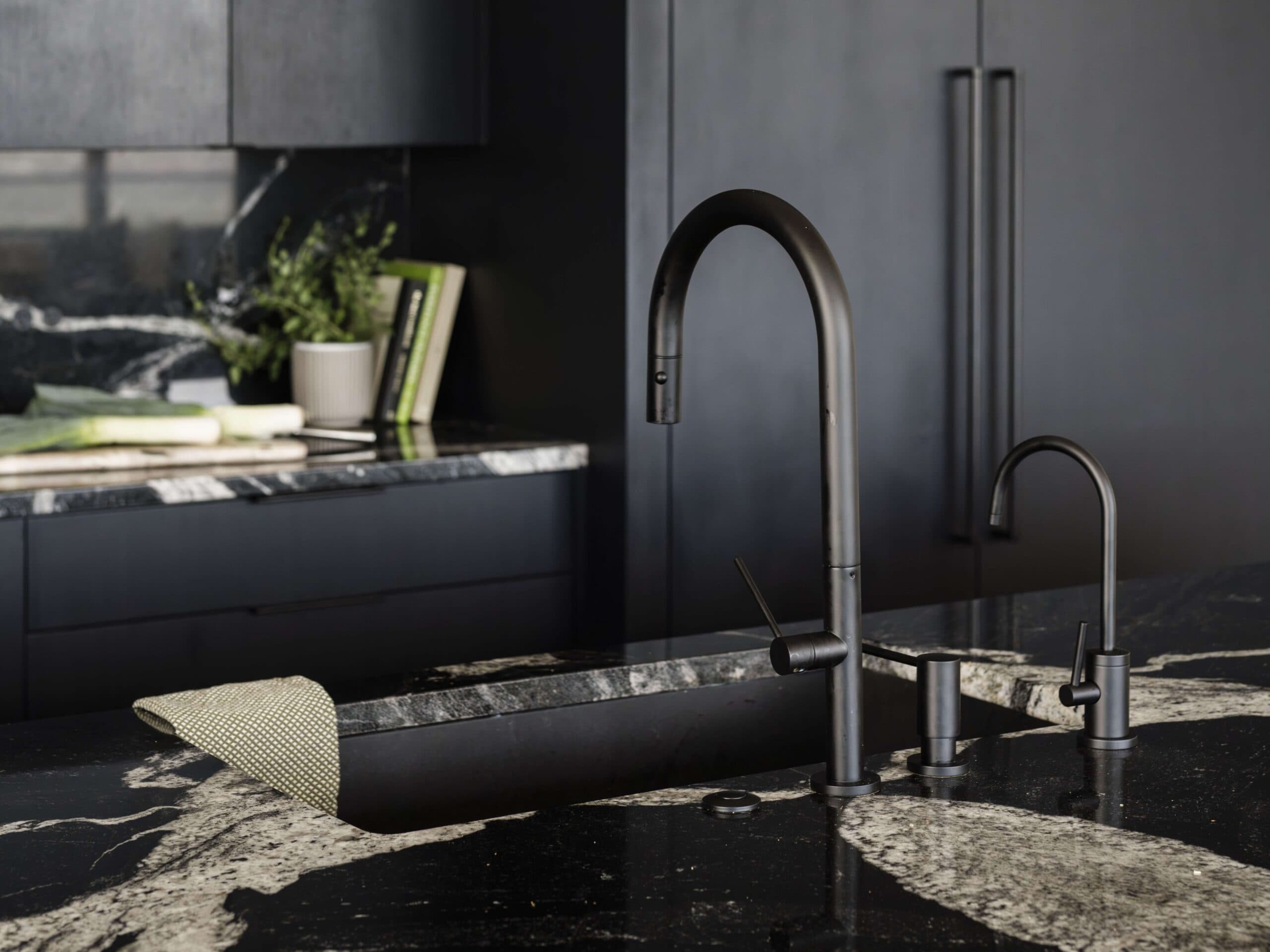
You probably assumed picking a kitchen faucet would be a quick checkbox on your remodel list.
Then you’re met with a sea of options: pull-down, pull-out, bridge, commercial-style; chrome, black, brass, stainless; standard, touchless, and “smart.”
Suddenly, this small fixture feels like a much bigger decision.
And it is. Your faucet has to work with your kitchen sink, clear tall pots, fit the surrounding layout, hold up to daily use, and still look right with your cabinets, countertops, and appliances.
To choose a kitchen faucet well, start with how your kitchen actually works. Sink size, cooking habits, reach, finish, and control style all matter, and the right combination can quickly narrow the field.
Here’s how to compare the main kitchen faucet types, decide whether touchless makes sense, and choose the other key details that will matter every day.
Kitchen Faucet Types vs. Sink Layout and Cooking Habits
The fastest way to narrow down your kitchen faucet choices is to consider it as part of a system: sink layout, backsplash, and your cooking habits. When these elements harmonize, your faucet works seamlessly with your kitchen style and needs.
A Closer Look at Kitchen Faucet Types
- Pull-down faucet: A high-arc fixture with a spray head that pulls downward into the kitchen sink, offering substantial reach and convenience for everyday rinsing and cleanup.
- Pull-out faucet: This lower-profile faucet features a spray head that pulls outward towards you, providing flexible reach in a more compact design. Ideal for tight counter spaces.
- Single-handle faucet: Uses one lever to control both temperature and water flow, suitable for both undermount sinks and drop-in sinks. It's space-efficient and easy to operate with one hand. Short or low-curvature single-handled faucets are a good fit for hard-water regions to prevent mineral buildup.
- Two-handle faucet: Separate handles manage hot and cold water, offering a more traditional look and precise temperature adjustment.
- Bridge faucet: This style has exposed connections for hot and cold controls above the sink deck, leaving both pipes exposed and offering a more rustic, vintage look. It's a classic choice for farmhouse sinks and apron-front sinks.
- Commercial-style faucet: Featuring a taller design with a flexible kitchen hose or exposed spring, it suits larger sinks in high-cook environments and fits especially well with modern styles.
- Pot filler faucet: These fill pot types can be installed either over deep single-bowl sinks or directly installed near the stove. As the name suggests, this type of wall-mount kitchen faucet swings out from the wall to fill large pots, sometimes directly on the stovetop. It's a boon for avid cooks who frequently prepare pasta, soups, or stews, saving the hassle of carrying heavy water-filled pots across the kitchen.
- Touchless and touch-type faucet: Both of these are activated using sensors, but the first does so by using motion sensors for hands-free convenience, while the latter requires a single touch to turn on or off. Non-touch type water faucets are favored in busy kitchens, but consider valve quality, water pressure compatibility, and the need for regular maintenance and batteries.
- Bar or prep faucet: A small secondary faucet complements venting and overflow holes in a prep area or beverage station, enhancing functionality without overwhelming the main kitchen sink.
Choose a faucet type that aligns not just with style, but also fits within the sink, counter space, and your cooking dynamics.
Matching Your Faucet to the Sink
First, align the faucet type with your sink’s structure. The objective is ample reach and height for cookware, avoiding splash zones and collisions with handles.
- Single deep bowl: Opt for a pull-down faucet, pot filler, or commercial-style faucet to easily rinse large pots.
- Shallow double bowl: Pull-out faucets or a lower-arc single-handler keep splashes in check, maintaining reliable performance.
- Apron-front or farmhouse kitchen sinks: Choose a high-arc pull-down, pot filler, or a bridge type, considering wall mount faucet requirements and wall studs for stability.
In cases where the kitchen sink does not fit standard categories, such as with corner or offset bowls, prioritize the best match based on bowl count and depth. Consult with a knowledgeable installer to confirm the faucet’s reach in relation to the drain opening and venting needs.
Consider also how you interact with your kitchen. For example:
- If frequent baking or batch-cooking is your norm, features like a swivel spout or spray types might offer efficiency.
- For shared kitchens, a bar faucet provides a separate work zone.
Coordinating sink layout and faucet type will help you ensure a cohesive, functional kitchen space, whether pursuing a modern style or leaning towards retro vibes.
Standard Single-Handle vs Touchless Faucets: Hygiene, Convenience, and Control
Choosing between touchless and standard single-handle faucets involves deciding between simple mechanical control and sensor-driven convenience.
Both of these types offer improved hygiene and control over the traditional two handles for hot and cold. But the decision hinges on whether you prioritize hands-free hygiene, automation, and the aesthetics of modern kitchen styles over zero-maintenance simplicity and long-term reliability.
When Touchless Faucets Make Sense
Touchless faucets incorporate sensors (some even include LED technology), adding a layer of modern style that can be a hygiene and safety upgrade in the right home.
They excel when hygiene and convenience outweigh the simplicity of manual operation. If you frequently navigate between raw ingredients, hot pans, and your kitchen sink, activating water flow without touching a handle can transform practicality into a necessity.
- Handling raw meat: Touchless faucets save you from transferring bacteria to handles while moving between prep and cleanup zones.
- Accommodating children or mobility issues: Hands-free activation suits households aiming to save time and effort, enhancing ease of use.
- Automatic shutoff: Certain models offer smart solutions by stopping water flow when no activity is detected near the sensors.
However, in homes where high-tech solutions are less appreciated, this can be an unnecessary tech complication.
When Standard Faucets Are Smarter
A standard single-handle pull-down faucet offers reliable performance due to its simple design.
In busy family kitchens, particularly those with hard-water regions, this option remains popular for its predictable valve quality and ease of use.
If handling electronic nuances isn't your forte, a robust mechanical faucet minimizes installation headaches and offers straightforward operation.
- Avoiding tech complications: Enjoy peace of mind without worrying about battery replacements, electrical outlets, or sensor adjustments.
- Light kitchen usage: For a kitchen that sees basic, infrequent use, a simple faucet is adequate and efficient.
- Desire for predictable control: The water flows only when you manually adjust the handle, ensuring intuitive and consistent operation.
The right choice depends on your kitchen style and habits, whether you're seeking a sleek black faucet to complement your modern appliance ensemble or maintaining functionality in a retro-style kitchen with an integrated or composite sink setup.
Standard Single-Handle vs Touchless Faucets Comparison Table
Here is a simple way to see the trade-offs side by side:
| Feature | Pros | Considerations |
| Standard single-handle pull-down | Very reliable, no power needed, familiar operation | Hands get dirty; it relies on you to turn the water off |
| Touchless single-handle | Great hygiene, convenient with messy hands | Needs power and occasional troubleshooting; sensor placement must be right |
| Commercial-style pull-down | Powerful spray, professional look, great for large sinks | Can splash more in shallow sinks; usually standard manual control |
If you lean touchless, favor models with a regular handle you can use during power issues and sensors placed where people actually work, not where they simply walk by. A few minutes spent understanding how that sensor behaves will save you from surprises once the kitchen is busy.

What Actually Matters in a Touchless Faucet: Sensors, Power, Flow, and Spray
If touchless still sounds right after the earlier comparison, it helps to ignore the marketing noise and focus on the core features that drive day-to-day satisfaction. Getting a few fundamentals right will do more for you than a long list of modes you never use.
Key Features to Compare in a Touchless Faucet
Choosing a touchless faucet really comes down to four decisions: how far it senses movement, how it gets power, how easily you can fall back to manual use, and whether its spray options match your cooking style.
- Sensor placement: You want the faucet to trigger when your hands or a pan are in the working area, not every time someone walks past the island. Ensure the sensor has a reasonable range. Look for adjustable sensitivity where available and a clear description or diagram of where the detection zone sits; vague language can lead to surprise behavior once the faucet is in a real kitchen.
- Power source: Batteries are easiest to retrofit; plug-in models work well when power is already available under the sink. Just remember to coordinate any under-sink electrical setup with the appropriate trade professional before cabinets and counters are finalized.
- Manual override: A handle that still works normally if the sensor or power fails. You don't want to wait for batteries just to rinse a plate or wash your hands in the kitchen.
- Spray function: Make sure the spray options match how you rinse cookware, produce, and the sink itself. In hard-water areas, look for spray heads with nozzles you can wipe clean with a thumb and components that are reasonably accessible for maintenance. That small detail saves a lot of frustration later.
Check Flow Rate Standards
Federal standards allow a maximum kitchen faucet flow rate of 2.2 gallons per minute at 60 psi, while many modern faucets operate below that level.
State and local requirements can be more restrictive, so confirm the rated flow rate and applicable requirements before you finalize the fixture.
In short, choose touchless models for reliability, not gimmicks: solid sensors, sensible power, manual control, and simple, useful spray options.
Finish Strategy: Matching Faucets, Hardware, and Appliances
Faucet finish is where functional decisions meet emotion. The goal is simple: tie together your hardware and appliances without creating a “spot magnet” you resent wiping every day.
Think in terms of a metal story. In most kitchens, the faucet and cabinet hardware are the lead characters; appliances either support that story or provide contrast.
Spaces start to feel visually noisy when three or more finishes appear with no clear “lead” metal. You do not have to match every metal exactly, but you do need a plan.
Three Metal-Mixing Fundamentals That Work
A few reliable rules keep your faucet decision from derailing the whole palette.
- Pick one primary metal: First, decide which finish you want your eye to land on. Often stainless, brushed nickel, or matte black on faucets and pulls.
- Add one accent metal: Then let everything else either echo that primary metal choice or quietly support it. Brass or bronze in lighting or small hardware for warmth or contrast.
- Repeat each finish: Every metal should appear in at least two places in the room.
Other Finishing Tips
- Polished chrome is durable and crisp but shows water spots more readily.
- Brushed and matte finishes are more forgiving if you do not want to wipe the faucet constantly.
- With a stainless sink, a stainless or brushed nickel faucet usually disappears in a good way.
- With a composite sink, pick a faucet finish that either echoes the sink color or clearly ties to your hardware so the two do not fight each other.
- Warmer tones like brushed brass look beautiful with white or wood cabinets, but the coating quality matters.
Some manufacturers use more durable coating processes, including PVD finishes, to improve wear resistance. Before deciding, hold finish samples next to your actual counters and cabinets under your real lighting, as screens can shift color, but the way metals interact with your stone and paint in person is what you live with every day.
This is also where coordinated kitchen design helps. Cabinet IQ encourages homeowners to look at finishes alongside cabinetry, countertops, lighting, appliances, and the room as a whole, so the faucet supports the design rather than becoming one more finish competing for attention.
Kitchen Faucet Ergonomics, Cleaning, and Day-to-Day Maintenance
When choosing a kitchen faucet, don't forget about ergonomics, cleaning ease, and daily upkeep. These crucial factors can significantly impact the functionality and appearance of your kitchen, especially in spaces with open plans where the faucet is always visible.
Design for Comfort and Easy Cleaning
Choose a faucet with a design that promotes comfort and minimizes maintenance. Focus on aspects that improve usability and reduce cleaning efforts.
- Handle clearance: Ensure that the single-handle or double-handle type doesn't interfere with your backsplash or window trim when fully open. Handle clearance is a common issue that can be avoided with careful planning.
- Check reach and height: Ensure the pull-down faucet has enough clearance for tall pots without spraying water everywhere. Also, for those with small children or older adults, consider handle types that require low force and discuss suitable hot-water settings with your plumber to ensure safety. A swivel spout or wall-mount faucet could also save on counter space while enhancing operational ease.
- Favor smooth bases: Seams and ridges can trap grime, so opt for faucets with smooth bases to simplify cleaning.
- Plan a care routine: Regularly cleaning aerators can prevent mineral buildup, a common issue in hard-water regions. Use a soft cloth and mild soap, and follow manufacturer instructions to preserve finishes.
- Finishes you can handle: Consider finishes that align with your daily habits and water quality. If you prefer not to dry fixtures, then go for matte or brushed finishes that hide water spots better than shiny chrome.
- Align it with sink and kitchen style: Whether it's a farmhouse sink, undermount sink, or integrated sink, select a faucet that complements it in both function and style.
For consistent long-term performance, prioritize faucets from reputable brands known for reliable performance. Address potential installation headaches by consulting with a professional if extra mounts or drilling faucet holes are necessary for unique setups. If considering multibuy discounts, ensure all kitchen faucets align with your overall kitchen style and appliance finishes.

The Workflow-First Kitchen Faucet Framework
A simple workflow-first framework keeps your faucet decision from spinning out every time you see a new style online. Instead of chasing photos, you put your layout and habits in charge, then let the faucet follow.
Have a Clear View of Your Kitchen Layout
- Map your kitchen's three zones: prep, cook, and clean.
- Ask what your main faucet must do in each: filling stockpots, rinsing greens, cleaning dishes before the dishwasher, or all of the above.
- Those jobs define the non-negotiables: Many designers use repeatable faucet and sink combinations around these jobs, so they are not reinventing the wheel for every project.
Build a Simple Faucet Plan Around That Layout
A three-step framework is usually enough to land on the right faucet and avoid surprises on install day. Think of it as locking the physical constraints first, then layering the function, then finish.
Step 1: Lock the Sink
Choose size, depth, bowl count, and faucet-hole pattern before you fall in love with a faucet. The sink, countertop cutouts, and surrounding clearances set hard limits on what will actually fit.
Step 2: Choose the Kitchen Faucet Type
Match pull-down, pull-out, bridge, commercial-style, or touchless operation to that sink and your tasks. For example, a family-friendly package might pair a deep single bowl with a pull-down sprayer, while a smaller secondary kitchen might use a compact pull-out over a shallow double bowl.
Step 3: Choose the Finish Story
Pick a primary metal that plays well with your cabinets and appliances, then add one accent metal you can repeat in hardware or lighting. This keeps the room feeling cohesive instead of cluttered.
Layer in Quality and Budget Where It Matters
Once type and finish are set, a few quality checks help you decide where to spend and where to save.
- Prioritize internals at the main sink: When budget allows, look closely at valve construction, cartridge type, hose quality, and replacement-part availability.
- Spend more where you work hardest: Invest in your primary kitchen faucet; bar or prep sinks can use simpler models.
- Use warranty as a tie-breaker: Longer, clearer warranties from established brands can make support easier over the life of the faucet.
Most major faucet makers offer a good-better-best ladder.
Using this framework, you can choose “best” where you cook every day and “better” or “good” in secondary spots without guessing. A designer or installer who knows your local market can run through these steps with you quickly and flag any conflicts before you order fixtures.
That same whole-kitchen thinking is built into Cabinet IQ’s design process. Rather than treating the faucet, sink, countertops, cabinetry, and layout as separate decisions, the goal is to resolve how those pieces work together before installation turns small conflicts into expensive ones.
How Cabinet IQ Helps You Choose a Kitchen Faucet With Confidence
If you are still weighing options, bring your photos, rough dimensions, and wish list into a real kitchen plan. Seeing faucet types, finishes, and touchless controls in context makes it easier to move from a long list of possibilities to a choice that actually fits the space.
Cabinet IQ looks at the faucet as part of the whole kitchen, alongside the sink, cabinetry, countertops, clearances, appliances, and workflow, so those decisions work together instead of competing with one another. That coordinated approach helps reduce surprises and creates a clearer path from design through installation.
If you are planning a kitchen remodel, start with a free kitchen consultation and build the plan around the way you actually use your kitchen.