The 5 Best Uses for a Corner Kitchen Cabinet
There is no such thing as too much storage space in modern kitchens. In a room that can easily become full of clutter and is utilized by your entire household every day, maximizing storage space is essential. When thinking about maximizing kitchen space, a corner kitchen cabinet is often thought to be useless and, at […]
There is no such thing as too much storage space in modern kitchen cabinet layouts. In a room that can easily become full of clutter and is utilized by your entire household every day, maximizing your kitchen storage space is essential. When thinking about maximizing kitchen space, a corner kitchen cabinetinstallation is often thought of as a dead corner and, at times, inconvenient. How much can really be done with a corner cabinet? Isn't it just wasted space?
When utilized correctly, a corner cabinet can actually serve as a functional storage solution for keeping important items handy and is not something that should go to waste. With the right layout, a corner area can turn one of the most awkward parts of a kitchen into one of its most useful. It just takes a bit of planning, an understanding of the shape you're working with, and a willingness to think outside the box about what items stored there will actually get used.
Here are the 5 best uses for a corner kitchen cabinet design, plus a clever way to think about the rest of your kitchen's potential.
How to Utilize a Corner Kitchen Cabinet
There are three main types of corner cabinets: diagonal, square, and blind. A traditional corner cabinet often sits at an angle, filling the gap where two runs of countertops meet, while a blind corner cabinet tucks part of the box behind an adjacent run of base cabinets or wall cabinets, leaving a section that's hard to reach without the right accessories. Base blind cabinets are the simplest corner cabinet type to install, which is part of why they show up so often in production kitchens, but they're also the type most likely to turn into a dead corner if nothing is added to help access the back of the box.
Knowing which shape you're working with helps you plan the best corner cabinet solution for your space, whether that's a base corner cabinet, a corner sink cabinet, or a simple pull out shelf system. A corner sink cabinet, for example, uses the angled shape to tuck plumbing out of the way while still centering the sink under a window, which is a clever way to make the corner earn its keep instead of sitting empty. Measuring the depth and width of the space before you plan anything also makes sense, since even a few inches of difference can determine whether a Lazy Susan, a set of cornered drawers, or a pull out shelf will fit comfortably.
1. Lazy Susan
The spinning shelves of a Lazy Susan make items in storage easier to access while making the most out of an unconventional or otherwise inconvenient space. You can use a Lazy Susan to store pots and pans, small kitchen appliances, spices, and more. This is one of the easiest and most effective ways to utilize the limited depth of a corner kitchen cabinet.
Because the shelves rotate a full 360 degrees, nothing gets pushed to the back and forgotten, which makes daily cooking prep faster and less frustrating, and gives the whole box a clutter free feel. A Lazy Susan also works well in a square or diagonal corner cabinet where the middle of the box would otherwise be difficult to reach. Some homeowners choose a half-moon style that fits inside a blind corner, while others prefer a full circle unit built into a corner base cabinet with double doors. Either way, the idea is the same: create a spot where nothing is truly out of reach, no matter how deep the cabinet runs.
2. Cornered Drawers
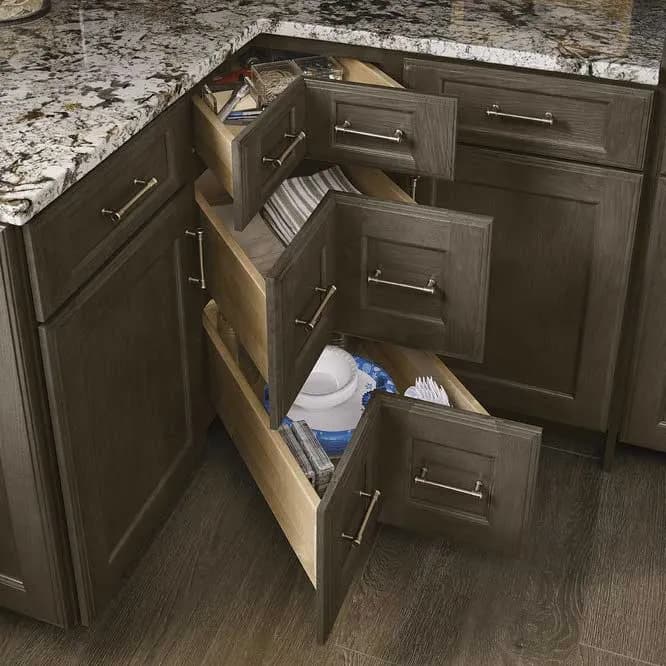
Although not the most traditional design, cornered drawers are built into a cabinet space and can help convert an awkward-sized corner cabinet into a usable amount of storage. Cornered drawers might not work for every style of interior space, but if you can incorporate them into your kitchen, they can be used to effectively store small items like utensils, linens, or paper products.
Base angle corner cabinets create a larger storage space but are expensive, so this option makes the most sense for homeowners planning a custom build rather than a quick refresh. Custom cabinetry gives a design team the ability to shape the drawer boxes to match the exact angle of the corner, which means less wasted depth compared to a standard box that was never designed with a corner in mind. For kitchens where drawers are used constantly throughout the day, cornered drawers can actually outperform a Lazy Susan, since everything slides straight out instead of spinning into view.
3. Hidden Trash Cans
Whether your corner cabinets are large or small, they can likely be used to conceal a trash can. Many homeowners install special doors or pull out shelves that allow a larger bin to slide out smoothly and be removed for emptying. A corner base cabinet can be the perfect place to keep a trash can handy without having it on display in an otherwise beautiful kitchen.
Base blind cabinets are common but hard to access, so this use case is a clever way to put that awkward depth to work. Because the trash can sits toward the front of the pull out shelf, the deeper, harder-to-reach section of the blind corner can hold recycling bins or compost containers instead, items that don't need to be accessed quite as often. This approach also keeps countertop space clear, since there's no need for a freestanding can taking up floor space near the sink or prep area.
4. Open Shelves
Instead of trying to make use of an awkward-sized cabinet drawer, you could renovate a corner kitchen cabinet into open shelving. This will allow you to store medium to larger sized items, like plates and small appliances, with full visibility.
Light-colored corner cabinets make spaces appear larger and brighter, and mixing dark and light tones in cabinetry creates visual interest if you want the corner to double as a design feature rather than just extra corner cabinet storage. Glass-front cabinets add depth and interest to corner spaces as well, giving homeowners a middle option between fully open shelving and closed doors. Open shelving in a corner also tends to encourage better organization, since everything is visible; it's harder to let clutter build up in a spot guests can see across the room.
5. Tall Cabinets
If open shelving does not work for your kitchen, you can still maximize storage space by placing a tall cabinet on your corner countertop space. This serves as the perfect spot to store dishes or cookware you want to keep handy, and it can accommodate bulky items that should be stored in the deepest part of corner cabinets, away from everyday reach.
A tall corner cabinet can also double as a corner pantry in kitchens that don't have a separate pantry closet. Corner pantries offer significant storage but require ample space, so this option tends to work best in larger kitchens or in layouts where the corner sits away from major foot traffic. For a more built-in look, some homeowners choose to run the tall cabinet floor to ceiling, which adds a modern look to the kitchen while making full use of vertical space that would otherwise sit empty above a standard-height box.
Smart Corner Cabinet Accessories to Consider
If none of the five ideas above quite fit your kitchen, there's still a clever way to make sense of that middle ground between two runs of cabinetry. Magic corner pull-out organizers enhance corner cabinet accessibility by bringing items forward instead of forcing you to dig toward the back of the box. These mechanisms attach to the door itself, so opening the cabinet automatically slides the shelving out into the room.
Vertical dividers can organize taller items such as cutting boards and trays, and adding stackable shelves utilizes vertical space that would otherwise sit empty above shorter items. Use clear, labeled bins to quickly identify stored items in cabinets, and removable bins allow grouping of loose items for easy access, which is especially helpful in a blind corner where you can't always see the full shelf at a glance.
Organizing by usage frequency improves accessibility in corner cabinets, so keep everyday items toward the front and rarely used pieces in the back, closer to the deepest, least accessible part of the box. Lighting can enhance visibility in deep corner cabinets, whether that's a simple battery-powered puck light or a wired option tied into the rest of the kitchen's under-cabinet lighting. Adding light to a dark corner does more than help you find things; it also gives the whole area a more modern look and makes the cabinet feel like an intentional part of the design rather than an afterthought.
Corner wall cabinets require 24 inches or more of space to function properly, so it's worth confirming those measurements early if you're planning new construction or a full remodel. Corner pantries offer significant storage but require ample floor space to plan around as well, so it's worth taking time to measure the full footprint of the kitchen before you commit to a layout. A little planning up front goes a long way toward making sure every inch of the room, corners included, actually gets used.
Corner kitchen cabinets can be frustrating but functional storage spaces when they're designed with intention. Whether you land on a Lazy Susan, cornered drawers, a hidden trash can setup, open shelving, or a tall cabinet, the goal is the same: turn what could be wasted space into part of your kitchen's overall storage plan.