How a Waterfall Island Can Fit in Your Kitchen Design
A waterfall kitchen island is one of the most visually arresting design elements you can add to a modern kitchen design or remodeling project. Unlike traditional islands that end where the countertop meets the cabinetry, a waterfall island continues the countertop material vertically down the sides, creating a dramatic, seamless flow from the worktop to […]
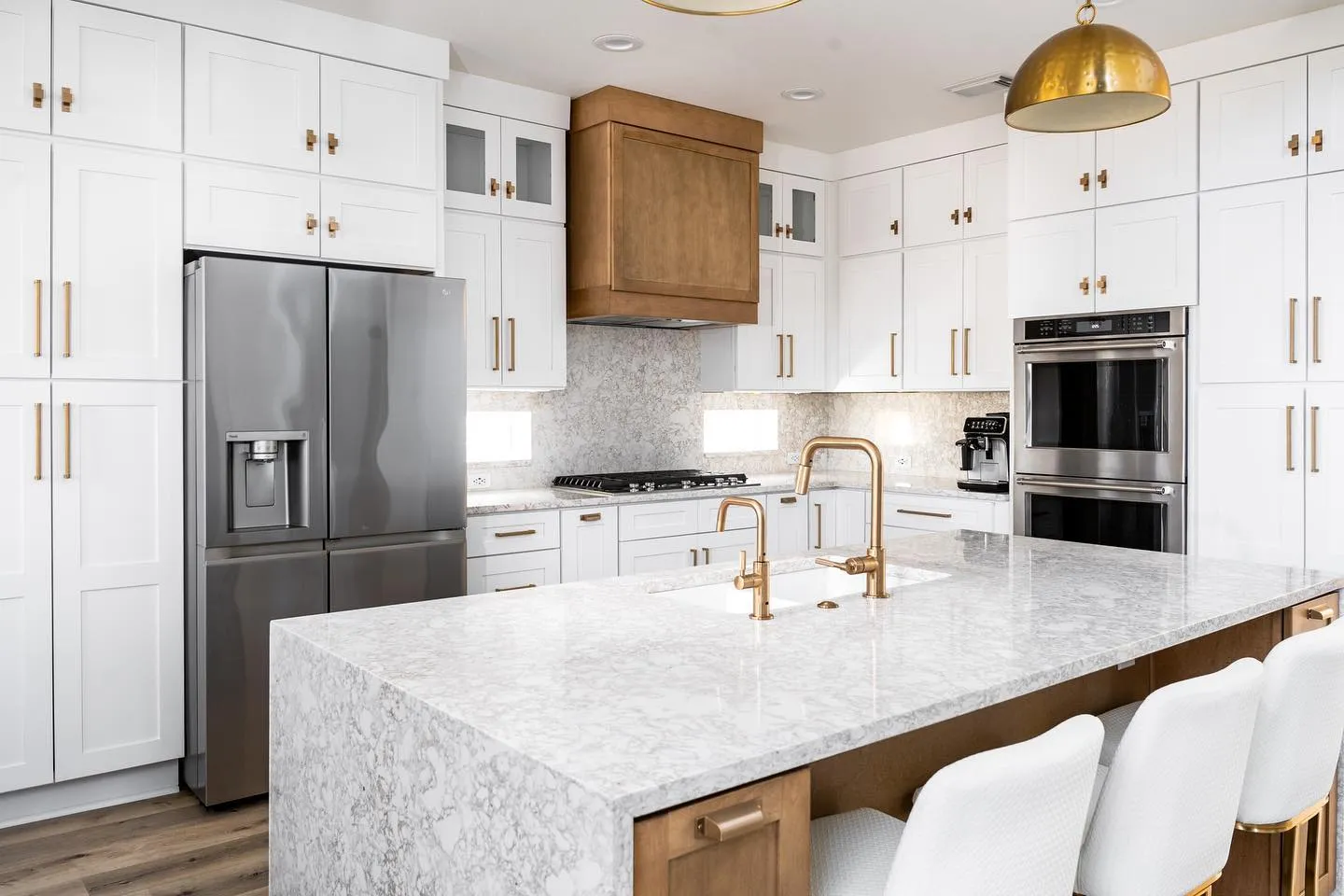
A waterfall kitchen island is one of the most visually arresting design elements you can add to a modern kitchen design or remodeling project. Unlike traditional islands that end where the countertop meets the cabinetry, a waterfall island continues the countertop material vertically down the sides, creating a dramatic, seamless flow from the worktop to the floor.
This wraparound look, also called a waterfall-edge countertop or waterfall edge, turns your island into a sculptural centerpiece, anchoring the space while blending functionality with bold design.
Whether you’re renovating an open-concept kitchen, planning a full home renovation, or upgrading to a more contemporary layout, waterfall island designs offer more than aesthetics. They can enhance your kitchen’s symmetry, hide millwork or appliances, and support design cohesion between cabinetry, countertops, flooring, and fixtures.
But a waterfall countertop isn’t just about looks. It involves constant practical decision-making regarding fabrication, material choice, seating, slab matching, and storage layout.
From quartz and granite to marble or wood, not all materials or installations behave the same. That’s why it’s important to work with an experienced kitchen countertop professional like Cabinet IQ, especially when your goal is to balance visual impact with everyday performance.
Let’s explore how to integrate a waterfall kitchen island into your kitchen remodeling project, and what to consider before committing.
What Is a Waterfall Island?
A waterfall island is a kitchen island where the countertop material continues vertically down one or both ends to meet the floor, creating the appearance of a continuous surface. This vertical extension, often called a waterfall countertop or waterfall edge, continues down the side of the island instead of ending at the top of the cabinetry. This style emphasizes clean lines and symmetry, core traits of modern kitchen design, and instantly draws the eye.
You’ll often find waterfall countertop edges on islands with flat-panel or flat-front cabinetry, especially in kitchens where minimalism and material quality are prioritized. However, waterfall countertop styles can also be adapted to more transitional or rustic kitchens using custom cabinetry, wood detailing, or contrasting slab choices.
The waterfall countertop edge also hides cabinetry seams or support millwork, making the island feel like a sculpted block of stone or engineered surface. It’s particularly effective when combined with materials like quartz, quartzite, and other fabricated surfaces that allow for precision mitered edges and bookmatching techniques.
Granite and marble also work beautifully, but may require more care in slab selection due to natural veining.
Why Homeowners Love Waterfall Kitchen Island Countertops
Waterfall islands have become a popular choice in both custom homes and upscale kitchen remodels for good reason. The benefits go beyond surface-level beauty because they reflect a broader shift in kitchen design, where every element is both functional and intentional.
Seamless Flow and Visual Impact
A waterfall-edge countertop provides a seamless flow of material from the worktop down both sides of the island, creating a sculptural, seamless appearance. This design continuity enhances visual symmetry—especially in open floor plans—and makes bold materials like quartz, granite, porcelain, and sintered stone stand out. When used with white countertops, strong veining, or bookmatched slabs, waterfall kitchen island designs become natural focal points.
Versatility in Style and Materials
Designers and homeowners love the flexibility that waterfall islands offer. From solid walnut bases and white oak cabinetry to stainless steel or flat-panel cabinetry, the waterfall edge pairs effortlessly with a range of finishes and millwork styles. Whether you’re going for sleek modern minimalism or rich material contrast, this feature adapts to your aesthetic.
Functionality for Daily Living
Beyond aesthetics, waterfall countertops bring added utility. Many include overhangs for bar seating or a breakfast bar. When installed by a professional fabricator, they’re designed for longevity, utilizing techniques such as slab matching, proper epoxy seams, waterproofing, and precise mitered edges
When a Waterfall Island Makes the Most Sense
Not every kitchen layout is ideal for a waterfall island, but when the conditions are right, the impact is unforgettable. Here’s when homeowners should seriously consider adding one to their remodeling project.
Best for Open Layouts and Visual Continuity
Waterfall countertops work especially well in open-concept kitchens where the island is fully visible from adjacent living or dining zones. These designs rely on flow and cohesion, and a waterfall island helps ground the space while adding an architectural element. If your island is positioned to face guests or family members, a clean waterfall edge is more visually appealing than exposed cabinet panels or support legs.
Ideal for Modern and Minimalist Designs
In modern kitchen design, the beauty is often in the simplicity.
- Waterfall kitchen island designs align perfectly with flat-panel cabinetry, integrated storage, and streamlined appliances.
- The uninterrupted countertop material adds polish and intentionality, making the island feel like a curated statement piece rather than a utilitarian block.
- Materials like quartz and porcelain are especially popular in these settings, offering precision fabrication and slab consistency.
Smart Fit for Luxury Remodels and New Builds
If you’re investing in high-end finishes, luxury appliances, or custom cabinetry, a waterfall island complements that investment. It’s particularly well-suited to newly constructed kitchens where layout, cabinetry runs, and millwork can be tailored from scratch.
But it’s also a bold addition to a kitchen remodeling project, especially when upgrading countertops or replacing outdated worktops with premium granite or quartzite.
How Much Does a Waterfall Island Cost?
A waterfall island typically costs more than a standard kitchen island countertop because it requires additional countertop material, more precise fabrication, and added installation work. The final cost depends largely on the size of the island, countertop material, whether the waterfall extends down one or both sides, and the complexity of matching seams or veining.
With natural stone such as granite or marble, slab selection and vein alignment can also affect the amount of material and fabrication required. Creating a continuous appearance may require additional planning so the horizontal countertop transitions naturally into the vertical waterfall panel.
Rather than budgeting for the waterfall edge as a simple countertop upgrade, consider it as part of the island's overall design and fabrication. Comparing material options and deciding early whether you want a waterfall on one or both ends can help you balance the look you want with your remodeling budget.
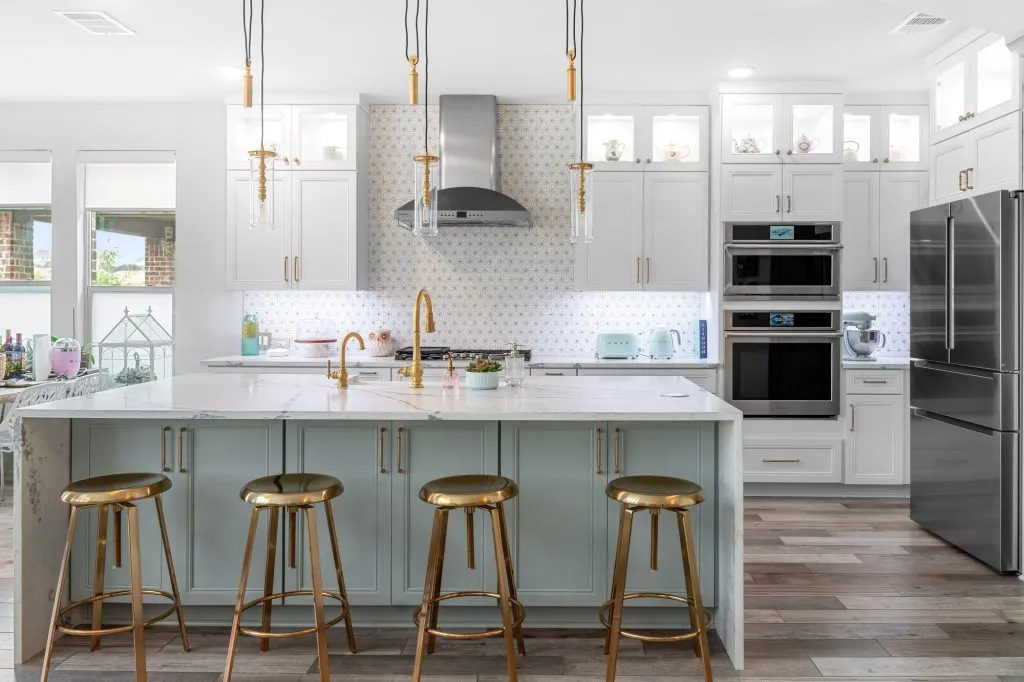
Popular Countertop Materials for Waterfall Islands
The success of any waterfall island depends on choosing the right countertop material; one that delivers durability, visual harmony, and ease of maintenance.
Here’s how the most popular options compare.
Quartz – The Most Versatile and Consistent Option
Quartz remains the top material choice for waterfall island designs. As an engineered stone, it offers consistency in color and veining, which makes slab matching and bookmatching easier for fabricators. It’s also less porous than natural stone options, making it a strong candidate for waterproof countertops, ideal around undermount sinks or prep zones.
Quartz holds mitered corners beautifully, doesn’t require sealing, and comes in a vast range of styles, from soft white countertops to dramatic marble-inspired patterns.
Granite – Bold, Natural Beauty with Strong Veining
Granite delivers unmatched depth and organic movement, especially in darker tones or slabs with expressive veining. It’s a top choice when you want a waterfall countertop edge that stands out. While it may require sealing to stay stain-resistant and water-repellent, granite is extremely durable once properly installed.
Due to its natural variation, working with an experienced fabricator is critical for slab alignment and edge integrity, especially when mitering the countertop material at the island’s corners.
Porcelain and Sintered Stone – Lightweight, High-Impact Surfaces
Both porcelain and sintered stone are increasingly used in modern kitchens for their ultra-thin profiles and advanced performance characteristics. These materials are scratch-resistant and UV-stable, and can be fabricated into dramatic waterfall islands without adding weight stress to the cabinetry. They’re ideal for minimalist spaces where the focus is on sleek lines and material purity.
However, they offer less durability than quartz or granite, which can be a major disadvantage for any waterfall island countertop material. Kitchen islands are high-use kitchen zones and surfaces that will also have to withstand constant impacts and contact on the sides.
Other Materials – Marble, Quartzite, Stainless Steel, and Wood
- Marble offers timeless elegance but demands regular sealing and gentle care.
- Quartzite is harder and more durable than marble, with the high-end look many homeowners love.
- Stainless steel creates an industrial-chic look and pairs well with flat-front cabinetry or exposed brick.
- Wood or butcher block waterfall edges, especially in walnut or white oak, can soften an otherwise modern kitchen, but require much more maintenance and sealing to handle spills and moisture.
No matter the material, ensure your fabricator is experienced in edge mitering, slab layout, and epoxy seam work to create a cohesive and durable result.
Design Considerations Before You Commit
Adding a waterfall countertop kitchen island is a major visual and structural decision in any kitchen remodeling project. It’s not just about the countertop, but about how it fits into the entire kitchen zone, including traffic flow, cabinetry, millwork, storage, and seating.
Island Size and Proportions Matter
A waterfall countertop works best on islands that are large enough to balance the bold visual weight of the slab. If your kitchen island is too narrow or short, the vertical drop may feel heavy or out of scale. Aim for a width and depth that leaves room for movement around all sides, while still allowing for overhang space for bar seating or a breakfast bar.
Consider Foot Traffic and Workflow
Waterfall sides can restrict side access or block pathways if the island is placed too close to other kitchen features. Evaluate how the waterfall countertop edge will interact with nearby cabinetry runs, appliances, and walking zones. Ideally, allow at least 42–48 inches of clearance between the island and perimeter countertops for smooth movement, especially if multiple cooks use the kitchen simultaneously.
Electrical, Appliances, and Utility Access
If your island includes electrical outlets, microwave drawers, or a wine fridge, make sure those are compatible with the waterfall design. Waterfall ends can conceal wiring or outlet boxes, but they require precise millwork integration and often custom cabinetry cutouts.
Also, consider if you’ll be adding an undermount sink or prep sink to the island. Waterproof countertops, especially with quartz or properly sealed granite, are essential for wet zones. Fabrication should include edge sealing and moisture-resistant adhesives to prevent long-term damage.
Think Through Storage and Seating
Waterfall island designs often conceal storage within side cabinetry or drawers, which can be lost if both ends of the island are wrapped in stone. We’ll go into further detail later, but know that if maximizing storage is important, consider using a single waterfall edge and keeping the other end open for drawer access or floating shelves.
The countertop overhang should also be planned early. To accommodate bar seating comfortably, allow for 15–18 inches of overhang with proper structural support, whether hidden corbels or internal steel braces, under the waterfall countertop edge.
How to Match Waterfall Islands with Your Kitchen Style
Waterfall islands aren’t just for ultra-modern spaces. When carefully integrated, they can work beautifully in a range of kitchen aesthetics, from sleek contemporary lofts to warm transitional homes. The key is choosing the right material, finish, and millwork to align with your kitchen’s broader design language.
Modern and Minimalist Kitchens
In a modern kitchen design, clean lines and streamlined surfaces are everything.
- Pairing a quartz waterfall countertop with flat-front cabinetry in a matte or high-gloss finish creates a polished, architectural vibe.
- Neutral-toned countertops, like white quartz, pale gray, or soft veined porcelain, keep the palette light and cohesive.
- A solid waterfall edge with minimal seams enhances that clean-lined look.
Transitional and Contemporary Spaces
If your kitchen blends classic and modern elements, a waterfall island can act as the unifying design element. For example:
- Pairing a white countertop waterfall edge with shaker cabinetry or white oak millwork strikes a perfect balance.
- Use warm-toned quartz or bookmatched granite slabs to add texture and depth, especially in spaces with layered lighting and mixed finishes.
Rustic, Industrial, or Eclectic Kitchens
Waterfall countertop edges aren’t exclusive to clean, minimalist design.
- In industrial kitchens, combining stainless steel appliances, exposed shelving, and a concrete or quartz waterfall island creates an urban, high-contrast look.
- In rustic kitchens, walnut or white oak cabinetry paired with a stone waterfall countertop offers a grounded, organic aesthetic.
- For eclectic spaces, consider combining a bold stone like quartzite with custom cabinetry and mixed metal finishes to create a one-of-a-kind focal point.
Just ensure the slab’s veining or patterns are thoughtfully placed during fabrication to avoid visual chaos.
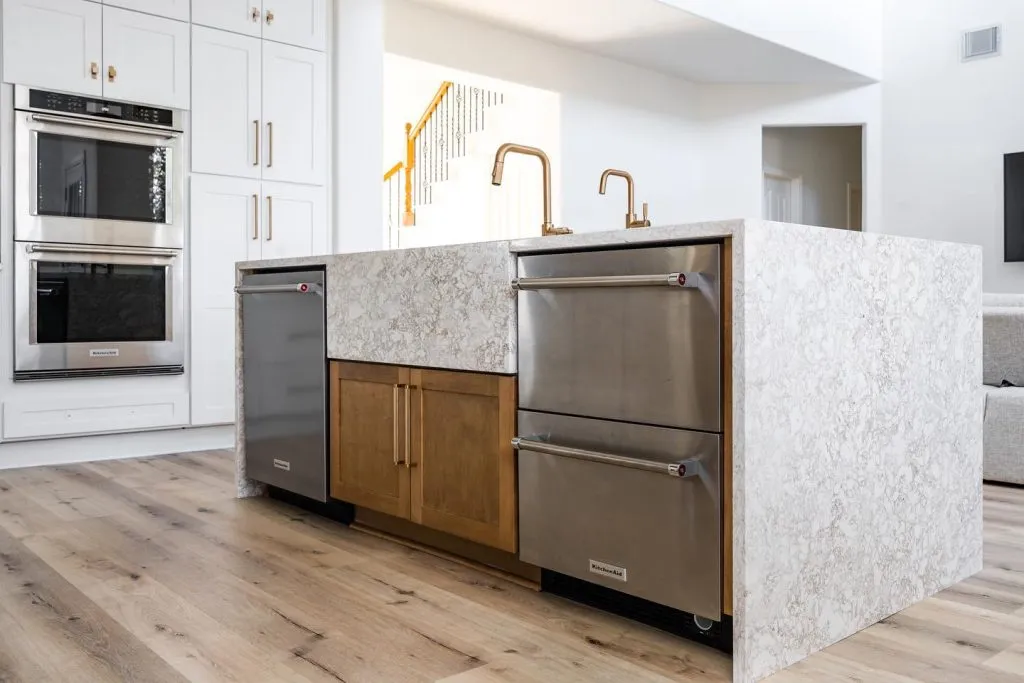
Storage, Seating & Functionality Tips
As we mentioned earlier, while waterfall kitchen island designs often steal the spotlight visually, they also need to support everyday functionality. Smart planning ensures your island not only looks good, but also works well.
Maximize Storage Without Losing Aesthetics
Waterfall edges can limit where cabinets and drawers are placed, especially when wrapping both ends of the island.
- If storage is a priority, consider using only one waterfall side or incorporating custom cabinetry behind the waterfall panels to maintain hidden access.
- Flat-panel cabinetry, finished in complementary wood or paint tones, can blend seamlessly beneath the waterfall to preserve the sculptural effect.
- For open layouts, a single waterfall edge can balance design and utility, creating drama on one end while keeping storage open on the other.
Plan for Comfortable and Functional Seating
If your island includes a breakfast bar or bar seating area, make sure the overhang depth supports actual use.
- Aim for 15–18 inches of overhang for counter-height stools.
- Waterfall countertop edges don’t inherently provide this clearance, so your fabricator must plan structural supports, like hidden corbels, steel braces, or extended millwork, beneath the stone.
- You want to avoid placing stools in high-traffic paths or crowding adjacent cabinetry runs.
Always consider how the island height and seating placement align with nearby kitchen zones.
Durable Materials and Fabrication Details
Daily use means your waterfall island must withstand bumps, spills, and cooking messes. Engineered materials like quartz or sintered stone offer excellent resistance to stains, scratches, and moisture. For natural stone like granite or quartzite, ensure a quality sealer is used, especially around undermount sinks or prep areas.
Fabrication precision is essential. Poorly joined corners or visible epoxy seams can detract from the effect.
Common Mistakes to Avoid
Waterfall countertops are a high-impact choice, but if not planned carefully, they can become a source of frustration or added cost. Here are common pitfalls homeowners should avoid.
Choosing Form Over Function
A perfectly styled waterfall island won’t help if it disrupts the kitchen’s functionality.
Be cautious of designs that reduce seating, block storage access, or shrink traffic zones. Make sure the island works with the rest of your kitchen layout and supports your daily routines.
Ignoring Material and Maintenance Needs
Not all materials are ideal for waterfall-edge fabrication.
- Marble, while beautiful, is prone to staining and etching.
- Wood, travertine, and even some quartzites can be tricky if not sealed properly.
Choose materials that match your lifestyle and maintenance tolerance, and don’t skip sealing or waterproofing near sinks and cooking zones.
Poor Slab Matching or Vein Alignment
The dramatic visual flow of a waterfall island depends on precise slab alignment. A mismatched seam or misaligned vein can ruin the look.
Always ask to preview layouts showing how veining will “waterfall” over the edge. Bookmatching or pattern continuation should be prioritized when working with bold stone patterns.
Working With an Inexperienced Fabricator
Waterfall islands demand expert installation. From mitered corners and invisible seams to hidden supports and epoxy work, every detail matters. Avoid low-cost fabricators unfamiliar with waterfall techniques.
At Cabinet IQ, our team specializes in quartz and granite fabrication, with proven experience in building structurally sound, visually seamless islands.
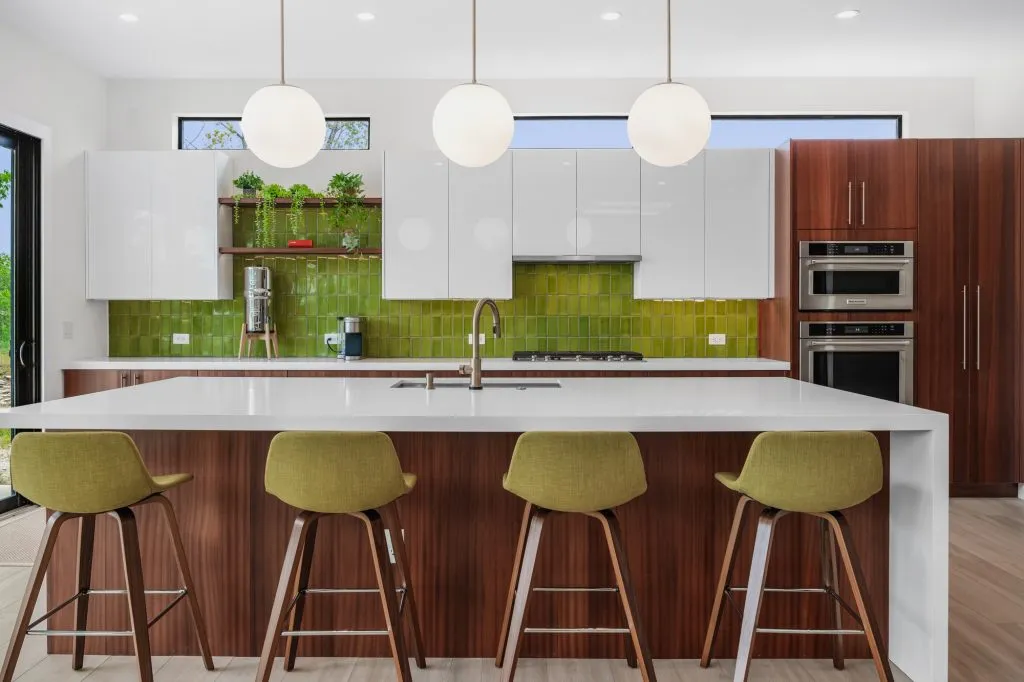
Why Granite and Quartz Are the Smartest Choices
While there are many countertop materials available for waterfall kitchen islands, quartz and granite stand out as the most practical and design-flexible options, especially for homeowners seeking performance, aesthetics, and longevity.
Quartz – Engineered for Consistency and Low Maintenance
Quartz is one of the most popular choices for waterfall-edge countertops because it’s engineered to perform well in high-use kitchen zones while offering exceptional design flexibility.
- Consistent veining and color: Ideal for slab matching and bookmatching across the waterfall edge
- Nonporous surface: No sealing required; highly resistant to stains, bacteria, and moisture
- Durable and chip-resistant: Holds up well in busy prep zones and around undermount sinks
- Easy to maintain: Cleans easily with soap and water; requires little upkeep
- Design flexibility: Available in styles that mimic marble, concrete, or solid whites—great for flat-panel cabinetry and minimalist kitchens
- Pairing compatibility: Matches beautifully with white oak cabinetry, stainless steel appliances, and modern millwork
Granite – Durable, Timeless, and Bold
Granite offers unmatched natural beauty and strength, making it a top choice for homeowners who want an eye-catching, durable waterfall kitchen island with a timeless feel.
- Naturally unique patterns: No two slabs are alike; ideal for creating bold, high-impact focal points
- Highly durable: Scratch- and heat-resistant when sealed properly
- Water-resistant: With proper sealing, granite repels moisture—great for areas near sinks or dishwashers
- Long-lasting: Holds up beautifully over time with basic care
- Strong design statement: Excellent for darker islands or dramatic veining
- Warm, organic textures: Pairs well with solid walnut, white oak, or custom cabinetry for contrast
Waterfall Island Ideas That Work
Whether you’re leaning toward a sleek, all-white design or something more expressive, there are countless ways to tailor a waterfall kitchen island to your space. Here are a few popular and effective ideas that combine aesthetic impact with functional design:
Monochromatic Waterfall with White Quartz
A white quartz waterfall island delivers a clean, bright centerpiece, ideal for modern kitchens with white oak cabinetry, stainless steel appliances, or flat-front cabinetry. This minimalist look works well in open spaces where natural light and neutral tones create a calm, sophisticated atmosphere.
Bold Veining for Maximum Visual Flow
Using materials like granite or dramatic veined quartz, you can create a waterfall countertop island that feels like a piece of art. This is especially effective in kitchens with simple cabinetry or subdued color palettes, allowing the countertop to take center stage. Proper slab matching ensures that the veining flows cleanly over the edge without visual interruption.
Contrasting Island for Depth and Drama
Try pairing a dark quartz or quartzite waterfall countertop with lighter cabinetry for contrast. A charcoal or slate-toned waterfall island surface wrapped in stone offers visual grounding in a white or neutral kitchen. This approach also works well in transitional kitchens with mixed metals or textured finishes.
Natural Wood Base with Stone Waterfall
Combine a solid walnut base or white oak cabinetry with a marble-inspired quartz or granite waterfall. This mix of textures brings warmth to the stone’s sleek finish, ideal for blending rustic elements with contemporary design. Be sure the wood base is sealed and finished to handle moisture and cleaning near the lower edge.
Dual Waterfall Ends with Central Seating Zone
For larger kitchens, consider wrapping both ends of the island with a waterfall edge while leaving the center open for seating. This design provides symmetry and drama while still supporting function, ideal for homes that entertain often or need expanded prep space.
Work with Designers Who Understand the Details
A successful waterfall kitchen island comes down to aligning the island with the overall kitchen design, ensuring precise fabrication, and addressing practical needs like seating, storage, slab flow, and waterproofing. That’s where working with an experienced design and fabrication team makes all the difference.
Expert Fabrication for Precision and Performance
Waterfall-edge countertops require meticulous craftsmanship. At Cabinet IQ, our certified installers and countertop specialists ensure that every mitered edge, epoxy seam, and bookmatched vein is flawlessly executed. We take care to align each slab’s veining and movement so your waterfall edge feels seamless, whether you’re using bold granite, clean white quartz, or a specialty surface like quartzite.
We also build every island for real-world use: proper overhang support for bar seating, moisture control around sinks, and compatibility with cabinetry, outlets, and appliances.
Our granite and quartz expertise means your design is not only beautiful, but built to last.
Personalized Design Support and Visualization Tools
Choosing a waterfall island involves dozens of decisions, which is why our design process includes 3D renderings, material samples, and slab previews to help you visualize the final result before a single cut is made.
Our team guides you through layout adjustments, color pairing, and countertop design options so you feel confident that every design element, from flat-panel cabinetry to countertop thickness, works in harmony.
Whether you’re upgrading your space or building your dream kitchen from scratch, Cabinet IQ helps turn high-end concepts into everyday luxury.
Ready to Build Your Dream Waterfall Island?
A waterfall kitchen island blends sculpture with substance. It enhances your home’s value, improves flow, and creates a showpiece that balances beauty with practicality. As one of today’s most sought-after island ideas in modern interior design, waterfall countertops create a seamless look where the island countertop material flows vertically to the floor, transforming a functional surface into architectural art.
Choosing the right countertop edge and material is essential to achieving this effect. Whether you prefer the durability of a quartz countertop, the timeless appeal of a marble countertop, or the natural character of a granite countertop, each option offers unique benefits. Quartz is a popular choice for waterfall countertops thanks to its strength, low maintenance, and consistent patterning that allows for clean slab matching. Granite delivers bold, organic movement that makes a dramatic waterfall counter, while a white marble kitchen creates a soft, luxurious aesthetic that elevates the entire space.
Material expertise becomes especially important when designing a waterfall counter that integrates practical features like a discreetly placed electrical outlet, seating overhangs, or transitions to complementary elements such as wood cabinetry. Proper slab alignment, structural support, and waterproofing ensure your island countertop is not only visually stunning but built to withstand everyday use.
At Cabinet IQ, we specialize in fabricating and installing premium quartz and granite countertops for kitchen islands, full remodels, and new construction. Our team understands the technical precision required for waterfall countertops, from mitered countertop edge fabrication to seamless installation that highlights the beauty of each quartz countertop, marble countertop, or granite slab.
Our 57-point design quality check, combined with our commitment to a 6-star client experience, ensures your waterfall edge is executed with precision and care, from consultation to final installation. Whether you envision a bold granite statement piece, a sleek quartz waterfall counter, or an elegant white marble kitchen centerpiece, we bring craftsmanship and attention to detail that turns inspired island ideas into reality.
Let’s bring your waterfall island vision to life.
Whether you want a minimalist white quartz island, a bold granite centerpiece, or something completely custom, we’re here to help.
Schedule a showroom visit and consultation today and explore how Cabinet IQ can transform your kitchen island into the heart of your home.