Choosing Cabinets for a Transitional Style Kitchen
When designing a kitchen that strikes the perfect balance between timeless charm and contemporary edge, few styles offer the versatility and sophistication of a transitional kitchen. Defined by its seamless blend of classic craftsmanship and modern simplicity, this aesthetic is a favorite among homeowners seeking a kitchen remodel that feels both fresh and enduring. Of […]
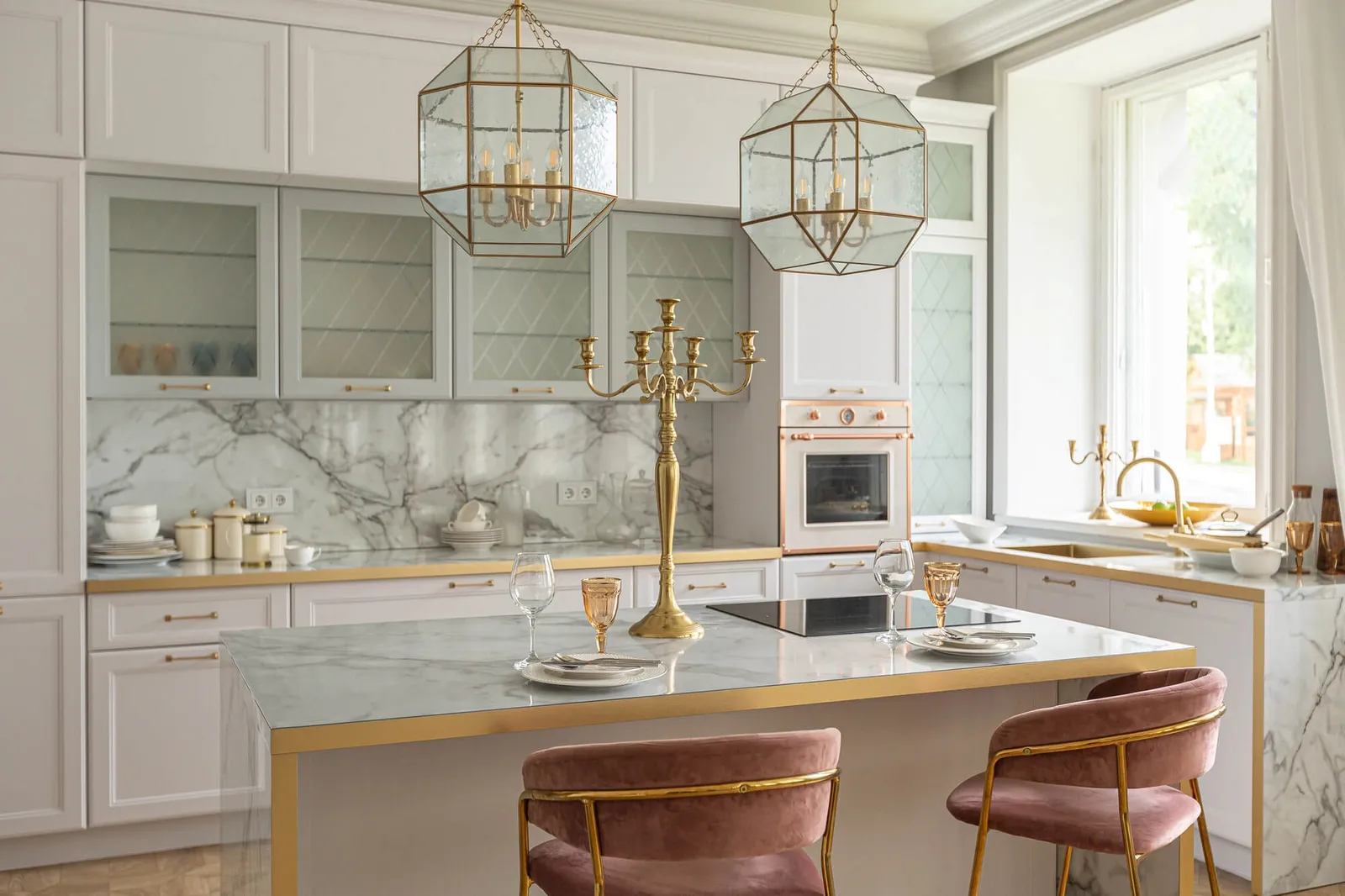
When designing a kitchen that strikes the perfect balance between timeless charm and contemporary edge, few styles offer the versatility and sophistication of a transitional kitchen. Defined by its seamless blend of classic craftsmanship and modern simplicity, this aesthetic is a favorite among homeowners seeking a kitchen remodel that feels both fresh and enduring.
Of course, at the heart of any transitional-style kitchen lies the cabinetry—an architectural feature that not only defines the room’s function but also anchors its overall aesthetic. From Shaker-style doors to clean hardware lines and neutral color palettes, transitional kitchen cabinets are essential to achieving a look that harmonizes tradition with innovation.
Whether you’re updating your current layout or embarking on a full kitchen transformation, after reading this guide, you’ll know more than enough about the key elements of this style, helping you make design choices that are both stylish and practical.
What Is a Transitional-Style Kitchen?
A transitional-style kitchen is where traditional craftsmanship meets modern minimalism. Popular among homeowners for its versatile and timeless appeal, this design approach fuses the best elements of contemporary styles with ageless and classic styles
This hybrid approach allows for flexibility and personalization. For instance, cabinetry may feature classic Shaker-style doors painted in neutral tones, while sleek countertops and appliances reflect a more modern sensibility.
According to the National Kitchen and Bath Association (NKBA), transitional kitchens are consistently among the most requested kitchen remodeling projects, balancing elegance and functionality and clean architectural lines with warm textures, offering a design that feels both current and enduring.
Key design cues of a transitional kitchen include a neutral color palette, strategic use of natural light, and a layout that prioritizes flow and usability.
Transitional kitchens often incorporate features like a wood-paneled ceiling, hardwood floors, a graceful arch between kitchen zones, or layered lighting that blends form with function. It’s the ideal choice for those who appreciate the aesthetic of traditional cabinetry but crave the seamless flow and simplicity of contemporary spaces.
Key Design Elements of a Transitional Kitchen
Understanding the foundational elements of a transitional kitchen is essential before selecting cabinetry, hardware, or finishes. These kitchens are built on principles of balance, function, as well as airy and casual elegance. Every element, from layout to lighting, contributes to the overall feeling of a space that’s curated yet approachable.
- Neutral Color Palette and Materials: Neutral color schemes—such as whites, greys, and beiges—dominate transitional kitchens. These are often complemented by natural materials like wood and stone. A wood-paneled ceiling, for instance, can add warmth while preserving the sleek lines of the design.
- Emphasis on Layout and Seamless Flow: A hallmark of this style is a kitchen layout designed for intuitive use, meaning that there should be a seamless flow between prep, cooking, and gathering areas. Transitional kitchens often feature open layouts, allowing for efficient use of space and natural light. This functional design appeals to homeowners looking for both beauty and practicality.
- Integration of Natural Light: Maximizing natural light is essential. Transitional kitchens often feature large windows, glass-paneled doors, and reflective surfaces to amplify daylight. The resulting environment feels fresh, open, and visually spacious.
- Balanced Mix of Textures and Finishes: Smooth quartz countertops might be paired with subtly grained, dark wood cabinets, while matte hardware complements glossy backsplashes. This thoughtful contrast enhances depth without visual chaos, a critical principle in transitional design.
Cabinets: The Cornerstone Feature of The Transitional Kitchen Style
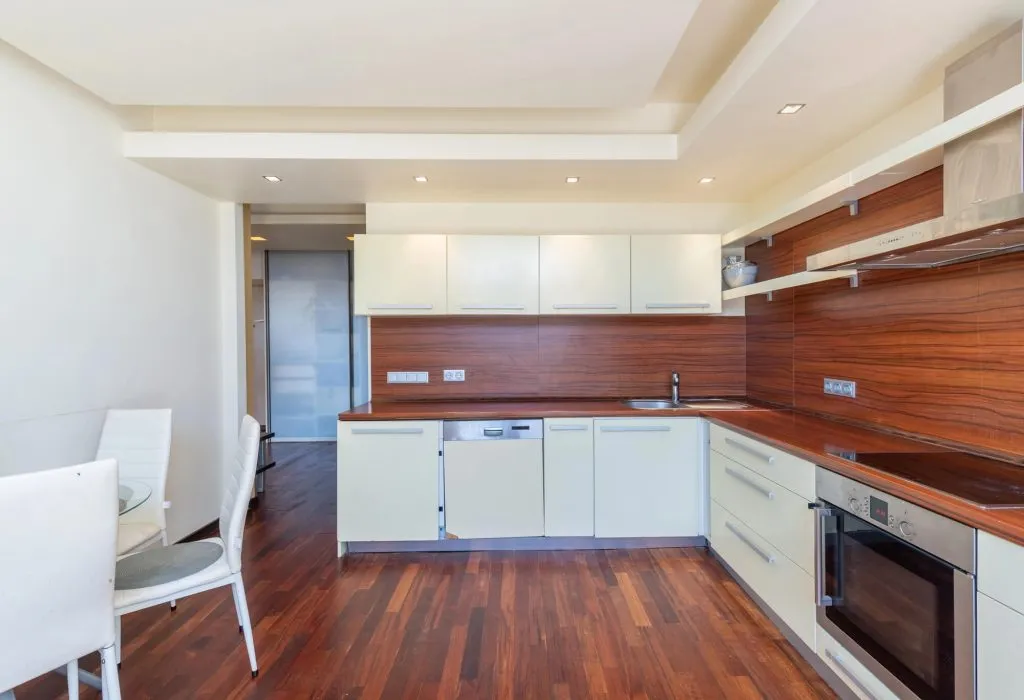
Cabinetry is the anchor of any transitional-style kitchen design. More than just storage, it defines the room’s visual rhythm, sets the tone for the space, and bridges the gap between traditional and contemporary design elements. Choosing the right cabinet design is one of the most crucial decisions in any transitional kitchen remodel.
Most Common Door Styles: Shaker and Slab-Front
The transitional kitchen style allows for a wide variety of creativity in cabinetry as long as it follows certain rules about balancing traditional kitchen functionality with the contemporary style. Nonetheless, two styles of kitchen cabinets are the top choices for transitional kitchen design, and those are shake and slab-front.
- Shaker cabinets: Shaker-style doors dominate transitional kitchen cabinets for a reason. They’re clean, timeless, and subtly detailed. Their recessed panels strike a balance between ornate traditional cabinets and minimalist flat-front doors.
- Slab-front: For a more modern interpretation, slab-front cabinets offer a smooth, uninterrupted look that still feels grounded when paired with warm finishes.
Material Selection
- Natural Wood: High-quality wood cabinetry—such as maple, oak, or cherry—is often used for its rich grain and durability.
- MDF: Painted MDF is another popular option, offering a smooth surface ideal for clean lines and neutral hues.
- Finishes: Transitional kitchens favor matte or satin finishes to maintain a soft, non-reflective aesthetic that aligns with both contemporary and rustic influences.
Popular Colors and Finishes
Transitional kitchen cabinets typically come in whites, grays, and taupes—colors that allow flexibility and long-term visual appeal.
Natural stains that highlight wood grain are also gaining popularity, especially in contemporary rustic remodels. These finishes work harmoniously with a range of countertops and hardware, from quartz to brass, helping create a cohesive look that transcends design fads.
Cabinet Hardware That Defines the Look
Hardware in a transitional kitchen might seem like a small detail, but it’s one of the most effective ways to reinforce the overall style. Just as the cabinetry balances classic and modern elements, the right hardware choices should do the same and offer both function and a refined aesthetic touch.
Metal Hardware Finishes: Brushed Nickel, Chrome, Black, Brass
Transitional kitchens favor subtle and versatile metal finishes.
- Brushed nickel is a go-to for its understated sheen
- Matte black adds a modern punch without overwhelming the design.
- Brass, whether polished or aged, introduces warmth and pairs beautifully with wood cabinets and natural stone countertops.
Handle and Pull Styles
Simple bar pulls, tubular handles, and low-profile knobs define transitional hardware. Avoid overly ornate details or hyper-minimalist styles since transitional kitchens thrive in that sweet spot between simplicity and character.
Consistency in shape and spacing also enhances the clean lines of the cabinetry.
Matching Hardware to Countertops and Appliances
No matter the kitchen style, you should always consider how each hardware interacts with the rest of your kitchen design. For example, matte black hardware echoes black stainless-steel appliances, while chrome pulls can tie into a polished marble countertop. The goal is to achieve balance, not competition, among your surfaces and finishes.
How to Choose the Best Cabinets for a Transitional Kitchen
Selecting the right cabinets for your transitional-style kitchen involves ensuring every choice supports both the functionality of your space and the cohesion of your design narrative. From layout to customization options, every detail counts.
Matching Cabinet Style to Kitchen Layout and Function
Your cabinetry should support the way you use your kitchen. In transitional kitchens, upper cabinets may be balanced with open shelving, while large kitchen islands offer expanded storage and prep space. Remember that well-thought-out transitional kitchen style cabinetry should enhance seamless flow across zones—cooking, cleaning, and gathering—without disrupting the visual line.
Balancing Aesthetic and Storage Needs
Transitional design values practicality more than a traditional kitchen. Make sure the cabinet layout and design will be able to accommodate storage solutions like pull-out drawers and spice racks, deep drawers for pots, and appliance garages to reduce countertop clutter.
You’ll need to incorporate features that simplify life without sacrificing the kitchen’s elegant aesthetic.
Coordinating Cabinets with Other Kitchen Elements
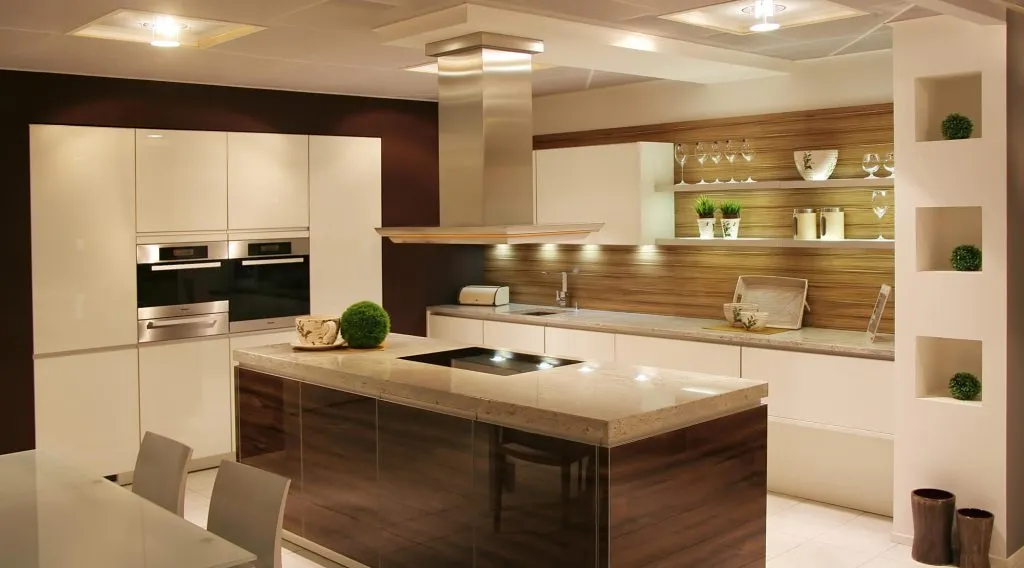
The elegance of a transitional-style kitchen comes from a harmony in which every design element should feel intentional, connected, and cohesive. Cabinetry may be the focal point, but it must align with flooring, countertops, appliances, and other visual anchors to create a seamless whole.
Complementing Countertops
Stone surfaces like marble, quartz, granite, or quartzite countertops work exceptionally well in transitional kitchens. For instance, white shaker cabinets pair beautifully with a veined quartz countertop, adding organic movement without overpowering the cabinetry. Matte or honed finishes enhance the understated sophistication of the overall aesthetic.
Pairing with Flooring and Backsplashes
Flooring should ground the space without competing for attention. Wide-plank hardwood in warm or neutral tones is a popular choice, while large-format porcelain tiles offer durability and visual consistency.
When it comes to backsplashes, those classic subway backsplash tiles are a staple, but you can experiment with textured, geometric, or stone finishes to add dimension.
Incorporating Open Shelving and Glass-Front Cabinets
To lighten the space and introduce a curated personal style, consider open shelving or glass-front upper cabinets. These elements allow for the display of elegant dishware, books, or decorative pieces, helping to break up visual mass while maintaining storage functionality. They also allow light to move more freely, enhancing the sense of openness.
Tips for Optimizing Cabinet Storage Solutions
Plan for storage zones that serve specific tasks. Add vertical dividers for baking sheets, pull-outs for trash bins, and tiered drawers for utensils. These features are especially valuable in transitional kitchens, where the emphasis is on reducing visual noise without compromising utility.
Transitional Cabinet Style Variations & Inspirations
Transitional kitchens are inherently flexible, which allows for creative expression within a balanced design framework. Whether you’re remodeling a downtown loft or a suburban home, you can personalize your cabinetry with stylistic twists that still align with the transitional core.
- Urban Transitional: Ideal for city dwellers, this variation emphasizes clean lines and a minimalist color palette while adding warmth through natural wood tones or mixed textures. Brands often feature in these kitchens, offering sleek, slab-style cabinetry with softened finishes and built-in functionality.
- Farmhouse Transitional: A contemporary rustic remodel often pulls from this look by pairing shaker cabinets with a farmhouse sink, weathered wood flooring, and matte black hardware. This version blends vintage appeal with modern restraint, achieving a cozy yet tailored kitchen environment.
- Coastal Transitional: Incorporating soft whites, muted blues, and plenty of natural light, coastal transitional kitchens favor open layouts and breezy palettes. Glass cabinet inserts, beadboard accents, and organic materials like driftwood-inspired flooring keep the space grounded in nature while remaining fresh and elegant.
Common Mistakes to Avoid
While transitional kitchens are known for their flexibility, it’s surprisingly easy to disrupt their subtle elegance with a few missteps. Whether you’re selecting cabinetry, planning your layout, or coordinating finishes, avoiding these common pitfalls can protect your investment and your aesthetic.
Overloading the Space with Conflicting Elements
Transitional design thrives on harmony. Mixing too many styles and design schemes—like ornate corbels with an eclectic collection of ultra-modern appliances—can create visual tension. Stick to a unified color palette and restrained design vocabulary to maintain cohesion.
Ignoring Functionality for Style
A beautiful kitchen that lacks storage or logical flow can quickly become frustrating. Ensure your cabinetry choices support everyday usability, especially around cooking zones and prep areas. Prioritize ergonomic storage features like pull-outs and drawer dividers.
Choosing Mismatched Finishes
Cabinet hardware, faucet fixtures, lighting, and appliances should complement one another. Avoid combining brushed nickel with oil-rubbed bronze unless intentionally curated. Transitional kitchens benefit from coordinated, not chaotic, material choices.
Final Tips for Homeowners Designing a Transitional Kitchen
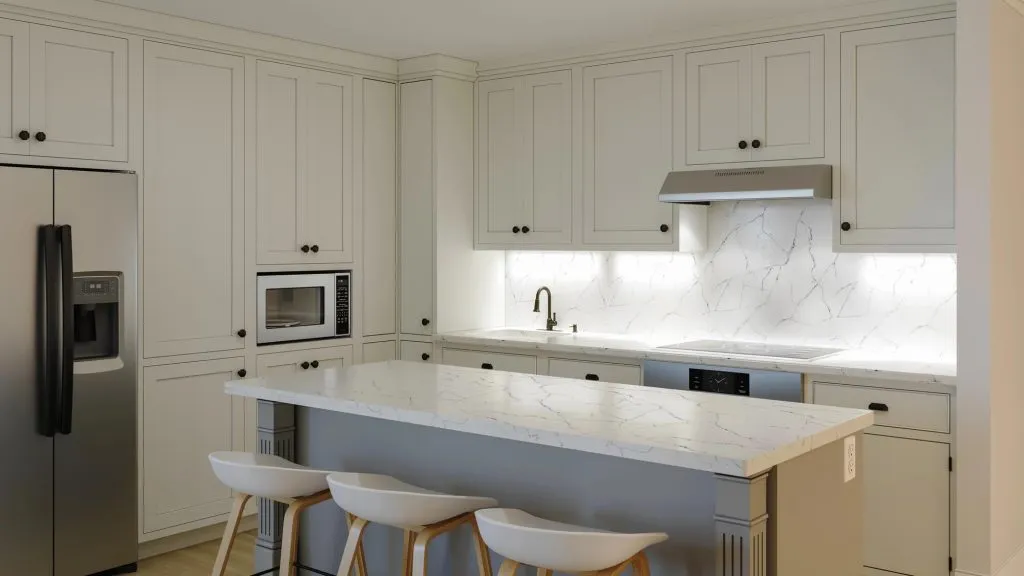
Designing a transitional-style kitchen is a rewarding endeavor, but it requires careful consideration to strike the perfect balance between traditional and modern elements. Transitional kitchen style provides a middle ground between traditional and modern cabinetry, and transitional cabinets provide great design flexibility and lasting appeal, which is exactly why so many homeowners see transitional style kitchen cabinets as an enduring choice for a full renovation. Here are some final tips to ensure your cabinetry and overall layout support long-term satisfaction.
- Start with Inspiration Boards
Before making any purchases, gather visual references from platforms like Pinterest and Houzz. Identify recurring patterns, cabinet styles, color schemes, lighting combinations, that align with your taste. This process sharpens your vision and guides discussions with your design team, and it helps you avoid paying too much attention to trends that won't feel timeless in your new kitchen a few years down the road.
- Work with a Kitchen Designer
Even if you have a strong aesthetic sense, a professional kitchen designer or interior designer can help translate your transitional kitchen ideas into a cohesive plan. They'll also help you avoid expensive layout missteps and ensure that all elements, from cabinetry to appliances to plumbing fixtures, fit seamlessly together throughout the house.
- Think Long-Term Usability
Choose materials and configurations that will serve your lifestyle for years to come. Favor timeless cabinetry profiles like shaker doors, opt for easy-to-clean finishes, and include flexible storage features that adapt as your needs evolve. Classic Shaker cabinets are made from solid timber for durability, which is part of why they remain a great example of a classic feature that still feels at home in a modern kitchen.
Cabinet IQ's Approach to Transitional Kitchen Cabinets
At Cabinet IQ, we understand that a transitional-style kitchen isn't just about blending a traditional kitchen style with contemporary style. You'll need a space that reflects your lifestyle, enhances functionality, and elevates your home's value. Transitional design appeals to a broad demographic of homebuyers precisely because it doesn't lean too far in either direction, and our streamlined process is designed to support homeowners through every step of their kitchen remodel.
Expert Design Consultation Process
Our design specialists work closely with you to understand your goals, preferences, and spatial constraints. Through mood boards, layout planning, and 3D renderings, we ensure your cabinetry choices align with your aesthetic while optimizing workflow and storage, whether the project touches just the kitchen or extends into an adjoining dining room.
Precision Installation with Certified Installers
Once your cabinetry is selected, our master-level certified installers bring your vision to life. With decades of experience and a 57-point design quality assurance check process, every detail, from hardware placement to panel alignment, is executed with exacting precision.
High-Quality Brands and Materials Used
We partner with premium brands known for durable, elegant cabinetry and hardware. Whether you're leaning toward painted dark wood cabinets, soft-close drawers, or integrated storage systems, our product selection supports both style and longevity. Transitional cabinetry combines wood warmth with modern materials like quartz or glass, and pairing warm wood tones with sleek marble countertops or granite countertops is a great example of how traditional and modern elements come together in one space.
Cabinet IQ Gets You to that Sweet Spot of the Transitional Kitchen Style
Transitional kitchens offer homeowners the rare opportunity to enjoy the best of both worlds, classic comfort and modern efficiency. At the core of this design philosophy lies cabinetry that blends thoughtful craftsmanship with clean, timeless lines. Neutral colors are common in transitional style kitchens, creating a calm palette, and transitional style kitchen cabinets often use simple, calm colors like white and gray to help the space feel uncluttered. Transitional style kitchens create a calm, uncluttered look overall, avoiding the ornate details of traditional designs while still keeping a warm, livable feel.
Whether you're exploring cabinet door styles like shaker or raised panel options, or experimenting with cabinet colors and paint colors that reflect your personality, every choice shapes the room's character. Transitional kitchens tend to rely on solid wood construction paired with understated hardware, and transitional kitchens rely just as much on the combination of cabinet door profile, color, and hardware as they do on any single design element, since that combination affects the overall transitional style more than any one choice on its own. Transitional cabinets frequently use understated knobs and pulls in finishes like brushed nickel or brass, and mixed metals, including brass hardware and gold hardware alongside chrome or nickel fixtures, can add visual interest without pulling too much attention from the cabinetry itself.
From a blue kitchen that makes a bold statement to a classic kitchen remodel with warm, neutral tones, there's no shortage of inspiring kitchen ideas and design ideas to draw from. Contrasting island cabinetry adds visual weight without bold colors, which is a popular way to create a focal point, especially when paired with a waterfall island for a touch of modern edge. Thoughtful kitchen cupboards placement, integrated hardware, and strategic layout planning ensure a space that feels both elevated and livable, perfect for homeowners seeking ideas that balance style with function. Oversized pendants illuminate transitional kitchens effectively, and pendant lighting is popular in transitional kitchen designs for good reason, since it adds both practical light and a decor element that ties the whole room together.
Whether you're inspired by contemporary rustic remodels or looking to achieve a balanced, family-friendly space with sleek finishes and warm textures, transitional kitchen cabinets can anchor your design beautifully. Transitional design allows for a mix of painted cabinetry and natural materials, and transitional cabinetry allows considerable freedom in choosing complementary kitchen elements, so classic design touches can sit comfortably alongside more contemporary choices. Transitional cabinets can complement both traditional architectural details and contemporary interiors, which is why the style tends to be such a perfect fit for so many different homes. Transitional kitchen cabinets offer a timeless look that avoids being too plain or too fancy, giving homeowners a genuinely enduring choice for the overall look of their space. With the right planning, materials, and support, your kitchen remodel can result in a space that's not only stunning but intuitively functional.
Ready to transform your kitchen? Partner with Cabinet IQ to bring your transitional-style kitchen vision to life.