How to Make a Statement with Two-Tone Kitchen Cabinets
Creating a dream kitchen today goes beyond choosing between white cabinets or dark wood. One of the most stylish, versatile, and timeless kitchen trends taking center stage in modern kitchen and transitional kitchen design is the two-tone kitchen cabinet look. From natural wood bases with white upper cabinets to a navy blue island paired with […]
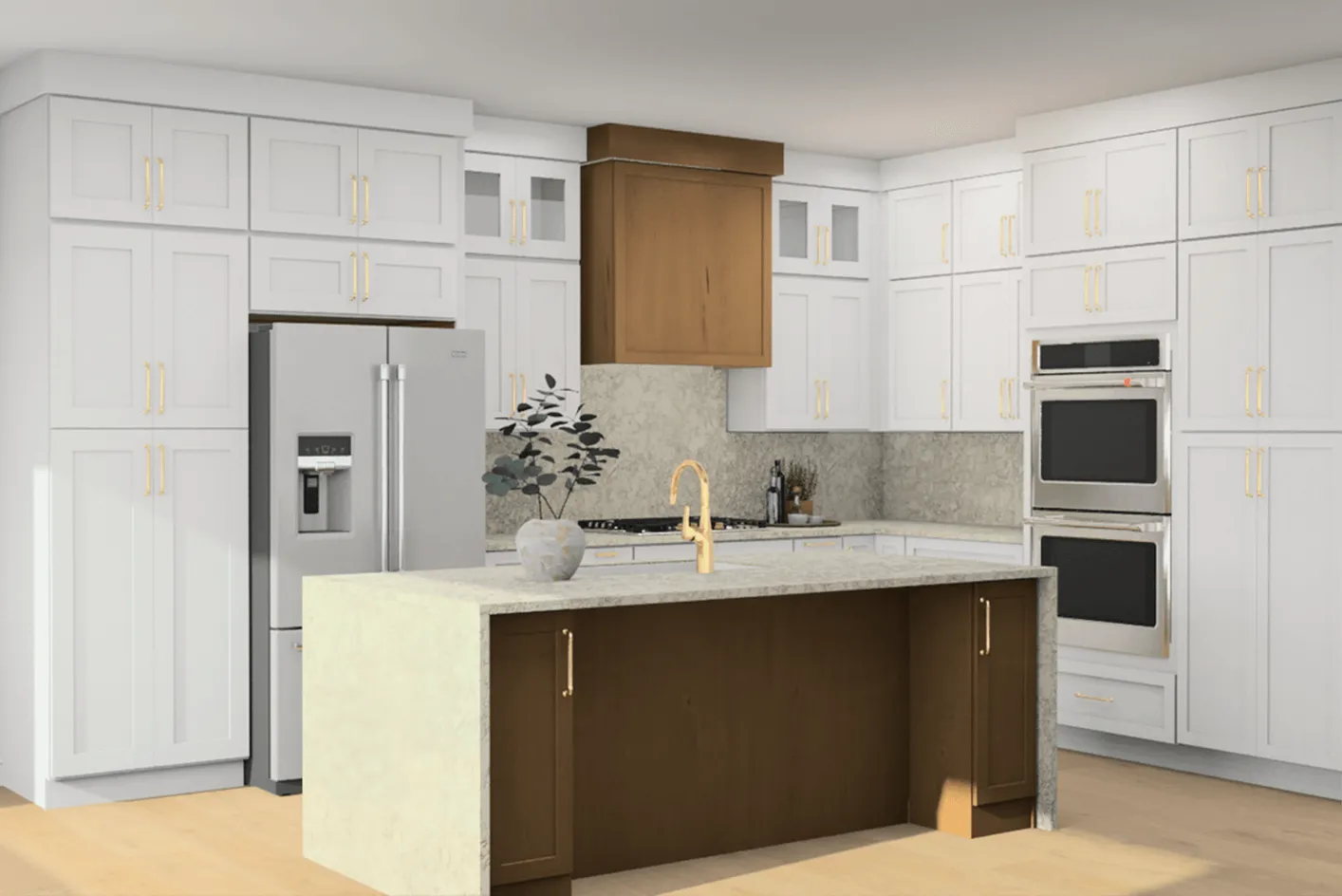
Creating a dream kitchen today goes beyond choosing between white cabinets or dark wood. One of the most stylish, versatile, and timeless kitchen trends taking center stage in modern kitchen and transitional kitchen design is the two-tone kitchen cabinet look. From natural wood bases with white upper cabinets to a navy blue island paired with white wood wall cabinets, the two-tone kitchen delivers both personality and sophistication.
Whether you’re starting a full kitchen remodel or simply looking for fresh kitchen design ideas, this guide will explore how to elevate your kitchen space with two-tone kitchen cabinets.
Get ready to transform a simple kitchen with color into a stunning kitchen statement, blending bright colors, muted pastels, and natural tones for a high-contrast look or a subtle, elegant touch. Whether you’re working with a spacious kitchen or a cozy country kitchen, the two-tone look offers countless color combinations for any kitchen style.
What Are Two-Tone Kitchen Cabinets?
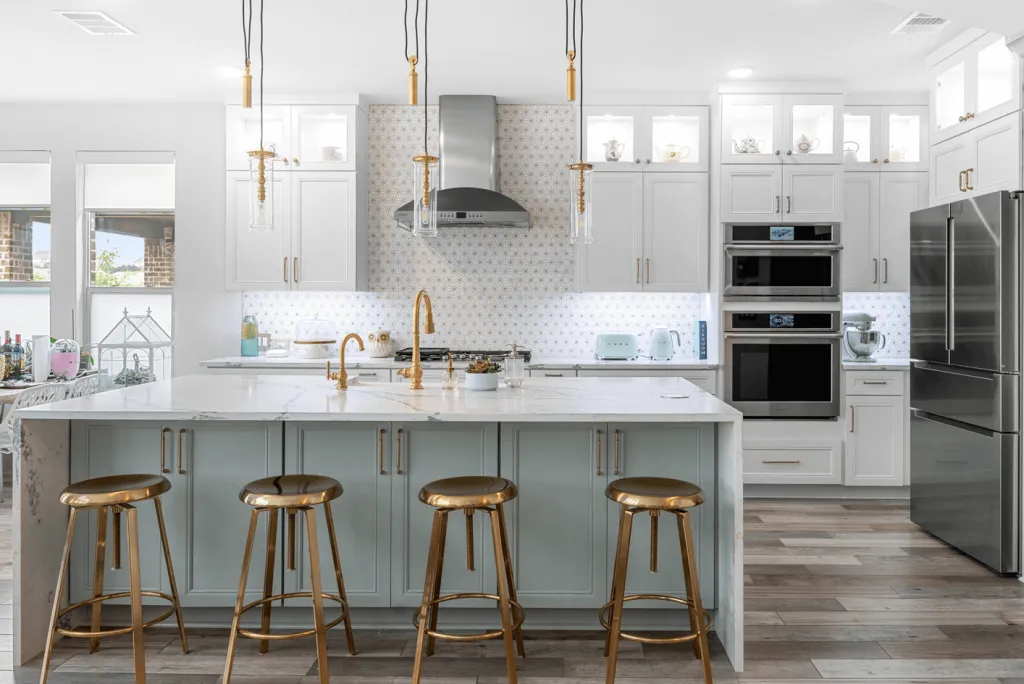
Two-tone kitchen cabinets are exactly what they sound like: cabinetry that features two distinct colors or finishes within the same kitchen layout. This design strategy typically splits the color scheme between different zones, most commonly between the upper cabinets and lower cabinets, or by contrasting a central kitchen island against the surrounding perimeter cabinetry.
Rather than defaulting to a single color or material, the two-tone kitchen approach introduces depth, contrast, and visual hierarchy. It can define spaces, emphasize architectural features like a prep space or dining table area, and introduce a primary accent color without overwhelming the design.
Examples of popular configurations include:
- White upper cabinets paired with a darker shade or natural wood lower cabinets
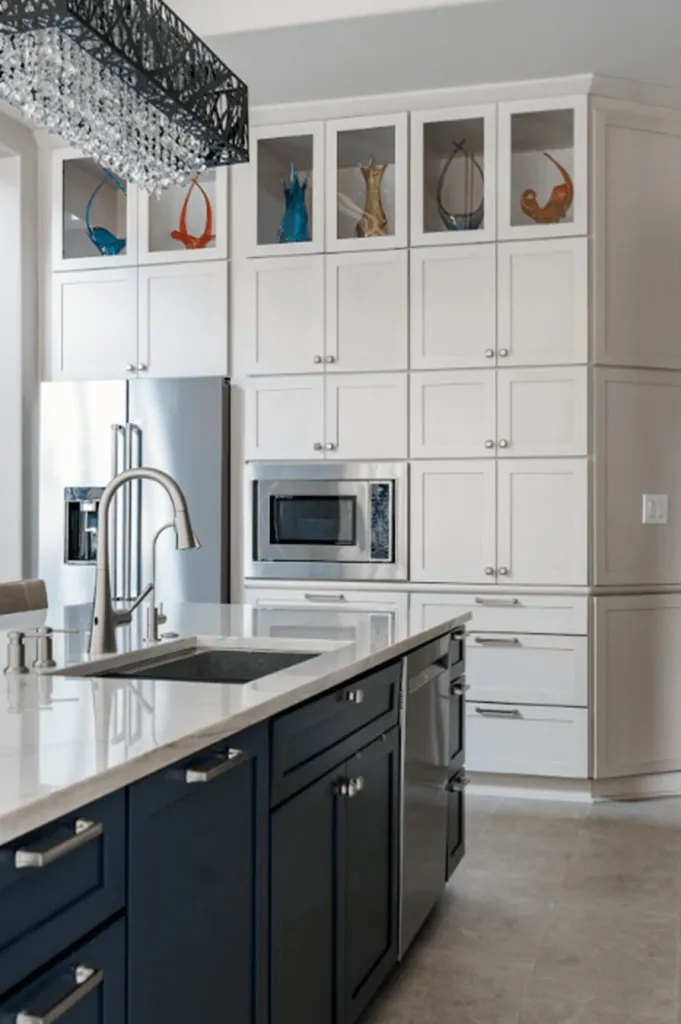
- Navy blue or black cabinets on the island set against lighter color perimeter cabinetry
- A mix of painted finishes and wood grain textures, like walnut wood cabinetry with white wood uppers
This flexible style works across nearly every kitchen design, whether it’s a contemporary kitchen, a traditional space, a modern farmhouse, or even a loft kitchen. It’s especially effective in larger kitchen layouts where a variety of finishes can help break up scale and create an inviting, layered look.
By combining color choices thoughtfully, two-tone cabinets can either ground a busy kitchen or inject a pop of color for a bold statement.
Are Two-Tone Cabinets Still in Style?
Definitely. Two-tone kitchen cabinets are not just a fleeting trend; they’ve cemented their place as a timeless kitchen design strategy. Originally popularized during the rise of modern and transitional kitchens, this approach has evolved to meet the needs of today’s homeowners who want visual interest, personalization, and flexibility in their kitchen cabinet colors without having to add an excessive amount of fixtures or other elements to their kitchens.
Designers and remodelers continue to embrace the two-tone kitchen look for several reasons:
- Visual Impact: The contrast between upper cabinets and lower cabinets, or perimeter and island cabinets, adds instant depth and character.
- Customization: It opens the door to countless color combinations, from bold color combinations like black cabinets with white countertops to earthy palette blends like natural wood with light grays or muted pastel finishes.
- Timeless Versatility: The pairing of white cabinets with darker cabinetry remains a go-to move for many, offering a clean yet grounded aesthetic that fits both modern style and traditional kitchens.
And this trend shows no signs of fading. Whether you’re designing a colorful kitchen or aiming for a sophisticated, neutral-toned kitchen with subtle contrast, the two-tone look adapts to both new builds and kitchen remodels with equal ease.
Choosing the Right Materials & Finishes
The success of a two-tone kitchen cabinet design also hinges on the materials and finishes you choose. These elements define the kitchen’s character, influence lighting dynamics, and directly impact durability and maintenance.
Popular Material Pairings
Combining materials adds another layer of contrast and richness. Some popular choices for two-toned kitchen cabinets include:
- Painted upper cabinets with natural wood lower cabinets: A classic mix for those seeking warmth and light balance in their kitchen space.
- Glossy cabinets contrasted with matte finish cabinetry: This high-low interplay works beautifully in modern kitchen settings.
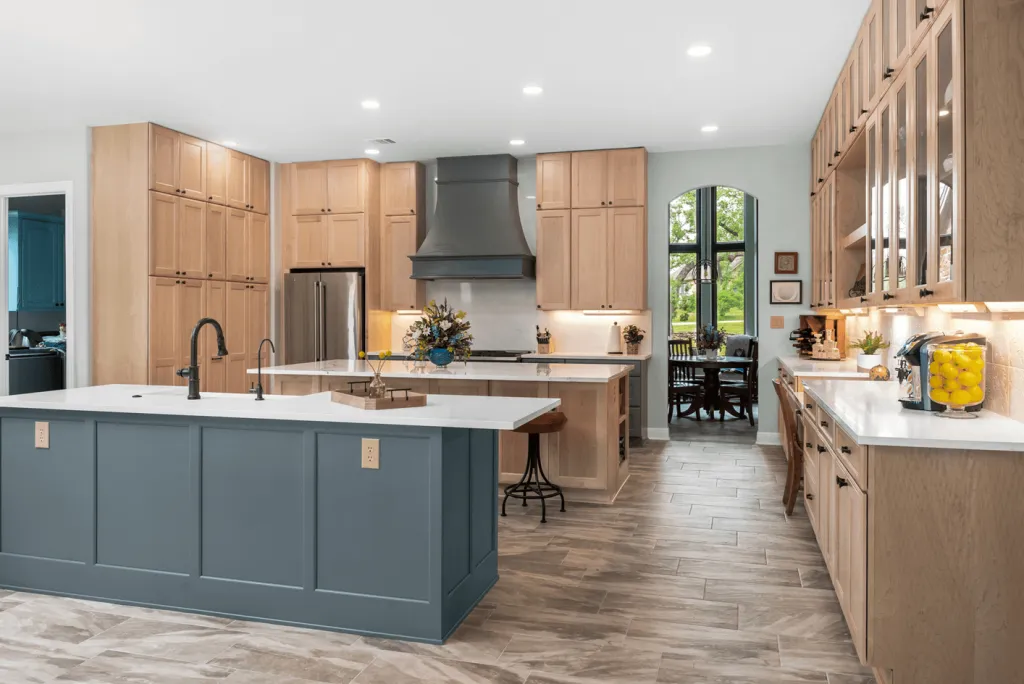
- Light wood cabinetry paired with white wood or white cabinets: This pairing delivers an airy kitchen vibe that’s ideal for Scandinavian or minimalist design.
Durability & Finish Considerations
When selecting cabinet finishes, balance visual appeal with longevity. Here’s how to align your finish on cabinets with your lifestyle:
- Matte finish: Hides fingerprints and works well in busy kitchens.
- Gloss finish: Reflects light and brightens darker cabinetry, ideal for smaller spaces or limited natural light.
- Stained wood: Highlights wood grain for a natural, organic aesthetic. Works beautifully with walnut wood, oak cabinets, or dark wood tones.
- Painted cabinets: Offer maximum flexibility for bold colors or subtle neutrals, especially useful for experimenting with green tone, blue cabinets, or charcoal gray.
Pro Design Tips to Incorporate Two-Toned Kitchen Cabinets
Incorporating two-tone kitchen cabinets effectively means more than just picking two paint colors. Here’s how to leverage this design technique to maximize both aesthetic and function in your kitchen remodel.
Balance with Backsplash
Choose a kitchen backsplash that bridges your upper and lower cabinet colors. For example:
- A white subway tile backsplash complements both white cabinets and dark cabinets.
- A marble backsplash with gray veining can connect charcoal gray lower cabinets with light color uppers.
Contrast with Purpose
Apply the darker shade on the lower cabinets or the kitchen island. This grounds the kitchen while keeping the upper areas feeling open and airy.
Popular combos:
- Dark wood cabinets below, white upper cabinets above.
- Black island cabinets with white countertops and light blues on surrounding cabinetry.
Play with Upper Cabinets
A key principle to keep in mind for any two-tone kitchen cabinet idea is that lighter tones on upper cabinets make kitchens feel taller and brighter. This is especially important in compact or low-ceiling kitchens.
Recommended lighter tones:
- White
- Light gray
- Muted pastel-like blush or soft green
Incorporate Natural Wood Accents
Use warm wood tones to soften bold color combinations. A natural wood island or oak cabinets mixed with painted uppers adds rustic charm and texture.
This pairing works well in:
- Modern farmhouse
- Transitional kitchen
- Country kitchen
Unify with Countertops
Your countertop material should act as a visual bridge between the tones. Options include:
- Quartz countertops for versatility and durability
- Quartzite countertops for a touch of elegance
- Black countertops echo darker cabinetry and balance bright kitchen elements
Focus on Shades, Not Just Colors
Don’t just think in terms of color, but in tones. Try layering:
- Light gray uppers with dark gray lowers
- Neutral shade cabinetry with a primary accent color on the island
Highlight with Hardware
Cabinet hardware is the finishing touch. Choose finishes that tie your two tones together:
- Gold hardware with navy, olive green, or black cabinets
- Brushed nickel for cool tones like gray or blue
- Matte black for white & wood combinations
Use the Kitchen Island as a Focal Point
Make the island your bold statement piece:
- Paint it a fun paint color like deep green or navy blue
- Use walnut wood cabinetry for warmth
- Choose metallic finishes or charcoal accents for a modern edge
Tie into Flooring and Lighting
Match your flooring and lighting to enhance flow:
- Wood flooring should echo your wood-grain cabinet tones
- Pendant lights over islands can repeat your accent color
- Metallic lighting frames work well with both matte and gloss finishes
Two-Tone Kitchen Ideas: Cabinet Color Combinations to Inspire Your Remodel
Once you decide where the contrasting color or finish will go, the next step is choosing two colors or materials that work together—and with the rest of the kitchen. A successful two-tone design should create contrast without making the room feel disconnected.
Here are six two-tone kitchen cabinet ideas to consider:
- White + Natural Wood: White cabinetry keeps the kitchen bright, while natural wood adds warmth and visible texture. This pairing works especially well when the wood is used on lower cabinets or the island, creating a softer contrast than two strongly different colors.
- White + Navy: Navy adds contrast without making the kitchen feel overly dark. Pairing it with crisp white cabinetry can work especially well in open-concept layouts, where the kitchen needs enough definition to feel distinct without becoming visually heavy.
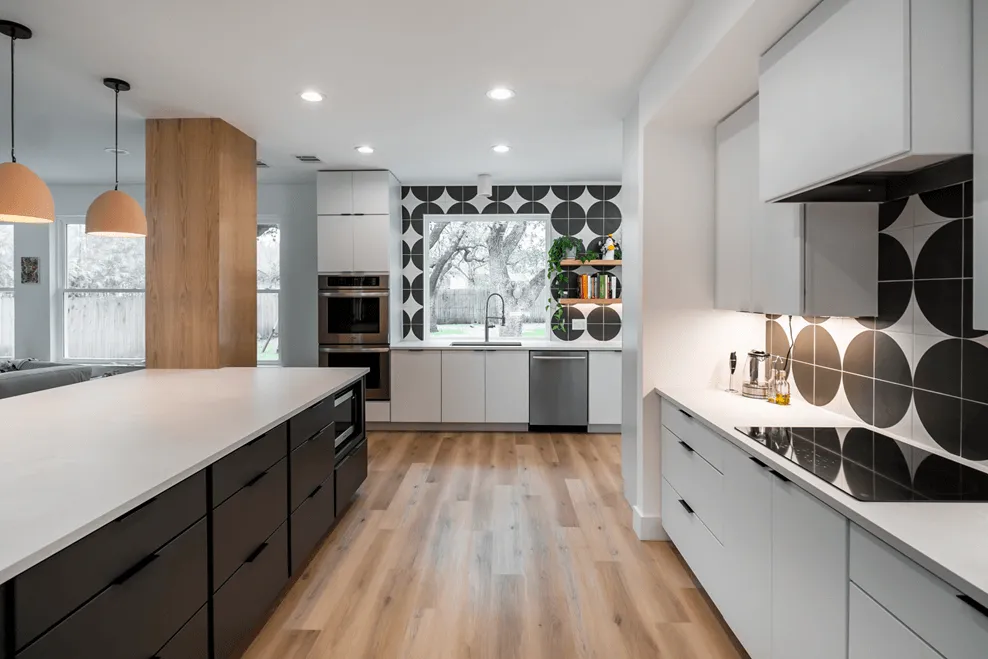
- White + Black: For stronger contrast, pair white upper cabinets with black lowers or a black island. Keeping the darker color lower in the room helps create visual weight, while lighter cabinetry above can help the room feel taller and more open.
- Cream + Warm Wood: Cream creates a softer transition than bright white and works naturally with warm wood tones. It’s a useful option when you want a softer contrast than an all-white kitchen or a high-contrast black-and-white scheme.
- White + Sage Green: Sage introduces color while remaining understated. It also works well with natural wood, light countertops, and warm metallic hardware, creating a palette that feels intentional without becoming overly coordinated.
- Light Gray + Charcoal: Using two shades from the same color family creates a subtler two-tone effect. Light gray uppers and charcoal lowers add depth without relying on completely different colors to define the design.
When comparing combinations, look at the cabinet colors alongside your countertops, backsplash, flooring, hardware, and lighting. A thoughtfully designed two-tone kitchen should feel cohesive as a complete space—not simply like two cabinet samples that happen to work beside one another.
Matching Other Kitchen Elements with Two-Tone Cabinets
Successfully designing a two-toned kitchen means coordinating the entire space, not just the cabinets. To achieve a cohesive and intentional look, the rest of your kitchen should echo or balance your two-tone color palette.
Appliances That Complement the Look
Your choice of appliances should reinforce the aesthetic, not distract from it.
- Stainless steel appliances: A versatile match for almost any color palette and perfect for both modern and traditional spaces.
- Black appliances: Pair elegantly with black cabinets or darker cabinetry, offering a clean, unified and cohesive look.
- Panel-ready or custom-colored appliances: Great for maintaining consistency in a high-end, minimalist design.
Lighting Fixtures that Reflect Style
Your lighting choices can either amplify your two-tone theme or subtly tie it together:
- Use gold accents or brushed brass fixtures to complement warmer tones or bold color combinations like green cabinets and dark wood.
- Matte black pendant lights align well with a more contemporary kitchen using black cabinets or darker shades.
- For an airy shade or bright kitchen, clear glass or light blue-tinted fixtures can soften and lighten the space.
Walls, Flooring, and Surrounding Décor
- Wall color: Stick to neutral colors like light gray, greige, or warm white to keep the focus on cabinetry.
- Accent wall: Try a soft green tone or pastel colors to add subtle dimension in a country kitchen or modern farmhouse.
- Flooring: Pair natural wood floors with contrasting cabinet colors, or try light wood floors with black cabinets for dramatic contrast.
Integrating Countertop & Backsplash Choices
Continue building your color palette through other surfaces:
- Use an all-white backsplash to frame and enhance two-tone cabinet contrasts.
- Match veining in a marble backsplash to colors found in both the upper and lower cabinets.
- Choose white countertops or dark countertops based on whether you need lightness or contrast.
Fixtures, Furniture & Accent Pieces
- Dining table or prep table: Match the kitchen island’s tone or finish for cohesion.
- Cabinet hardware: Continue the color story, gold hardware for warm tones, matte black or chrome for cool tones.
- Stools and chairs: Upholstery or paint can reflect your accent color for unity across the space.
When every element plays a role in supporting the two-tone palette, your kitchen transforms into a highly intentional, well-balanced environment.
How to Choose the Best Two-Tone Cabinets for Your Kitchen
Selecting the right two-tone kitchen cabinet combination isn’t just about aesthetics; it’s about harmonizing style, space, and function. Here’s a practical framework to guide your choices for an efficient, elegant kitchen remodel.
Assess Your Kitchen Layout and Size
The layout and dimensions of your kitchen dictate how bold you can go with color contrasts.
- Larger kitchens: Can handle more dramatic contrasts, like black cabinets with light upper cabinets, or a deep green island with natural wood cabinetry.
- Smaller kitchens: Benefit from lighter colors up top, such as white upper cabinets or pastel tones, to create an open, airy feel.
- U-shaped kitchens or loft kitchens: Offer more real estate for three-color kitchens or layered finishes, such as a dark wood perimeter, white island, and light gray uppers.
Consider Natural Light Levels
Light influences how color is perceived.
In kitchens with minimal natural light:
- Choose lighter shade cabinets or a white & wood combination.
- Avoid overly dark shades unless you balance them with reflective finishes like a gloss finish or white countertops.
If your kitchen gets plenty of sunlight, you can lean into:
- Darker colors like charcoal gray or black cabinets
- Bolder tones like navy blue or forest green
- Metallic accents to catch and reflect light
Define Your Kitchen Style and Mood
Match your cabinet colors to your broader kitchen style:
- Modern kitchen: Cool tones like light blues, charcoal gray, and high-contrast pairings work well.
- Traditional kitchens: Warm wood tones, cream, and natural wood combinations feel timeless.
- Contemporary kitchen: Mix in bold statement finishes, such as glossy cabinets or metallic finishes, against matte neutrals.
- Farmhouse kitchen: Light wood and muted pastel pairings, such as sage green and white wood, reinforce a cozy, rustic charm.
Think in Color Palettes and Emotional Impact
Each kitchen has a personality. Choose tones based on the mood you want:
- Bright colors like yellow or light blues add cheer to a colorful kitchen.
- Neutral shade combinations bring calm, ideal for a prep space or busy kitchen.
- Accent blue or green-toned islands act as visual anchors.
- Dark gray or black lower cabinets ground the kitchen and introduce sophistication.
Why Professional Installation Is Critical
When it comes to two-tone kitchen cabinets, even the most beautiful design can fall flat without expert installation. Because the look relies heavily on precision, symmetry, and visual balance, professional handling makes all the difference in both aesthetics and longevity.
Seamless Alignment Matters More with Contrast
Unlike monochromatic designs, the two-tone look draws attention to the interaction between cabinet zones, from upper and lower, to island and perimeter, painted and natural wood. A small misalignment or uneven spacing is far more noticeable when you’re working with high-contrast finishes like:
- Green kitchen cabinets alongside walnut wood or light wood accents
- Matte white uppers with gloss finish lowers
Complex Layouts Require Precision
Installing two-tone cabinetry often involves more than hanging boxes on walls:
- Integrated color zones must align perfectly with appliances, walls, and countertops.
- Kitchen islands, wall cabinets, and range hood surrounds must be measured and fitted with millimeter-level accuracy.
- The transition between tones must be consistent across prep space areas, U-shaped kitchen layouts, or open-concept plans.
Quality Assurance Safeguards the Investment
Cabinet IQ, for example, follows a detailed, client-first process that includes:
- A 57-point design quality assurance check to verify all dimensions and finishes
- In-home remeasurements before final ordering and fabrication
- Use of master-level certified installers with decades of experience
- Trusted use of top-tier tools to ensure cabinet hardware and trim are flawlessly installed
This level of diligence minimizes errors, accelerates project timelines, and protects your investment, delivering a kitchen space that looks high-end and functions effortlessly.
Mistakes Are Costly and Hard to Hide
DIY installations often lead to:
- Misaligned cabinet doors or gaps between finishes
- Paint chipping due to incorrect mounting
- Improper leveling that disrupts the two-toned look
Hiring experienced professionals not only saves time and stress, it ensures your two-tone kitchen cabinet design achieves the bold statement and timeless finish it deserves.
Make a Bold Yet Timeless Statement with Two-Tone Kitchen Cabinets
Two-tone kitchen cabinets offer a perfect blend of creativity, sophistication, and functional beauty. The two-tone approach empowers you to customize your kitchen to reflect your style and elevate your space.
From farmhouse kitchens with warm wood tones to modern kitchens with sleek finishes and bold colors, this design trend adapts to virtually every layout, mood, and lifestyle. With thoughtful color choices, high-quality materials, and a skilled installation team, your kitchen can become a stunning kitchen that balances aesthetics and practicality.
When you’re ready to transform your kitchen with this timeless design, working with professionals like Cabinet IQ ensures the process is as seamless as the final result. Your dream kitchen is well within reach.
Explore your two-tone kitchen cabinet options today and make a bold statement that lasts for years to come.